


Laboratory reagent bottles In Scientific Research Application
Laboratory reagent bottles are an integral part of scientific research, playing a vital role as containers for media, solutions, and reagents. These bottles are carefully designed to meet the rigorous demands of the laboratory environment, ensuring optimal storage, mixing, and dispensing of liquids and powders necessary for experimental procedures.
The design and construction of laboratory bottles are tailored to maintain the integrity and stability of the stored substances. These bottles are made of a variety of materials, such as plastics (e.g., polyethylene, polypropylene) or specialized polymers, and are selected based on their compatibility with specific chemicals, solvents, or biological agents. Glass bottles are favored for their inertness and resistance to chemical reactivity, making them suitable for long-term storage of sensitive compounds or media that need to be protected from contamination and environmental factors.
In contrast, plastic bottles offer advantages such as light weight, resistance to shattering, and compatibility with autoclaving and other sterilization methods. These properties are particularly beneficial for handling aqueous solutions, buffers, and reagents used in routine laboratory experiments, where convenience, safety, and ease of handling are essential.
Laboratory bottles are more than just containers; they are important tools for ensuring the reliability and reproducibility of experimental results. Their precise design includes features such as screw caps, septum closures, and graduation markings to facilitate accurate measurement and dispensing of liquids or powders. Graduation markings allow researchers to dispense precise volumes of solutions, reduce measurement errors, and ensure consistency in experiments.
In addition, the versatility of laboratory reagent bottles extends beyond basic storage to encompass a wide range of functions that are critical to the scientific workflow. They are used to prepare stock solutions, dilute reagents, mix components, and store biological samples or chemicals under controlled conditions. This versatility supports a wide range of applications in disciplines such as molecular biology, biochemistry, microbiology, and analytical chemistry, where precise handling and preservation of reagents are critical to experimental success.
high quality
Advanced Equipment
Professional Team
One-Stop Solution
high quality
Efficient and precise processing and testing equipment.
advanced equipment
Efficient and precise processing and testing equipment.
professional team
Efficient and precise processing and testing equipment.
global shipping
Efficient and precise processing and testing equipment.
In summary, laboratory reagent bottles are an indispensable asset in scientific research, playing a fundamental role in the storage, mixing, and dispensing of liquids and powders that are critical in experimental procedures. Their design ensures safe handling, precise measurement, and preservation of reagents, thereby helping to improve the reliability, reproducibility, and success rate of scientific research in different fields. As laboratories adopt technological innovations and sustainable practices, reagent bottles will continue to evolve into important tools that support the advancement of knowledge, innovation, and discovery in the scientific community. Here are some of the Laboratory reagent bottles products:

Screw Cap Reagent Bottle
Introducing our 500ml Screw Cap Reagent Bottle-a versatile solution for secure chemical storage. Crafted with precision, this bottle ensures a reliable seal with its screw cap, preventing spills, leaks, and evaporation. Its ample 500ml capacity makes it ideal for various laboratory applications.

Plastic Lab Chemical Reagent Bottle
The Plastic Lab Chemical Reagent Bottle with a 125 ml capacity is a versatile and essential container designed for the safe storage and dispensing of various chemicals and reagents in laboratory settings. Constructed from high-quality plastic, such as polyethylene or polypropylene, this bottle ensures excellent chemical resistance, maintaining the integrity of stored substances.
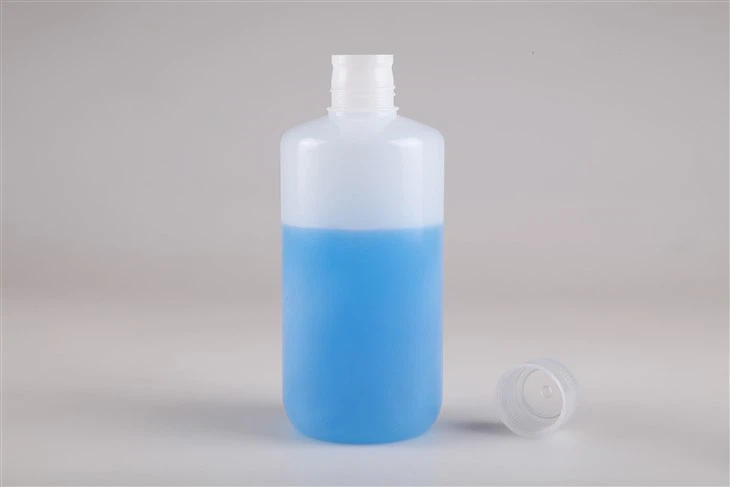
Reagent Bottle 1000ml
The 1000ml reagent bottle is a laboratory vessel designed for precise measurement and safe storage of chemicals. With a durable build and a secure screw cap, it ensures reliable containment and easy access for scientific experiments and processes.

125 Ml Reagent Bottle
The 125ml reagent bottle is a laboratory container designed for precise storage and dispensing of chemicals. Its moderate size makes it suitable for controlled handling of smaller volumes in scientific experiments. Typically made of glass or plastic, it features a secure seal to prevent contamination and evaporation.

Reagent Bottle Lab
A "bottle reagent" typically refers to a container used for storing and dispensing chemical reagents. These bottles are commonly made of glass or plastic and come in various sizes with different sealing mechanisms. They are essential in laboratories, pharmaceuticals, chemistry, and the life sciences to ensure safe storage and convenient access to reagents.

Narrow Mouth Amber Glass Bottles
Narrow mouth amber glass bottles are laboratory containers designed for light-sensitive substances. Crafted from amber-colored glass, they prevent UV light exposure, preserving the integrity of stored chemicals. The narrow mouth ensures controlled pouring, ideal for precise dispensing.
Products Description
Chemical Compatibility
Material Options: Laboratory reagent bottles are available in various materials, such as glass, plastic (polyethylene, polypropylene), and specialized materials (borosilicate glass, fluoropolymers), which ensure compatibility with a wide range of chemicals, including acids, bases, solvents, and biological reagents.
Non-reactive Surfaces: High-quality reagent bottles have non-reactive surfaces that prevent chemical interactions with stored reagents, preserving the integrity and stability of the chemicals.
Safety and Durability
Secure Sealing: Many reagent bottles come with airtight and leak-proof caps or closures that prevent spillage and contamination, ensuring safe storage and handling of hazardous chemicals.
Break-resistant: Plastic reagent bottles are often designed to be break-resistant, reducing the risk of accidents and exposure to hazardous substances in case of drops or impacts.
Precision and Accuracy
Graduated Markings: Some reagent bottles feature graduated markings for approximate measurement, allowing for easy and quick volume assessments during experiments.
Clear Labeling: Many reagent bottles provide space for labeling, which helps in the clear identification of contents, reducing the risk of mix-ups and ensuring precise use of reagents.
Versatility
Wide Range of Sizes: Laboratory reagent bottles come in various sizes, from small vials to large containers, catering to different storage needs, whether for small volumes of precious reagents or bulk storage of commonly used chemicals.
Multi-application Use: They are suitable for storing a wide variety of substances, including liquid chemicals, powders, and biological samples, making them versatile tools in different research applications.
Convenience
Easy Dispensing: Bottles with narrow necks or specialized dispensers facilitate easy and controlled pouring or pipetting, minimizing waste and ensuring accurate reagent use.
Autoclavable Options: Many reagent bottles, especially those made of borosilicate glass or certain plastics, are autoclavable, allowing for sterilization and reuse, which is convenient for microbiological and cell culture applications.
Temperature Resistance
High and Low Temperature Tolerance: Glass and certain plastic reagent bottles can withstand a wide range of temperatures, making them suitable for storing reagents that require refrigeration, freezing, or heating.
Chemical Stability: These bottles maintain the chemical stability of their contents under various temperature conditions, ensuring the reliability of stored reagents.
What are the applications of laboratory reagent bottles in scientific research?
Laboratory bottles play a key role in the safe and long-lasting storage of a wide range of substances essential to scientific research. These substances include a range of chemical reagents, biological samples, culture media, buffers, and more. The choice of bottle material, whether glass or plastic, is determined by the specific characteristics and stability requirements of the reagents being stored. This careful selection ensures that the integrity and functionality of the reagents remain intact during long-term storage.
Plastic bottles are versatile and practical in laboratory settings. They are lightweight, shatter-resistant, and compatible with autoclaving and other sterilization techniques, which facilitates the safe storage of aqueous solutions, buffers, and reagents used in routine experiments. Their sturdy construction ensures durability while maintaining the integrity of the stored contents, preventing potential chemical interactions or contamination.
Not only that, laboratory bottles are carefully crafted with features such as sealing caps or closures to prevent leaks and maintain a sterile environment. These closures also help maintain the concentration and potency of stored solutions, improving the reliability and reproducibility of experimental results.
The ability to safely store reagents and solutions for long periods of time is essential in scientific research. It ensures that researchers have access to high-quality materials for ongoing experiments and validation, promoting consistency and accuracy in scientific research. In addition, proper storage in dedicated reagent bottles reduces the risks associated with degradation, evaporation, or unexpected reactions, thereby protecting the integrity of valuable research resources.
In summary, laboratory reagent bottles are an indispensable tool in scientific laboratories, providing a powerful solution for the safe and reliable storage of key reagents and solutions that are essential to advancing knowledge and innovation across disciplines. Their design and material composition are tailored to maintain the highest quality assurance standards, ensuring that stored substances remain in their original state and viability throughout their specified shelf life. As scientific methods and research paradigms continue to evolve, the role of reagent bottles in supporting reliable experimental results and groundbreaking discoveries remains fundamental and irreplaceable.

Preparing and mixing reagents

Preparing and mixing reagents is a critical part of laboratory work, and laboratory bottles play a key role in this process. These bottles are carefully designed to support the accurate preparation of solutions with specific concentrations, ensuring consistency and reliability in experimental processes.
Precisely prepare solutions with specific concentrations: Laboratory bottles play an integral role in the accurate preparation of solutions, such as standard buffer solutions or catalyst solutions required for chemical reactions. These bottles are equipped with graduation markings and volume indicators, allowing researchers to measure and dispense reagents with great precision. These markings not only provide researchers with clear reference points for measuring the volume of reagents added or removed during the preparation process, but also ensure that the desired solution concentration is consistently achieved during multiple preparations, which is critical to ensuring experimental repeatability and reproducibility.
Serially dilute and adjust solution concentrations: The volume markings on laboratory bottles allow researchers to perform serial dilutions or adjustments to achieve solutions with specific concentrations. This capability is particularly important in fields such as analytical chemistry, molecular biology, and biochemistry, where the precise composition of the solution directly affects the accuracy and reproducibility of experimental results.
Advantages of design features: The design of laboratory bottles incorporates features that improve accuracy and ease of use. For example, bottles may be designed with narrow necks and ergonomic shapes to facilitate controlled pouring and minimize spillage. In addition, the choice of bottle material, whether glass or plastic, is selected based on the characteristics and intended use of the reagents to ensure the stability and safety of the reagents during storage and use.
Application in scientific research: In biological research, laboratory reagent bottles are widely used to prepare cell culture media and culture fluids to ensure the accuracy of nutrient concentrations to support cell growth and vitality. In chemical synthesis or analytical laboratories, these bottles are used to prepare standardized solutions for calibration, quality control, and reaction monitoring, providing a solid basis for the reliability and comparability of experimental data.
Chemical synthesis and analysis occupy an important position in laboratory work, and laboratory reagent bottles play a key role in both areas. These bottles are designed to safely and efficiently store and dispense a variety of chemical reagents, from solvents, catalysts to reaction media in organic synthesis, providing necessary support for experimental work.
Chemical synthesis: Laboratory reagent bottles play a vital role in chemical synthesis, especially in organic synthesis processes. They are not only used to store various solvents and catalysts, but also can safely contain various media required for the reaction. It is crucial to choose the right bottle material to ensure the stability and purity of the reagents during storage and use. For example, for reagents that are sensitive to air, glass bottles with good sealing and chemical inertness are usually selected to avoid the risk of unnecessary oxidation or contamination of the reaction. At the same time, some special organic solvents may choose chemically resistant plastic bottles to prevent their impact on the reagents.
Analytical chemistry: In analytical chemistry, laboratory reagent bottles are used to store various standard solutions, internal standard substances, and quality control solutions, which are essential for calibrating and verifying analytical instruments. Standard solutions are used to establish the baseline and standard curve of the analytical method to ensure the accuracy and comparability of the measurement results. Internal standard substances are used for quantitative correction in internal standard analysis to improve the accuracy and precision of the analysis. Quality control solutions are used to monitor systematic errors in the analysis process and ensure the reliability and repeatability of experimental data. Therefore, choosing appropriate laboratory reagent bottles can ensure that these key reagents are not affected by the external environment during storage, thereby ensuring the accuracy and reliability of the analysis results.
The design features and material selection of laboratory reagent bottles are crucial in chemical synthesis and analytical chemistry. They must not only be able to withstand the chemical properties of the reagents, but also have good sealing and stability to prevent the volatilization, oxidation or contamination of the reagents, thereby affecting the reliability of the experimental results. In laboratory work, researchers rely on these precisely prepared reagents to carry out complex chemical syntheses and precise analytical work, and promote the progress and results of scientific research by optimizing experimental processes and ensuring the accuracy of data.
In summary, the application of laboratory reagent bottles in chemical synthesis and analytical chemistry is not only the infrastructure of scientific research, but also a key link to ensure experimental success and data reliability. Through their careful design and selection of high-quality materials, these bottles provide researchers with safe and reliable reagent storage and handling solutions, helping to promote scientific progress and innovative development in various fields.

Laboratory safety and management

Laboratory safety and management are crucial aspects of scientific research, and the labeling, quality control and compliance management of laboratory reagent bottles play a key role in ensuring laboratory operation safety and reagent quality stability. Labeling and identification system: Laboratory reagent bottles are often equipped with labels and barcodes. These labels are not only for the convenience of identifying and tracking reagents, but also an important means to ensure that the laboratory can follow the correct operating procedures and safety measures when storing, using and disposing of reagents. The label usually includes key information such as the name, concentration, expiration date, storage conditions and safety precautions of the reagent. Through clear and concise labels, laboratory staff can quickly identify the nature and purpose of the reagent, avoid misuse or confusion, and ensure the accuracy and reliability of experimental results. Quality control and compliance inspection: The laboratory ensures that the quality of the reagents meets international standards and regulatory requirements through quality control and compliance inspection of reagent bottles. This includes strict monitoring and evaluation of the quality of the bottle itself (such as materials, sealing performance) and the reagent contents (such as purity, concentration, stability). Regular quality control inspections and the laboratory's internal quality management system can effectively reduce the uncertainty and risk introduced by reagents in the experimental process and ensure the repeatability and comparability of experimental results. Environmental protection and sustainability considerations: In the management of reagent bottles, laboratories should also consider environmental protection and sustainability factors. For example, choosing reusable reagent bottles or bottles made of recyclable materials can help reduce the amount of waste generated by the laboratory and reduce the impact on the environment. At the same time, the rational use of reagents and reducing waste are also one of the important strategies that laboratories should consider in terms of sustainable development. In summary, the labeling and identification system of laboratory reagent bottles, quality control and compliance inspections, as well as safe operating guidelines and environmental protection considerations, together constitute an important part of laboratory safety and management. Through scientific and reasonable management and strict quality control measures, laboratories can effectively manage and protect reagent resources, ensure the safety, reliability and sustainability of the experimental process, and thus provide solid guarantees for the smooth progress of scientific research.
Maybe you would also like to know the following questions
1. What are the types of laboratory reagent bottles?
There are many types of laboratory reagent bottles, which are mainly designed according to the reagents used and the experimental requirements. Common types include:
Glass bottles: Traditional glass reagent bottles are usually used for general reagent storage. They have excellent chemical inertness and transparency and are suitable for a wide range of applications.
Plastic bottles: Used to store various reagents. Plastic bottles are light and not easy to break, suitable for some reagents that do not need long-term storage.
Cryostat: Used for low-temperature storage, such as samples in liquid nitrogen or ultra-low temperature refrigerators.
Pressure balance bottles: Designed to maintain reagent storage under specific pressure conditions during the reaction process.
The differences in the design of these bottles are mainly reflected in material selection, sealing performance, stability, and applicable storage conditions.
2. How does the material selection of laboratory reagent bottles affect the experimental results?
Material selection directly affects the chemical inertness, corrosion resistance, and interaction between reagents and materials of the reagent bottles. For example, glass bottles have good compatibility with most reagents, but some organic solvents may have compatibility issues with the materials in plastic bottles, resulting in contamination or degradation of reagents. The correct selection of materials can ensure the accuracy and repeatability of experimental results.
3. Why is the sealing performance of laboratory reagent bottles important?
The sealing performance of reagent bottles directly affects the stability of reagents during storage and the possibility of long-term preservation. Good sealing performance can prevent reagent evaporation, air oxidation or other contaminants from entering, thereby maintaining the purity and activity of reagents and ensuring the reliability of experimental results.
4. What is the role of laboratory reagent bottles in experiments?
Laboratory reagent bottles are not just containers for storing reagents, they also play the following important roles:
Protect reagents: ensure the safety and stability of reagents before and after use.
Ensure experimental conditions: Some bottles such as pressure balance bottles can maintain specific experimental conditions, such as pressure or atmosphere.
Facilitate experimental processes: Appropriate bottles can simplify the storage and use of reagents and improve experimental efficiency.
Ensure data accuracy: By ensuring the purity and stability of reagents, the credibility of experimental results is guaranteed.
5. Why is cleaning and disinfection of laboratory reagent bottles so important?
Cleaning and disinfection of reagent bottles is a key step to ensure the accuracy of experimental results and avoid cross-contamination. Bottles that are not properly cleaned may contain residual reagents or contaminants, which will affect the results of subsequent experiments. Regular cleaning and disinfection procedures can effectively reduce these potential problems and extend the life of reagent bottles.
6. What is the role of laboratory reagent bottles in sustainable experimental practices?
In the current environment that emphasizes sustainable development and green experimental practices, the selection and use of laboratory reagent bottles have also changed. For example, more and more laboratories choose reusable glass bottles instead of disposable plastic bottles to reduce waste generation. In addition, optimizing the design and material selection of reagent bottles can also reduce energy consumption and resource waste.
7. What is the future development direction of laboratory reagent bottle technology?
In the future, the development of laboratory reagent bottles may focus on the following directions:
Material innovation: Develop new materials that are more environmentally friendly and highly chemically inert.
Intelligent design: Integrate sensors or identification technology to monitor the status and history of reagents.
Sustainability: Further optimize the design to reduce resource consumption and waste generation.
In summary, laboratory reagent bottles are a vital part of scientific research, and their design and use have a profound impact on the quality and reliability of experimental results. Through proper selection, maintenance and innovation, the efficiency, safety and environmental friendliness of reagent bottles can be further improved, thereby promoting the progress and sustainable development of scientific research.