






Imagine holding a microscopic plate, smaller than your palm, that has the extraordinary power to unlock the mysteries encoded in our genetic blueprints. PCR (polymerase chain reaction) microplates are an innovation of modern science that are revolutionizing the landscape of healthcare and scientific discovery. These humble plates, with their tiny wells arranged in a grid pattern, serve as miniature laboratories where genetic material can be amplified and analyzed with astonishing precision.
PCR microplates have become an integral part of the diagnostics landscape, allowing healthcare professionals to detect and identify diseases with unprecedented precision. From diagnosing infectious diseases like COVID-19 by detecting viral RNA to discovering genetic mutations associated with cancer and genetic diseases, these plates play a key role in early detection and personalized treatment strategies. By amplifying specific DNA sequences millions of times, PCR microplates provide clinicians with critical insights into a patient's genetic profile, guiding customized therapies to improve outcomes and minimize side effects.
Beyond healthcare, PCR microplates are driving innovation across diverse scientific disciplines. Researchers use them to study ancient DNA, track endangered species, and even solve crimes through forensic analysis. Their versatility and reliability have expanded the horizons of genetic research, paving the way for groundbreaking discoveries and applications.
In short, as technology continues to advance, PCR microplates remain at the forefront of scientific progress, evolving to meet the needs of modern medicine and research. Their ability to quickly and accurately decode genetic information highlights their importance in unraveling the complexity of life itself. PCR microplates are more than just tools; they are catalysts for change in healthcare, allowing us to better understand, diagnose, and fight disease, and ultimately improve the quality of life for people around the world.
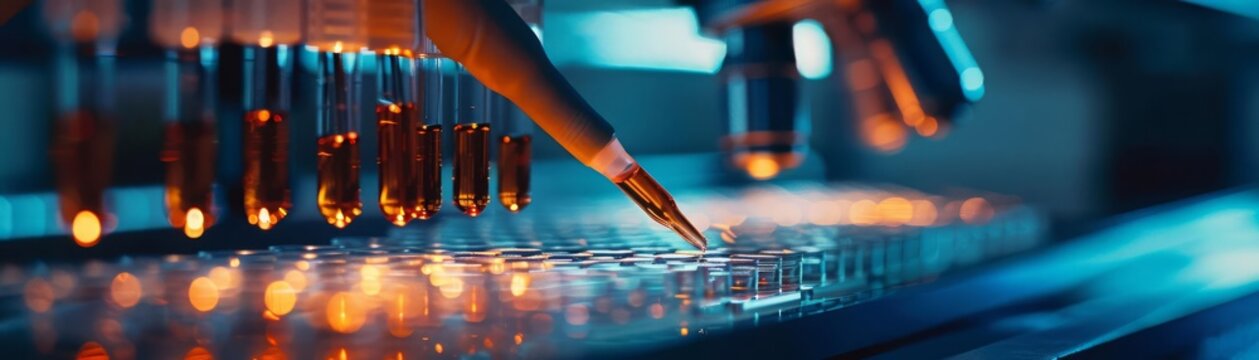
First, what are PCR microplates?
PCR microplates are essential components in molecular biology, resembling miniature laboratories equipped with numerous tiny wells arranged in a grid-like pattern. These wells serve as micro-reaction chambers where scientists meticulously combine genetic samples with specialized enzymes, nucleotides, and primers-key ingredients required for the Polymerase Chain Reaction (PCR). During PCR, which is a fundamental technique in genetic analysis, the genetic material undergoes cycles of heating and cooling. This process allows for the selective amplification of specific DNA sequences, replicating them millions of times within each well. The amplified DNA can then be analyzed to detect genetic markers associated with diseases or conditions. PCR microplates enable scientists to conduct these reactions in a high-throughput manner, processing multiple samples simultaneously with precise control over reaction conditions. Their design and functionality make them indispensable tools in diagnostics, research, and various applications across biological sciences, contributing significantly to advancements in understanding genetic mechanisms and developing targeted therapies.
One of the most fascinating aspects of PCR microplates is their pivotal role in disease detection. These innovative tools are adept at identifying a wide array of health threats, from viral infections such as COVID-19 to intricate genetic mutations linked with cancer and inherited disorders. PCR microplates achieve this by leveraging their ability to amplify specific DNA sequences present in minute quantities within biological samples.
In the context of infectious diseases, PCR microplates enable healthcare providers to detect viral or bacterial DNA or RNA swiftly and accurately. During the COVID-19 pandemic, for instance, these microplates played a crucial role in diagnosing infections early, guiding timely interventions, and mitigating the spread of the virus. Their high sensitivity and precision empower medical professionals to make informed decisions about patient care, facilitating effective treatment strategies and ensuring better health outcomes.
Moreover, PCR microplates are instrumental in genetic diagnostics, allowing clinicians to identify mutations associated with hereditary conditions or predispositions to diseases. This capability is transformative in personalized medicine, as it enables tailored therapies based on individual genetic profiles, optimizing treatment efficacy and minimizing adverse effects.
In essence, PCR microplates stand as technological marvels in the field of healthcare, continuously advancing our ability to understand, diagnose, and manage diseases with unparalleled precision and efficiency. Their versatility and impact extend beyond traditional laboratory settings, shaping the future of medicine and improving global health outcomes.

The Coolest Thing About PCR Microplates – Detecting Diseases

One of the most fascinating aspects of PCR microplates is their pivotal role in disease detection. These innovative tools are adept at identifying a wide array of health threats, from viral infections such as COVID-19 to intricate genetic mutations linked with cancer and inherited disorders. PCR microplates achieve this by leveraging their ability to amplify specific DNA sequences present in minute quantities within biological samples.
In the context of infectious diseases, PCR microplates enable healthcare providers to detect viral or bacterial DNA or RNA swiftly and accurately. During the COVID-19 pandemic, for instance, these microplates played a crucial role in diagnosing infections early, guiding timely interventions, and mitigating the spread of the virus. Their high sensitivity and precision empower medical professionals to make informed decisions about patient care, facilitating effective treatment strategies and ensuring better health outcomes.
Moreover, PCR microplates are instrumental in genetic diagnostics, allowing clinicians to identify mutations associated with hereditary conditions or predispositions to diseases. This capability is transformative in personalized medicine, as it enables tailored therapies based on individual genetic profiles, optimizing treatment efficacy and minimizing adverse effects.
In essence, PCR microplates stand as technological marvels in the field of healthcare, continuously advancing our ability to understand, diagnose, and manage diseases with unparalleled precision and efficiency. Their versatility and impact extend beyond traditional laboratory settings, shaping the future of medicine and improving global health outcomes.
PCR microplates can be aptly likened to personalized health detectives, delving into the intricacies of an individual's genetic makeup to guide targeted treatments that are tailored to their unique genetic signature. This personalized approach represents a significant leap forward in medicine, offering patients a more precise and effective path towards combating diseases that were once formidable challenges.
By analyzing specific DNA sequences amplified within PCR microplates, healthcare providers gain invaluable insights into genetic variations that influence disease susceptibility, progression, and response to treatments. For instance, in oncology, PCR microplates enable the detection of genetic mutations driving cancer growth, allowing oncologists to prescribe therapies that target these specific mutations. This personalized treatment strategy not only enhances therapeutic outcomes but also reduces the likelihood of adverse effects, as treatments are selected based on genetic compatibility.
Furthermore, in the realm of inherited disorders, PCR microplates facilitate early and accurate diagnosis by identifying genetic markers associated with hereditary conditions. This enables proactive management strategies and personalized care plans that can potentially delay disease progression or mitigate its impact on the patient's health.
In essence, PCR microplates empower healthcare professionals to move beyond a one-size-fits-all approach to medicine, ushering in an era where treatments are customized to fit the genetic profile of each individual. This paradigm shift holds promise for improving patient outcomes, enhancing quality of life, and ultimately reshaping the landscape of healthcare by harnessing the power of personalized medicine.

PCR Microplates – Superheroes of Science:

Beyond their indispensable role in medicine, PCR microplates have emerged as superheroes of scientific exploration, extending their capabilities into diverse fields such as archaeology, conservation biology, and forensic science. These versatile tools enable researchers to delve deep into the past, present, and future of life on Earth with unprecedented accuracy and reliability.
In archaeology, PCR microplates are instrumental in studying ancient DNA extracted from fossils and archaeological remains. By amplifying and analyzing ancient genetic material, scientists can unravel evolutionary histories, trace human migrations, and uncover the genetic diversity of extinct species. This deepens our understanding of human origins and ancient civilizations, offering insights into how our ancestors lived and adapted to changing environments.
In conservation biology, PCR microplates play a crucial role in monitoring and protecting endangered species. Researchers use them to identify species-specific DNA markers, assess genetic diversity within populations, and track the movement of wildlife. This information informs conservation efforts, guiding strategies to preserve biodiversity and mitigate the impact of habitat loss, climate change, and human activities on vulnerable species.
Moreover, in forensic science, PCR microplates are indispensable tools for analyzing DNA evidence collected from crime scenes. By amplifying and comparing DNA profiles obtained from biological samples, such as blood, saliva, or hair, forensic scientists can establish links between suspects and crime scenes with high accuracy. This aids in criminal investigations, supports judicial proceedings, and ensures justice is served.
The versatility and precision of PCR microplates continue to expand horizons across scientific disciplines, fostering innovation and driving discoveries that impact both our understanding of the natural world and our ability to address pressing societal challenges. As technology advances and applications evolve, these microplates remain at the forefront of scientific progress, empowering researchers to push boundaries and unlock new frontiers in science and beyond.
The role of PCR microplates in the lab and beyond
A day in the lab:
In a busy lab, scientists work attentively, each responsible for different experiments and research. Cell images under the microscope flash on the screen, and the data on the computer screen is constantly updated, recording the experimental results and analytical data. In the magic of these modern technologies, PCR (polymerase chain reaction) microplates work quietly. These microplates are precisely arranged on the laboratory table, and each small hole is loaded with important experimental reagents and samples to be tested. The slight hum of the machines in the laboratory and the sound of the equipment are intertwined, as if playing a symphony of scientific exploration.
The working principle of PCR microplates is to amplify specific DNA sequences through polymerase chain reaction, so that trace amounts of DNA samples can be detected and analyzed in experiments. The accuracy and efficiency of this technology allow scientists to complete large-scale DNA analysis in a short period of time, which is crucial for disease diagnosis, genetic research and many other applications in the field of biology. Every day in the laboratory is full of new discoveries and breakthroughs, and every experiment may reveal new mysteries of life and promote the advancement of scientific knowledge and the expansion of applications.
Outside the lab:
The impact of PCR microplates is not limited to the lab, they are also widely used in the outside world, bringing revolutionary changes and improvements to various fields. In the field of food safety, PCR microplates are used to detect and monitor harmful microorganisms in food, such as bacteria and viruses, to ensure the health and safety of consumers. This technology is not limited to the food industry, but also extends to the field of environmental monitoring, protecting the health of natural water bodies and ecosystems by detecting microbial contaminants in water quality. Through early detection and early warning, PCR microplates play a key role in preventing food and environmental hygiene problems.
In addition, PCR microplates also have important applications in the agricultural field. Farmers use PCR technology to identify and cultivate disease-resistant crop varieties, and by screening and testing the genome of plants to find seeds with disease-resistant characteristics, thereby improving the growth rate and yield of crops. This not only helps agricultural producers improve economic benefits, but also helps reduce pesticide use, reduce environmental impact, and contribute to global food security.
About the future of PCR microplates
With the continuous advancement of technology and the deepening of human understanding of genetics, PCR (polymerase chain reaction) microplates will continue to play a key role in shaping the future of healthcare and scientific research. These microplates are not just tools in scientific research, they are the key to exploring the mysteries of life, revealing important information hidden in our DNA again and again.
In the future, the application of PCR microplates in the field of medical diagnosis will be further improved. With the continuous optimization and popularization of PCR technology, doctors can more accurately diagnose a variety of diseases, from infectious diseases to genetic diseases, and even rare diseases. By analyzing the genetic information of individuals, doctors can develop more personalized and effective treatment plans to maximize the success rate of treatment and the quality of life of patients.
In addition, the role of PCR microplates in scientific research and exploration will also be further expanded. In the field of archaeology, researchers use PCR microplates to analyze ancient DNA to reveal the history of human evolution and the evolution of culture. In terms of protecting biodiversity, PCR microplates help scientists monitor and protect endangered species, assess genetic diversity and population health, and provide scientific basis for protecting and restoring ecosystems. In forensics, PCR microplates can not only help solve criminal cases, but also help with identification and remains identification in disasters, providing accurate judicial information for family members.
Continuous technological advances will further enhance the performance and application scope of PCR microplates. For example, the development of real-time PCR and digital PCR technologies has enabled PCR microplates to have higher accuracy and efficiency in detection sensitivity, real-time monitoring, and quantitative analysis. The application of these technologies will further promote the application of PCR microplates in clinical diagnosis, basic research, and applied research, and accelerate the development of new drugs and innovation in disease treatment.

So when you hear about PCR microplates again, remember that they are more than just small well plates in the laboratory. They are key tools in modern healthcare and scientific research, and the key to unlocking the mysteries of life. From diagnosing and treating diseases to protecting the environment and promoting scientific discoveries, PCR microplates are changing our world in unprecedented ways. They have brought us a safer and healthier life, laying a solid foundation for a brighter and more promising future tomorrow. With the continuous advancement of technology and the continuous expansion of applications, PCR microplates will continue to play an important role in our lives, pushing medicine, science, and human society to new heights.