






In modern laboratories, pipette tips are one of the indispensable basic tools in experimental operations. It not only plays an important role in precise control during liquid transfer and distribution, but is also directly related to the accuracy and reliability of experimental results. Choosing the right pipette tip is of vital importance to ensure the accuracy of the experiment, avoid cross-contamination of samples, and improve work efficiency. However, there are many types of pipette tips on the market. How to choose the most suitable tip according to different experimental needs has become a challenge that every laboratory worker must face in daily operations. This article will help you fully understand how to choose a pipette tip suitable for your experiment, thereby improving the accuracy and credibility of the experiment.
Content
1. Basic types of pipette tips
2. How to choose the right tip according to your needs
3. Compatibility with pipettes
4. Disposable vs. reusable tips
5. Precautions for storage and use of tips
1. Basic types of pipette tips
Although pipette tips may seem like a small accessory, they actually come in different types, each with its own unique features and application scenarios. Understanding these basic types can help you better choose the tip that best suits your experimental needs. Below, let's take a look at several common types of pipette tips.

1. Standard Tips
Standard tips are the most common type and are suitable for most daily experiments. They are generally made of polypropylene (PP), which is both sturdy and non-toxic, making them ideal for general liquid transfer. Standard tips are also relatively affordable and suitable for laboratories that need to use a lot of pipettes. However, if your experimental requirements have high requirements for precision or strict control of cross contamination, you may need to consider other types of tips.
2. Filter Tips
Filter tips have a filter membrane added to the top of the tip, which can effectively prevent liquid from splashing or coming into contact with air during transfer, preventing sample contamination. This type of tip is particularly suitable for experiments that are extremely sensitive to contamination, such as PCR, RT-PCR, or cell culture. The filter membrane is usually made of sterile materials, which can greatly reduce the risk of cross contamination when used. Although it is a little expensive, it is an indispensable assistant in some experiments requiring high precision.
3. Low-adsorption tips
In some experiments, we need to pay special attention to the fact that the liquid does not stay too much on the inner wall of the tip. At this time, low-adsorption tips are needed. Their inner walls are specially treated to reduce the adsorption of liquid and ensure that the amount of liquid removed is more accurate. They are especially suitable for handling viscous liquids or trace liquids. Low-adsorption tips are particularly important when performing high-precision analysis, such as DNA extraction, enzyme activity analysis and other experiments.
4. Reverse tips (special tips)
Reverse tips are usually designed for specific experimental needs, such as experiments that require ultra-high precision or special operating conditions. For example, reverse tips have some special designs when aspirating liquid to help avoid excessive liquid aspiration, or are specially tailored for certain experimental equipment. Although they are used less frequently, they have irreplaceable advantages in certain professional fields.

By understanding the basic types of these tips, you can choose the most suitable pipette tip according to your experimental needs to avoid affecting the experimental results due to improper selection. Next, we will take a deep dive into how to choose a tip based on your specific needs to help you make a wise choice.
2. How to choose the right tip according to your needs
When choosing a pipette tip, the most important thing is to make a decision based on your experimental needs. Different experiments have different requirements for tips, so choosing the right tip can not only improve work efficiency, but also ensure the accuracy and reliability of the experiment.
First, capacity selection is a very important consideration. The capacity of a pipette tip usually matches the capacity of the pipette itself. For small-capacity tips, they are suitable for experiments that require high-precision small-volume pipetting, such as micro-liquid analysis and PCR reagent addition. Large-capacity tips are suitable for large-volume liquid pipetting, such as culture medium distribution and large sample dilution. When choosing, make sure that the capacity of the pipette and the tip matches to ensure that the liquid will not overflow or cannot be fully absorbed.
Secondly, the material of the tip is also a key factor. Common tip materials include polypropylene (PP), polyethylene (PE), polystyrene (PS) and polytetrafluoroethylene (PTFE). Polypropylene (PP) is the most common tip material. It is corrosion-resistant, non-toxic and low-cost, and is suitable for most routine experiments. Polyethylene (PE) has better flexibility, is suitable for low temperature environments, and has strong impact resistance. Polystyrene (PS) has higher hardness and is usually used in experiments that do not involve chemical reactions. Polytetrafluoroethylene (PTFE) is chemically resistant and is often used to handle special chemical reagents or corrosive liquids. When choosing a material, it should be determined based on the properties of the liquid used in the experiment, such as whether it involves strong acids, strong bases, or organic solvents.


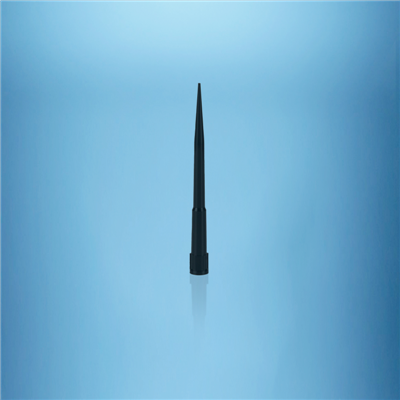

If your experiment needs to avoid cross contamination or higher sterility conditions, filter tips are a good choice. This type of tip is equipped with a filter membrane on the top, which can effectively prevent liquid from splashing or contacting with the air, thereby preventing the sample from contaminating the air. Filter tips are usually used in experiments that are extremely sensitive to contamination, such as PCR, RT-PCR, and genetic analysis. In addition, tips with filter membranes can effectively reduce the risk of cross contamination and are an indispensable assistant in some high-precision experiments.
In some experiments, when dealing with viscous liquids or very small samples, conventional tips may not be able to completely absorb all the liquid. At this time, low-adsorption tips are particularly important. Their inner walls are specially treated to minimize the adhesion of liquids and ensure that the amount of liquid transferred each time is more accurate. Low-adsorption tips are particularly suitable for experiments that require high precision, such as enzyme reactions and protein extraction.
Finally, it is critical to choose tips according to the specific type of experiment. Different experiments have different requirements for tips. For example, when conducting PCR experiments, in order to avoid sample contamination, it is more appropriate to choose filter tips. For experiments with sterile operations such as cell culture, it is best to choose disposable tips to avoid the introduction of exogenous bacteria or contaminants. When performing high-throughput analysis, choosing multichannel tips that are highly compatible with pipettes can improve operational efficiency and accuracy.
In general, the selection of suitable pipette tips should be based on a comprehensive consideration of factors such as the liquid volume, properties, accuracy requirements, and whether there is a risk of contamination in the experiment. Only in this way can the smooth progress of the experiment be ensured and reliable results can be obtained.
3. Compatibility with pipettes
The compatibility of the pipette tip with the pipette directly affects the accuracy of liquid transfer and the convenience of operation. If the tip and the pipette are incompatible, it may cause liquid leakage or poor sealing, thus affecting the experimental results.
Different brands of pipettes and tips may have different interface designs, resulting in the tip not being able to perfectly fit the interface of the pipette. Therefore, it is best to choose a tip of the same brand as the pipette to ensure the sealing and accuracy of liquid transfer. For some high-precision pipettes, manufacturers usually recommend the use of special tips to ensure optimal performance.
For multichannel pipettes, special multichannel tips are required. These tips are suitable for high-throughput experiments and ensure the accuracy when multiple samples are processed simultaneously.
If you choose a universal tip, be sure to make sure that its size and pipette interface are perfectly matched to avoid incompatibility issues. Check the connection between the tip and the pipette regularly to ensure that it is firmly installed to avoid falling off or liquid leakage.
In summary, the compatibility of the pipette tip with the pipette is crucial, and choosing the right tip can improve the accuracy and efficiency of the experiment.
4. Disposable vs. reusable tips
Disposable pipette tips are suitable for experiments with high precision and strict sterility requirements, such as PCR, genetic analysis and cell culture, because they are convenient and fast and avoid cross contamination. They are especially important when sample contamination needs to be avoided. Reusable pipette tips are suitable for long-term, large-scale experiments with low contamination risks, such as routine liquid transfer and sample dilution. They are economical and environmentally friendly, suitable for laboratories with limited budgets, but they need to ensure thorough cleaning and disinfection. When choosing, decisions should be made based on factors such as experimental needs, contamination risks and budget.
5. Precautions for storage and use of tips
You may not realize that improper storage and use of pipette tips can quietly affect the accuracy and reliability of your experimental results. Even a small tip can ruin your experiment if not handled properly. So how can you ensure that the tips are kept in the best condition and your experiment goes smoothly? Next, we will reveal some key storage and use precautions for you.
- 1. Storing tips: Tips should be stored in a dry, cool place away from direct sunlight and humid environments. When storing, make sure they are in clean packaging and away from contamination sources to prevent dust or bacteria from entering.
- 2. Using tips: Before use, check that the tips are intact, ensure that the tips are properly installed on the pipette, and avoid overloading. Replace with new tips every time you change samples to prevent cross contamination. Keep the tips and laboratory bench clean during operation to avoid contamination.
- 3. Special attention to disposable tips: Discard disposable tips immediately after use to avoid reuse. Make sure the tip packaging is intact and avoid storing it in high temperature environments to prevent the tip from deformation or damage.
6. Conclusion
Pipette tips may seem simple, but they play a vital role in the accuracy and reliability of experiments. Proper storage and use of tips can not only avoid cross-contamination and ensure the accuracy of experimental data, but also extend the service life of the tips. When choosing tips, choosing the right type according to the experimental needs and keeping the tips clean and sterile are basic skills that every laboratory worker must have. By mastering these details, you can effectively improve the efficiency of the experiment, reduce errors, and ensure that every experiment can proceed smoothly. Only by paying attention to every small link can you achieve greater success in scientific research.