






Serological pipettes are important tools widely used in biological laboratories, medical institutions and the pharmaceutical industry. Although the global market is dominated by well-known brands such as Eppendorf, Gilson and Thermo Fisher, there are still many small and medium-sized manufacturers occupying a place in specific markets.
This report will focus on the world's top ten less well-known but still market-competitive serological pipette manufacturers, analyze their company background, main product features and possible technical shortcomings, to help buyers better choose suppliers.
Content
1.Zhejiang Biorear Biotechnology Co.LTD (China)
2. BioSerum Instruments (Germany)
3. MediTech Pipetting Solutions (UK)
4. PipetLab Systems (France)
5. AccuFlow Scientific (Canada)
6. SerumTek Manufacturing (Japan)
7. NanoDispense Biotech (Singapore)
8. MedPipette Innovations (India)
9. PrecisionLab Tools (Australia)
10. EcoPipette Solutions (China)
1.Zhejiang Biorear Biotechnology Co.LTD (China)
Zhejiang Biorear Biotechnology Co.LTD is a company focusing on the research and development, manufacturing, sales and service of high-tech products in the fields of life sciences and clinical diagnosis. The company is committed to providing high-quality consumables to customers around the world, and has made significant progress in the fields of special processing equipment, optical testing systems, and stability impact systems that simulate special environments. Through continuous innovation and technological progress, we has successfully developed several fully automatic inspection instruments, which can provide accurate quality monitoring and measurement solutions for different products and application scenarios.

Our Products

Sterile Serological Pipettes
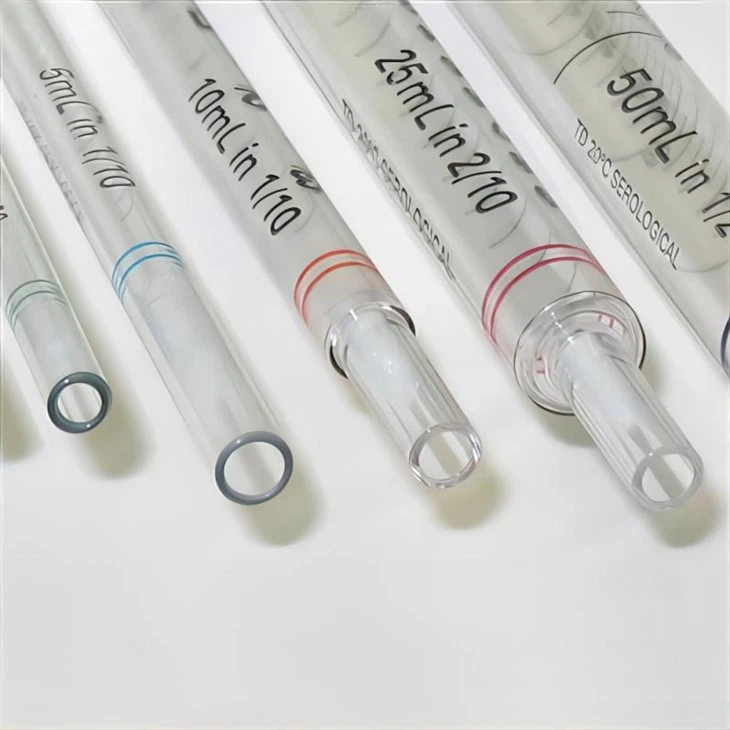
Thermo Serological Pipette

Graduated Serological Pipette
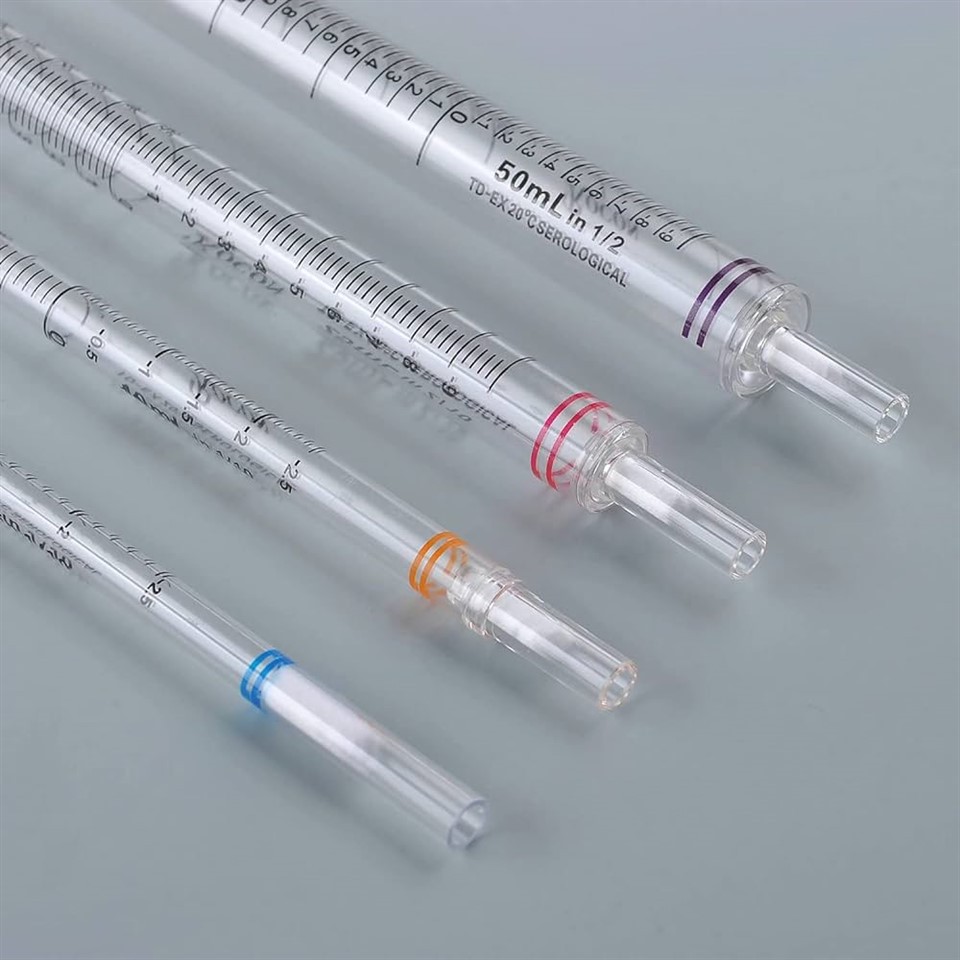
10 Ml Serological Pipette
Our company specializes in the professional manufacturing of custom serological pipette products. We are committed to providing high-quality laboratory consumables tailored to meet the specific needs of our customers worldwide. Our serological pipettes are designed with precision and versatility in mind, ensuring accurate and reliable performance in a variety of laboratory applications.
We offer a wide range of customization options to cater to different requirements, including varying capacities, graduation markings, and packaging preferences. Our pipettes are made from high-quality, medical-grade polystyrene material, ensuring superior clarity, chemical resistance, and durability. Each pipette undergoes stringent quality control processes and is certified to be free from RNase, DNase, and pyrogen contamination, providing a safe and sterile environment for your experiments.
Application of Our products in clinical laboratories:

Microbiology Testing
Antibiotic Susceptibility Testing:
Determining the sensitivity of pathogens to antibiotics is an important task in clinical laboratories. This product is used to accurately distribute culture media, samples, and antibiotic solutions to ensure the standardization of tests and the reliability of results.
Bacterial Culture and Identification:
Samples need to be diluted and transferred during bacterial culture and identification. This product can accurately perform these operations to ensure the accuracy of culture and identification.

Clinical Chemistry Analysis
Electrolyte and Metabolite Testing:
The detection of electrolytes (such as sodium, potassium, calcium, etc.) and metabolites (such as lactate, lactate dehydrogenase, etc.) is essential for evaluating the patient's metabolic status and organ function. This product ensures high precision in sample processing and reagent distribution to ensure the accuracy of test results.
Toxicology Analysis:
Toxicology testing is used to monitor and analyze the presence and concentration of toxins in and outside the body. This product can accurately distribute samples and reagents to ensure high sensitivity and accuracy of toxicology analysis.

Sample Preparation and Preservation
Plasma and Serum Separation:
In many tests, whole blood samples need to be centrifuged to separate plasma or serum. This product is used to accurately transfer supernatant to avoid contamination by cells and other components.
Sample dilution and mixing:
Many clinical tests require sample dilution and mixing. This product can accurately perform these steps to ensure the dilution ratio and mixing uniformity, and improve the reliability of test results.
Materials and Advantages of Our products
Olypropylene material:
Most of them are made of polypropylene, which has excellent chemical stability and corrosion resistance. Polypropylene is not easily corroded by most chemicals and is suitable for liquid operations in various biochemical and biochemical experiments.
Transparency:
The tube body has high transparency, which is conducive to users to observe and control the liquid volume, ensuring accurate distribution and suction.
Non-toxicity:
Polypropylene material is non-toxic and will not release harmful substances into the liquid being operated, ensuring the purity and reliability of the experimental results.
High temperature resistance:
Polypropylene has good heat resistance and can withstand high temperature sterilization to ensure the sterility of the product.
Strength and durability:
The tube body is designed to be sturdy, strong in pressure resistance, not easy to deform or break, and suitable for long-term use and high-frequency operation.
Compliance with industry standards:
The manufacturing of the products complies with ISO and other relevant industry standards to ensure product quality and performance stability.
2. BioSerum Instruments ( Germany)
Company Background: BioSerum Instruments was founded in 2009 and is located in Munich, Germany. It mainly provides high-precision laboratory pipetting equipment for the European market.
Product Features: Its serological pipettes have excellent scale accuracy and are made of chemically resistant materials, suitable for high-demand experimental environments.
Technical defects: Due to the small production scale, its product supply chain is long and the delivery cycle is relatively long, which affects large-scale procurement.
3. MediTech Pipetting Solutions (UK)
Company Background: MediTech was founded in 2015 and is headquartered in Cambridge, UK. It focuses on pipetting solutions for the medical and biotechnology industries.
Product Features: Provides electronic pipettes that are programmable and compatible with a variety of experimental needs to improve experimental efficiency.
Technical defects: The battery life of electronic pipettes is relatively short, and some users report that the operating interface is not intuitive enough.
Company Background: PipetLab Systems was founded in 2010 and is headquartered in Lyon, France. It focuses on the research and development of reusable and environmentally friendly serological pipettes.
Product Features: The product uses degradable materials, meets environmental standards, and provides a variety of replaceable tips to reduce long-term use costs.
Technical defects: Environmentally friendly materials have poor high temperature resistance, are easily damaged during high temperature sterilization, and have limited applicability.
5. AccuFlow Scientific (Canada)
Company Background: AccuFlow Scientific was founded in 2013 and is headquartered in Toronto, Canada. It mainly supplies high-precision laboratory pipettes for the North American market.
Product Features: Its products are made of high-quality polystyrene (PS) materials to ensure transparency and clarity of scales, while providing a variety of capacity options.
Technical defects: Compared with mainstream brands, its pipettes are slightly inferior in performance in handling high-viscosity liquids.
6. SerumTek Manufacturing (Japan)
Company Background: SerumTek Manufacturing was founded in 2011 and is located in Osaka, Japan. It mainly provides precision liquid handling equipment for the Asian market.
Product Features: The products are highly accurate and widely used in cell culture and molecular biology experiments.
Technical defects: Some users reported that the aspiration rate of their pipettes decreased after long-term use, affecting the stability of the experiment.
7. NanoDispense Biotech (Singapore)
Company Background: NanoDispense Biotech was founded in 2014 and is headquartered in Singapore. It focuses on micro-pipetting technology and precision laboratory instruments.
Product Features: It provides nano-level serological pipettes, which are suitable for high-precision laboratory needs, such as PCR analysis and genetic research.
Technical defects: The price is high and the scope of application is relatively limited compared to traditional pipettes.
8. MedPipette Innovations (India)
Company Background: MedPipette Innovations was founded in 2016 and is located in Mumbai, India. It mainly serves laboratories and hospitals in South Asia and the Middle East.
Product Features: With affordability as its main advantage, it provides ISO-standard serological pipettes suitable for laboratories with limited budgets.
Technical defects: Compared with European and American products, its durability and scale accuracy are slightly inferior, suitable for basic experimental applications.
9. PrecisionLab Tools (Australia)
Company Background: PrecisionLab Tools was founded in 2012 and is headquartered in Sydney, Australia. It mainly provides high-quality laboratory instruments for the Oceania market.
Product Features: Made of chemical-resistant materials, it is suitable for a wide range of biological research and industrial applications.
Technical defects: In low-temperature environments, its plastic pipettes tend to become brittle, affecting its service life.
10. EcoPipette Solutions (China)
Company Background: EcoPipette Solutions was founded in 2017 and is headquartered in Suzhou, China. It is committed to the research and development of environmentally friendly and cost-effective laboratory consumables.
Product features: Made of recyclable plastic materials, and providing mass customization services, suitable for bulk purchases by laboratories and hospitals.
Technical defects: Its product line is relatively new, and there is relatively little market feedback. More long-term user data is needed to verify its reliability.
FAQ
1. How is the sterility of this product guaranteed?
The sterility of this product is ensured by strict production processes and professional aseptic processing. First, the production process uses high-quality polypropylene materials, which have excellent corrosion resistance and chemical stability and are not easily corroded by contaminants. Secondly, all pipettes undergo a strict aseptic processing procedure after production, usually through high-temperature steam sterilization (autoclaving) or other aseptic processing methods to ensure that the product remains sterile before packaging. Each batch of products is tested for sterility performance and quality control to ensure that the product meets industry standards and customer expectations.
2. What is the service life of this product? Can they be reused?
This product is designed for single use and reuse is generally not recommended. This is to avoid cross contamination and ensure the accuracy of experimental results. After each use, it should be discarded and a new pipette should be used to avoid contamination problems in the experiment. Although they are made of durable polypropylene material and have certain strength and durability, the recommended use is single use to ensure the best experimental results and data reliability.
3. What laboratory applications are these pipettes suitable for? What is their capacity range?
This product is widely used in life science laboratories to dispense, aspirate and transfer liquid samples. Their capacity ranges from 1 ml to 50 ml, providing options for different experimental needs. Common applications include cell culture, molecular biology experiments, clinical diagnostics and various chemical and biochemical analyses. Whether in academic research, pharmaceutical development or clinical diagnostics, these pipettes can provide precise and reliable liquid dispensing functions.
4. Are there any special operating tips or precautions when using these pipettes?
When using this product, there are several operating tips and precautions that need special attention. First, make sure to check whether the packaging is intact before use to confirm that the sterility is not broken. Secondly, aseptic techniques should be used during operation to avoid contamination of the internal liquid or external surface. In addition, the manufacturer's instructions should be followed before use to ensure correct aspiration and discharge methods to avoid air bubbles and droplets. Finally, it should be discarded immediately after use to avoid cross-contamination and possible experimental errors.
5. How to choose the right pipette capacity and model to meet my experimental needs?
Choosing the right Pipettes mainly depends on your experimental needs and operating habits. First, consider the range of liquid volumes you typically handle. If you often handle small volumes of liquid, such as cell culture or PCR reaction mixtures, a smaller capacity pipette (such as 1 ml or 5 ml) may be more appropriate. If you need to handle a large number of liquid samples or perform larger volume distributions, a larger capacity pipette (such as 25 ml or 50 ml) may be more practical. Second, consider the precision requirements and operating comfort in your experiment, and choose the appropriate model and design to ensure the efficiency and accuracy of the experiment.
6. How are these pipettes packaged? What is their shelf life?
This product is usually sold in individual packages or combination packages to ensure that it remains sterile before use. Individually packaged pipettes are more suitable for laboratory environments that require frequent use and strict sterility requirements. Each packaging unit is usually marked with an expiration date, and it is recommended to use it within the expiration date to ensure optimal performance and sterility protection. The packaging design is not only convenient for storage and use, but also protects the pipettes from contamination and damage from the external environment, especially during long-term storage.
7. If I have any questions or need support about these pipettes, how can I contact customer service?
If you have any questions or need support when using this product, we provide a variety of contact methods to facilitate your assistance. You can contact our customer service team directly through our official website or the contact information provided on the product packaging. Our professional team will wholeheartedly provide you with technical support, product information and solutions to ensure that your experiment is carried out smoothly and with satisfactory results. We are committed to providing you with the best customer experience and technical support, so that you can have a deeper understanding and confidence in our products.