







Thermo Serological Pipette| Finetech Filter
1.Thermo Serological Pipette Materials
Usually made of high-quality polystyrene (PS), which is durable and unbreakable. Polystyrene is a polymer material widely used in laboratory consumables and is popular for its excellent transparency and mechanical properties. Its transparency allows researchers to clearly observe the volume and state of the liquid, ensuring the accuracy and reliability of experimental data. At the same time, the mechanical properties of polystyrene, including its impact resistance and abrasion resistance, ensure the long-term durability of the pipette during multiple uses, reducing the loss and replacement frequency in laboratory operations.
Some product may also be made of polypropylene (PP). This material shows higher chemical resistance in chemical experiments, especially for handling solutions with strong acidity and alkalinity. Polypropylene is not only resistant to high temperatures, but also has good tolerance to many chemical reagents, and can maintain stability and reliability in harsh experimental environments. Compared with polystyrene, polypropylene has superior heat resistance, which allows pipettes made of polypropylene to be reused under high-temperature sterilization conditions without deformation or degradation, thereby extending their service life.
In the laboratory, pipettes are commonly used as liquid transfer tools, and the material selection directly affects the accuracy and safety of the experiment. Thermo's pipettes are not only carefully selected in materials, but also strictly controlled in the design and manufacturing process to ensure that each pipette can provide stable performance during use. The application of high-quality polystyrene and polypropylene materials not only improves the physical properties of the pipette, but also enhances its adaptability in different experimental environments, meeting various scientific research needs.
2.Clear, precise graduations
(1)Clarity and Precision:
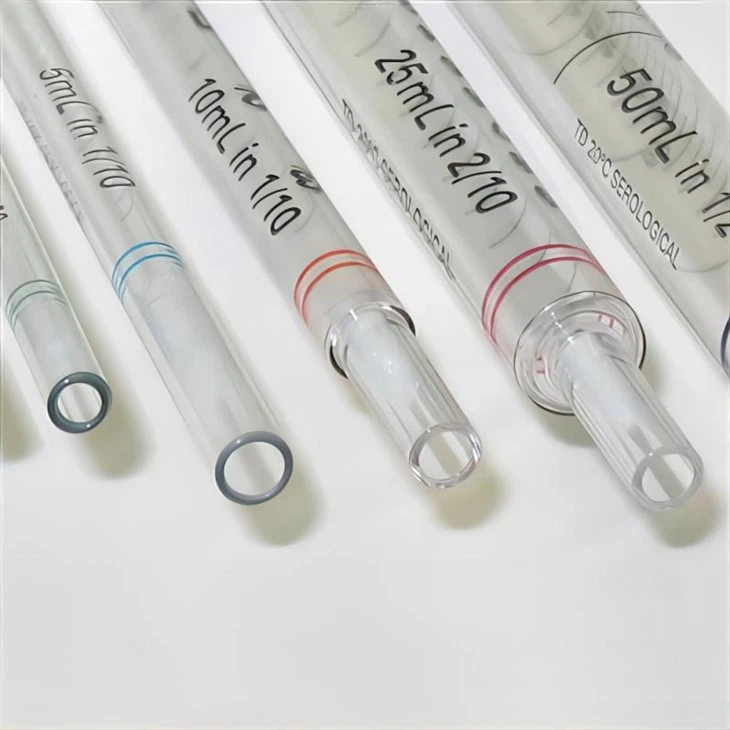
High-Visibility Markings: The graduations on them are designed for high visibility. They are printed using high-contrast ink, which stands out against the transparent background of the pipette. This clarity ensures that users can easily read the measurements, reducing the likelihood of errors during liquid handling.
Precision Engineering: Each graduation mark is precisely calibrated to ensure accurate volume measurements. This precision is critical in scientific experiments where even small deviations in liquid volumes can significantly impact the results. The exact spacing and alignment of the graduations are achieved through advanced manufacturing techniques, guaranteeing consistency across different pipettes.
(2)Color-Coded Graduations:
Ease of Identification: To facilitate quick and easy identification of the pipette's capacity, the graduations are often color-coded. Different pipette volumes are assigned specific colors, making it simple for users to select the correct pipette at a glance. For example, a 5 mL pipette might have blue graduations, while a 10 mL pipette could feature orange graduations. This color-coding system streamlines workflow in busy laboratories, reducing the time spent searching for the appropriate pipette.
Standardization: The use of standardized color codes across different pipette brands and models ensures uniformity in the laboratory. This standardization is particularly beneficial in multi-user environments where different researchers might be working simultaneously, as it minimizes confusion and potential errors.
(3)Durability of Markings:
Permanent Ink: The graduations on them are printed with durable, permanent ink that resists fading or wearing off, even with repeated use and exposure to various laboratory conditions. This longevity ensures that the pipettes remain reliable and accurate throughout their lifespan.
Chemical Resistance: In addition to being permanent, the ink used for the graduations is also resistant to chemicals commonly used in laboratories. This resistance prevents the markings from being degraded by solvents or reagents, maintaining their readability and accuracy over time.
Application of Thermo pipettes in clinical laboratories:

Hematology Tests
Clinical blood test:Clinical blood test is one of the most common tests in clinical laboratories, used to evaluate the number of red blood cells, white blood cells and platelets in the blood. Accurate liquid handling is essential for the preparation of blood samples. This product can ensure the accurate distribution of blood samples, reduce errors and improve the reliability of test results.
Erythrocyte Sedimentation Rate Assay:
The erythrocyte sedimentation rate (ESR) is another commonly used hematology test used to diagnose and monitor inflammation, infection and other pathological conditions. This product is used to accurately distribute blood samples and anticoagulants to ensure the accuracy of the test.

Biochemical Tests
Clinical laboratories:Clinical laboratories often perform blood glucose and cholesterol tests, which require accurate liquid handling of serum or plasma. This product can ensure the accurate distribution of reagents and samples to obtain accurate test results.
Liver and Renal Function Tests:
Tests that evaluate liver and kidney function (such as ALT, AST, urea, creatinine, etc.) also require accurate sample handling. The high precision and reliability of this product can ensure the accuracy and repeatability of these key tests.

Immunological Testing
ELISA:ELISA is a widely used technique for detecting antigens and antibodies, and is used in the diagnosis of various diseases. This product plays a key role in the distribution of samples and reagents, ensuring the precise amount of liquid in each well, making the results more reliable.
Flow cytometry:
Flow cytometry is used to analyze and sort cell populations, and is often used for immunophenotyping and cell function research. This product is used to accurately handle cell suspensions and dyes to ensure the accuracy of experiments.
How to use the Thermo pipette
Choose the right pipette tip:
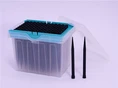
This product is usually equipped with a variety of specifications and types of pipette tips, such as volumes ranging from microliters to milliliters. When choosing a pipette tip, you need to decide based on the volume of liquid required for the experiment. Generally, smaller-volume pipette tips are suitable for handling micro-volumes, while larger-volume ones are suitable for handling larger samples.
Prepare the pipette:
Before using the pipette, make sure it is calibrated and clean. The accuracy of the pipette depends on its internal precision mechanism and external maintenance status. Routine cleaning and calibration are usually required to ensure accurate liquid aspiration and release.
Insert the pipette tip:
Insert the selected pipette tip into the pipette tip connection. Make sure that the pipette tip is tightly connected to the pipette tip to prevent liquid leakage or inaccurate aspiration.
Aspirate liquid:
Insert the pipette tip into the liquid to be processed and then perform the aspiration operation. The aspiration operation can be performed in two ways:
Press and draw: Gently press the pipette down until the tip is completely immersed in the liquid, then release the pressure and the liquid will enter the pipette tip.
Push-Push: After the pipette tip has been immersed in the liquid, the liquid is drawn into the tip by appropriate pushing. This method can more accurately control the volume of liquid sucked.
Release Liquid:
Insert the pipette tip into the target container and then release the liquid by pushing. Make sure the pipette tip is fully inserted into the target container to avoid liquid leakage or residue in the tip.
Cleaning and Disinfection:
After each use of the pipette, it should be properly cleaned and disinfected. This can be done by using appropriate cleaning agents and disinfectants. Cleaning includes not only the external pipette surface, but also the details of the pipette tip and the inside of the tip. Regular maintenance and care can extend the life of this product and ensure accurate operation.
Packing
-

Boxed
-

Stacked box
-


You may also want to know
1. What are the applicable scenarios of this product?
This product is suitable for a variety of scenarios in the laboratory that require precise pipetting, including but not limited to experimental operations in the fields of molecular biology, cell biology, microbiology, etc. It can accurately transfer liquid from one container to another to ensure the accuracy and repeatability of the experiment. It is commonly used in experiments such as PCR, ELISA, cell culture, protein analysis, etc.
2. How accurate is this product?
This product has high precision and can operate in the range of microliter or even sub-microliter liquid volumes. Typically, its accuracy can reach one thousandth of a milliliter or higher, which is essential for experiments that require precise control of liquid volume. Precise pipetting capabilities ensure the accuracy and repeatability of experimental results.
3. Is the use of this product complicated?
This product is designed to be easy to operate, but it may take some time to familiarize yourself with its operation when you use it for the first time. Generally speaking, a pipette consists of two basic parts: an aspirator and a dispenser. Users need to master the correct aspiration and dispensing techniques and the operation buttons of the pipette. Although beginners may need some practice, once familiar with it, it is very efficient to use.
4. How to choose the right model for this product?
The model of this product should be determined by the experimental needs. Key factors include the size of the required pipetting range, the accuracy requirements, the frequency of use, and the operator's preference. Generally speaking, there are single-channel and multi-channel pipettes to choose from, with single-channel being suitable for individual operations and multi-channel being suitable for situations where multiple samples need to be operated simultaneously.
5. What are the main features of this product?
This product is known for its high precision and reliability and is suitable for a variety of liquid handling tasks. The main features include:
High-quality materials: Usually made of high-quality polystyrene or polypropylene, it has excellent chemical resistance and mechanical strength.
Clear scale: The scale is printed with high-contrast permanent ink to ensure readability and durability.
Multiple volumes: A variety of volume options from 1 mL to 50 mL are available to meet different experimental needs.
Sterilized packaging: Most pipettes are sterilized by gamma ray and individually packaged to maintain sterility.
Strong compatibility: The design is compatible with a variety of standard pipette controllers and auxiliary devices.
Color coding: Pipettes of different volumes are color-coded for quick identification.
6. What are the specific applications of this product in biochemical testing?
In biochemical testing, this product is used for a variety of important analyses, such as:
Blood glucose testing: Precisely dispensing serum or plasma samples and reagents to ensure the accuracy of blood glucose level measurement.
Cholesterol testing: Precise liquid handling is also required to prepare samples and reagents to ensure the reliability of test results.
Liver function tests: Such as ALT and AST tests, enzyme reaction reagents need to be accurately dispensed to obtain accurate liver function assessment results.
Renal function tests: Such as urea and creatinine tests, this product is used to accurately pipette and dispense samples to ensure measurement accuracy.
Hot Tags: thermo serological pipette, China, suppliers, manufacturers, factory, custom, wholesale, for sale, 50 L Pipette Tip, Tip Comb, Red PCR Tubes, Round Deep Well Plate, Lab Pipette Tip, plastic PCR Tubes


