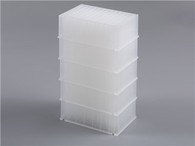





deep well tissue culture plates
Deep well design: The plate is designed with multiple deep wells, usually deeper than traditional culture plates. This deep-well design increases the culture area, allowing researchers to achieve high cell density in a limited space. This is particularly important for applications such as high-throughput screening and drug testing, which can significantly improve experimental efficiency.
Transparent Properties: The transparent or translucent appearance of deep-well tissue culture plates allows researchers to easily observe the status of cultures without opening the plates. This design reduces the time the sample is exposed to the external environment, thereby reducing the risk of contamination and ensuring the sterility and accuracy of cell culture.
High temperature sterilization capability: This type of culture plate can withstand high temperature sterilization, ensuring effective sterilization before and after use. This is crucial in biological laboratories, as a sterile environment is key to successful cell culture. High temperature sterilization will not cause the material to deform or release harmful substances, ensuring the safety of the experiment.
Wide range of applications: These plates are suitable for the culture of various cell types, including adherent cells and suspension cells. It is widely used in biotechnology, drug development and basic research, especially in the study of cell proliferation, differentiation and drug response.
High-throughput experimental support: The design of this product is particularly suitable for high-throughput experiments and can process multiple samples at the same time, greatly improving experimental efficiency and convenience of data collection. This makes deep-well tissue culture plates an indispensable tool in modern biological research.
Material composition and features

These plates are usually made of high-quality polypropylene (PP) or polystyrene (PS) materials. These materials are known for their excellent chemical resistance and can effectively resist various chemical reagents and solvents commonly used in laboratories, including acids, alkalis and organic solvents. This chemical resistance ensures that during the cell culture process, the cells stored in the culture plate will not react adversely with the materials, thereby maintaining the activity and stability of the cells. In addition, both polypropylene and polystyrene have good biocompatibility, which enables cells to grow well during the culture process, reduces variables in the experiment, and ensures the accuracy of the experimental results.
The low water absorption of these materials is also a major advantage of these plates. The low water absorption property can effectively reduce the evaporation loss of samples during the culture process, help maintain a constant concentration of the culture medium, and thus improve the reliability of the experiment. This feature is particularly important in experiments with long-term culture, which can effectively avoid unstable cell growth caused by changes in the concentration of the culture medium. In addition, the transparent nature of these plates allows researchers to intuitively observe the growth status of cells without opening the culture plate, which not only reduces the time that the samples are exposed to the external environment, reduces the risk of contamination, but also improves work efficiency.

Application areas of deep well tissue culture plates

Genetic Engineering Applications
In the field of genetic engineering, this product is widely used in transfection experiments to help scientists observe gene expression and function. Transfection refers to the introduction of exogenous DNA into cells in order to study its role in the cell. By culturing transfected cells in deep wells, researchers can effectively evaluate the effects of genes on cell growth, differentiation and their physiological functions. The deep well design of this culture plate not only provides a larger space for cell growth, but also supports high cell density culture, which is suitable for experiments that require a large number of cells for gene function testing. Researchers can transfect different genes in different wells to observe the effects of multiple genes at the same time. This high-throughput experimental design greatly improves experimental efficiency. In addition, the transparent nature of this product allows researchers to monitor the status of cells in real time without interfering with the experiment, further enhancing the controllability of the experiment and the accuracy of the data.
Vaccine Development Applications
This product also plays an important role in the vaccine development process. Vaccine development usually requires testing the effectiveness and safety of antigens in cell culture. The design features of these plates enable researchers to test multiple antigens in one experiment, improving the efficiency and yield of the experiment. By culturing different samples in multiple deep wells, researchers can quickly evaluate the effects of various antigens on cellular immune responses. The high capacity and high density of this culture plate are particularly suitable for large-scale vaccine production needs, making the cell culture process more efficient.

Maybe you have the following questions
Q: What is the material of this culture plate?
A: This product is usually made of high-quality polypropylene or polystyrene. These materials have excellent chemical resistance and can withstand a variety of chemical reagents and solvents commonly used in laboratories, ensuring that they will not react with samples during cell culture, thereby maintaining the stability and safety of samples.
Q: What is special about its hole design?
A: The hole design of this product is deeper, which increases the available culture area and cell density. This design enables high-throughput experiments in limited space, which is particularly suitable for drug screening and cell response research. The deep hole structure also promotes the exchange of nutrients and waste discharge of cells, improving the growth efficiency of cells.
Q: Can this product withstand high-temperature sterilization?
A: Yes, this product has good thermal stability and can withstand high-temperature sterilization process without deformation or release of harmful substances. This is crucial when handling biological samples, ensuring the reliability of a sterile environment for cell culture.
Q: What impact does its transparency have on the experiment?
A: The transparent material allows researchers to easily observe the status of the culture without opening the plate. This design reduces the time that the sample is exposed to the external environment, thereby reducing the risk of contamination and improving work efficiency.
Q: What types of cells are suitable for this product?
A: This culture plate is suitable for many types of cells, including adherent cells and suspended cells. This makes it widely used in biotechnology, drug development and basic research, especially in the study of cell proliferation and differentiation.
Q: What is the capacity of this culture plate?
A: This product is usually designed with multiple deep wells, each of which can accommodate an appropriate amount of culture medium, suitable for high-throughput experiments. Such a design can effectively utilize space, meet the storage and culture needs of a large number of samples, and provide convenience for scientific research.
Q: How to deal with this culture plate after use?
A: The used culture plate can be handled according to the laboratory's waste management regulations. Due to the chemical resistance of its material, it can usually be sterilized at high temperature and disposed of in accordance with local biohazardous waste treatment requirements to ensure environmental safety.
Hot Tags: deep well tissue culture plates, China, suppliers, manufacturers, factory, custom, wholesale, for sale, Pcr Tubes, 96 well Pcr Microplate, 2 2ml 96 deep well plate, Hard Shell 96 Well Pcr Plate, Sterile Pipette Tip, Half Skirt Pcr Microplate