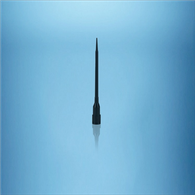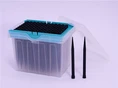




The pipette tip is made of high-transparency medical-grade polypropylene (PP), and the inner wall is hydrophobically modified to ensure low adsorption and high precision. Some models are also equipped with a hydrophobic filter to further prevent aerosol contamination. The product supports universal interfaces and is compatible with mainstream brand pipettes such as Gilson, Eppendorf, and Thermo Fisher.
-
Anti-wall design: greatly reduce sample residue and improve aspiration/blowing efficiency
-
Improve accuracy and repeatability: especially suitable for micro-operations and low-concentration samples
-
No adsorption of protein/DNA/cell liquid: suitable for high recovery rate experimental scenarios
-
Compatible with multi-brand pipettes: universal interface, easy to adapt to common experimental equipment
-
Support pollution-free experimental needs: some versions pass enzyme-free/pyrogen-free detection
-
High transparency: visual operation, reducing the risk of errors
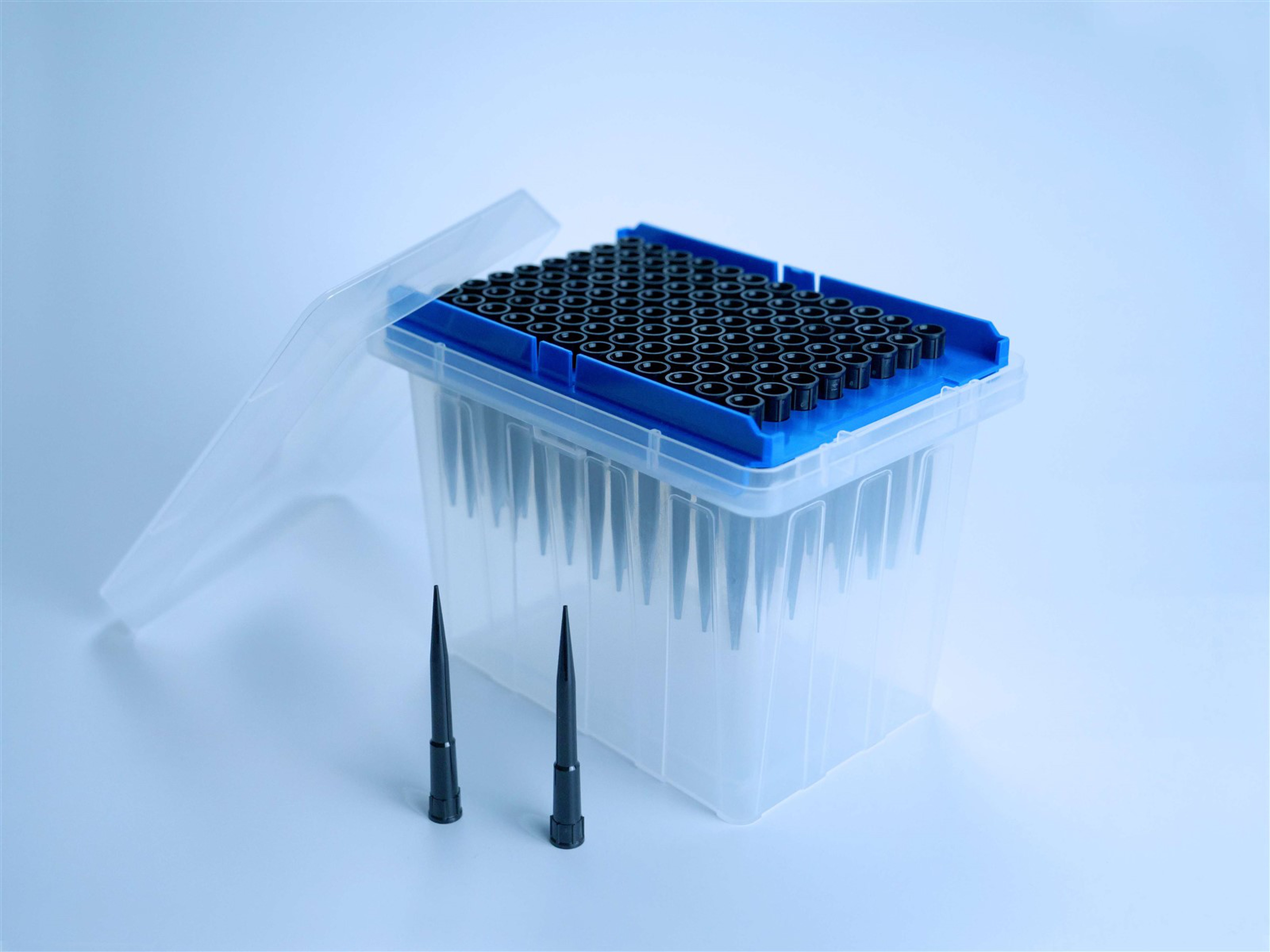
| Capacity range | 50μl, 300μl, 1000μl |
| Material | High-purity polypropylene + hydrophobic treatment layer |
| Surface performance | High contact angle (usually ≥ 110°), droplets slide easily |
| Sterilization status | Pre-sterilized or non-sterilized optional |
| Cleanliness level | DNase/RNase-free and pyrogen-free optional |
| Interface type | Universal type, compatible with multiple brands of pipettes |
| Optional structure | With filter cartridge / without filter cartridge |

- It is recommended to pre-wet the tip before aspiration (i.e. pre-aspirate once and then blow out) to further reduce sample residue.
- For low-volume samples, it is recommended to use a hydrophobic tip with a scale and operate with a digital pipette.
- If used for volatile solutions, please transfer immediately after aspiration to avoid changes in the tip surface affecting the operation.
- It is recommended to use pre-sterilized packaging to ensure that the cleanliness meets the requirements of molecular-level experiments.
- Do not reuse to prevent damage to the hydrophobic coating and cross-contamination of samples.
- Keep dry during storage and avoid ultraviolet radiation and high temperature and humidity environments.
Hydrophobic Pipette Tip manufacturer
Cutting-edge technology strength
Focusing on the fields of life sciences and clinical diagnosis, it has the ability to develop automated testing instruments and special environment simulation technology, providing high-precision quality monitoring solutions.
Full industry chain coverage
Integrating R&D, manufacturing, and sales services, from consumables to special processing equipment and optical detection systems, providing one-stop product and technology solutions.

Strict quality assurance
Adopting advanced technology and strict quality control standards to ensure the reliability and stability of consumables under extreme conditions, and meet the high standards of global customers.
Innovation-driven development
Continuously break through special process equipment and automated detection technology to provide cutting-edge products and service support for the fields of life sciences and clinical diagnosis.
FAQ
Are hydrophobic tips suitable for sample transfer before freezing or cryopreservation?
Yes, hydrophobic tips reduce residues and are particularly suitable for recovering high-value samples such as proteins/nucleic acids completely before freezing to avoid loss.
Does hydrophobic treatment change the optical transparency of the tips?
No. High-end hydrophobic treatment technologies (such as plasma activation) do not affect the transparency of the tips, and the liquid surface and bubbles can be clearly observed.
How do hydrophobic tips perform in viscous liquids?
Better performance. For high-viscosity liquids such as glycerol and cell lysate, the hydrophobic inner wall can avoid wall adhesion and improve transfer efficiency.
Are hydrophobic tips suitable for magnetic bead-based nucleic acid extraction?
Very suitable. It can significantly reduce magnetic bead residue, improve elution efficiency and reduce subsequent experimental interference.
Do you need to consider pipette calibration when using hydrophobic tips?
Yes. Although the tips reduce residues and improve accuracy, the pipette body still needs to be calibrated regularly to ensure the reliability of the overall pipetting system.
Are hydrophobic tips advantageous in single-cell experiments?
Yes. Single-cell manipulation is extremely sensitive to sample volume, and hydrophobic tips can minimize cell loss and tip wall adsorption.
Will hydrophobic coatings affect certain enzyme reactions?
High-quality coatings have no effect on enzyme activity. However, it is recommended to conduct preliminary tests for extremely sensitive reactions (such as low-concentration CRISPR enzymes).
In what non-life science scenarios can hydrophobic tips be used?
They can be used for chemical experiments, food analysis, and trace liquid processing in environmental samples, especially for operations that require high recovery rates.
Hot Tags: hydrophobic pipette tip, China, suppliers, manufacturers, factory, custom, wholesale, for sale, 200 L pipette, Disposable Pipette Tip, Lab Pipette Tip, Polypropylene Pipette Tip, Sterile Pipette Tip, Transparent Pipette Tip