


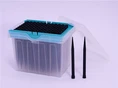





200 micropipette
High precision and high repeatability:
The 200 μL micropipette is designed to provide excellent volume measurement accuracy, ensuring consistent liquid transfer under various experimental conditions. Its accuracy can reach ±1%, which is essential for experiments requiring high precision such as molecular biology and cell biology. High-quality mechanical structure and materials not only improve the durability of the product, but also enable it to maintain high repeatability in each operation. This stability means that experimenters can be confident in the results and reduce the risk of result deviation due to operating errors, thereby ensuring the reliability and repeatability of experimental data.
Ergonomic design:
The design of this micropipette fully considers the user's operating comfort, and adopts an ergonomic handle shape to ensure that there is no hand fatigue during long-term use. The lightweight structure makes the operation more flexible and convenient, suitable for high-intensity laboratory environments. In addition, the micropipette is equipped with an adjustable push rod, and users can adjust the operating force according to their personal grip habits to achieve higher operating accuracy. This flexible design not only improves the user experience, but also effectively reduces liquid transfer errors caused by improper operation.
Wide volume range:
Although the maximum capacity of this product is 200 microliters, its design provides a wide range of volume adjustment from 20 to 200 microliters. This flexibility allows the micropipette to adapt to the needs of different experiments, whether it is high-throughput screening or single-cell experiments, users can easily set the appropriate volume. This adaptability ensures the diversity of experiments and enables researchers to flexibly adjust operations for specific experimental conditions, further improving experimental efficiency.
Reliable performance and durability:
The micropipette is carefully manufactured using high-quality materials to ensure stable performance under frequent use. Its design is optimized to effectively resist the influence of the external environment, such as temperature and humidity changes, so that it can perform well under various experimental conditions. This durability not only extends the service life of the product, but also reduces the maintenance costs of the laboratory, allowing researchers to focus on the experiment itself without worrying about the performance of the tool.
Material composition and features

The main materials of the 200 μL micropipette are high-quality plastic and aluminum alloy, which are carefully selected to ensure that the product is lightweight and durable. The polymer used has excellent chemical resistance and can resist the erosion of common laboratory reagents such as acids, alkalis and organic solvents. This feature not only extends the service life of the pipette, but also maintains its stable performance under a variety of experimental conditions. In addition, the surface of the micropipette has been specially treated to be smooth and easy to clean, effectively reducing the risk of cross-contamination.
In addition to polypropylene, the sealing part of the 250 µl pipette may use special rubber or silicone materials to ensure airtightness when sucking and releasing liquids. This design effectively avoids the generation of bubbles and improves the accuracy and repeatability of measurements. At the same time, the selection of materials also takes into account the characteristics of high temperature and high pressure resistance, so that the pipette can maintain its performance and safety during high temperature sterilization (such as high-pressure steam sterilization). The combined characteristics of these materials enable the 250 µl pipette to show excellent stability and reliability in various experimental environments, becoming an indispensable tool in the laboratory.

Application areas of 200 micropipette
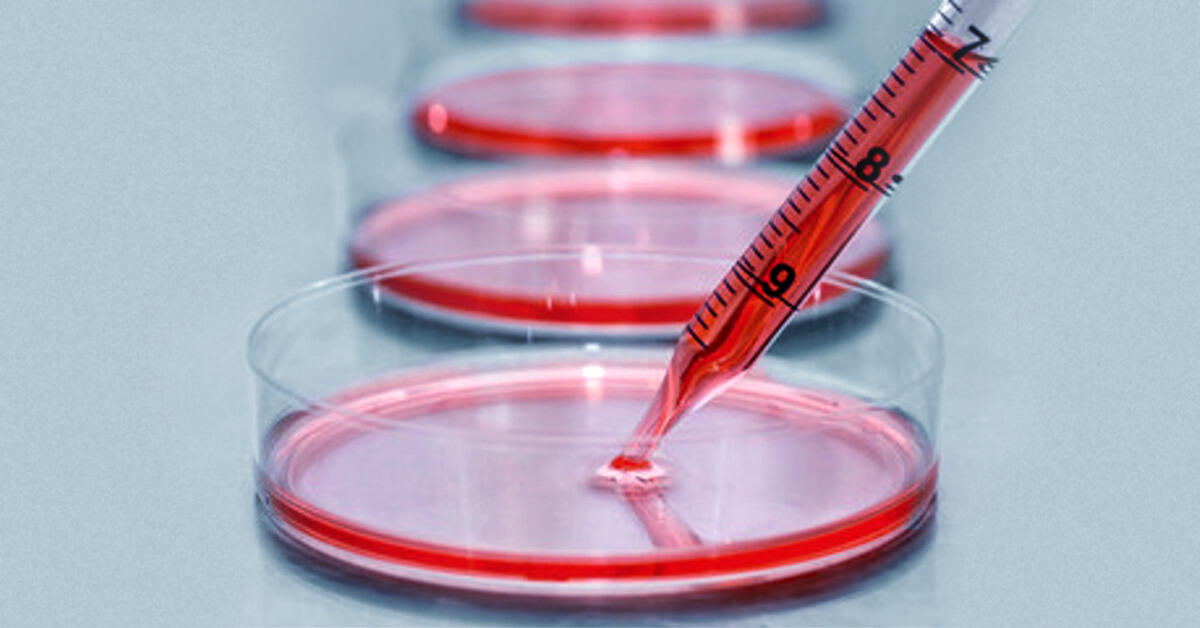
Cell Culture:
The 200 μL micropipette plays an important role in cell culture, mainly used to transfer culture media, drugs and other reagents. During the cell culture process, researchers need to precisely control the amount of each component to ensure that cells grow in the best environment. The volume adjustment function of this micropipette allows users to freely set between 20 and 200 μL, and this flexibility enables it to meet the needs of different cell types and experiments. Through accurate liquid transfer, researchers can adjust the concentration of nutrients and growth factors to promote healthy cell growth and reproduction. In addition, the high repeatability of the micropipette ensures that the amount of liquid transferred each time is consistent, reducing experimental errors caused by improper operation, thereby improving the reliability and repeatability of experimental results.
Immunology Experiments:
In immunology research, the 200 μL micropipette also plays a key role, especially when performing tests such as ELISA (enzyme-linked immunosorbent assay). ELISA is a common technique for quantitative analysis of antibodies and antigens, and accurate liquid transfer is the basis for achieving reliable results. The high precision of the micropipette ensures the accurate ratio between different samples and reagents, thereby improving the sensitivity and specificity of the test. Through its excellent sealing performance, the tool can effectively prevent cross-contamination of samples and ensure the independence of each experiment. In addition, the user-friendly design of the 200 microliter micropipette makes the operation process easier and reduces human errors during the experiment. These characteristics make it an indispensable tool in immunology research, helping scientists to deeply explore the immune response and related disease mechanisms.

Maybe you have the following questions
1. How accurate and repeatable is the device?
Accuracy and repeatability are important parameters for any laboratory equipment. This device uses a high-precision mechanical structure and high-quality materials to ensure consistent volume every time the liquid is pipetted. By measuring the same liquid sample multiple times, its repeatability can be verified, and the error is usually within 1%. This makes the device very suitable for experiments that require high precision, such as molecular biology and cell culture.
2. How to ensure that the sample is not contaminated during use?
In order to prevent cross-contamination, the device is designed with an anti-drip system to reduce liquid residue. In addition, the use of disposable pipette tips is the key to ensuring the purity of the sample, and each replacement of the pipette tip can effectively avoid cross-contamination. This is especially important when handling sensitive samples to ensure the reliability of experimental results.
3. Does it support the processing of various liquid types?
This device is able to handle a variety of liquid types, including viscous liquids and low surface tension liquids. Its adjustable liquid aspiration speed and pressure allow users to adjust according to the specific liquid properties to ensure that the sample is not damaged or bubbles are generated during operation. This flexibility makes it suitable for a variety of laboratory environments.
4. What are the cleaning and maintenance requirements of the device?
Cleaning the device is relatively simple, and it can usually be rinsed with alcohol and ultrapure water. The outer shell design of the pipette makes it easy to wipe, and the internal components can be checked and maintained regularly. In most cases, just make sure to replace the tips and clean the external parts regularly, which reduces the maintenance burden on users.
5. What is the adjustable volume range?
The volume range of the device is from 1 microliter to 200 microliters, and users can adjust it precisely according to their needs. By simply rotating the dial, the required volume can be quickly set. This flexibility makes it suitable for a variety of experiments, from micro-reactions to standard liquid transfers.
6. Is the manual operation of the device convenient?
The design of the device takes ergonomics into consideration, and the shape of the handle is suitable for long-term holding and is not easy to fatigue. In addition, the resistance to pressing the button is moderate, and users can easily operate it with one hand, which greatly improves work efficiency. This is especially important in high-throughput experiments.
7. How cost-effective is the device?
Overall, the device maintains a good balance between performance and price. Its high precision, durability, and ease of use make it competitive among its peers. Although the initial investment is higher, the benefits gained over the long term due to its reliability and reduced maintenance requirements make it a worthwhile investment.
Hot Tags: 200 micropipette, China, suppliers, manufacturers, factory, custom, wholesale, for sale, Disposable Pp Material Plastic Pcr Tubes, Low Binding Pipet Tip, Round well U bottom deep well plate, Hard Shell 96 Well Pcr Plate, Disposable Pipette Tip, Deep Well Plate


