


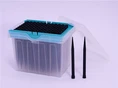




- Made of highly transparent medical grade polypropylene (PP) with good chemical compatibility.
- Made with precision molds to ensure good compatibility and accurate liquid transfer.
- Compatible with mainstream brand pipettes.
- Available in two types: Filter Tip and standard pipette tips.


Sterile Pipette Tips:
Cell culture
Molecular biology experiments
Clinical diagnosis
Aseptic environment operation
Non-sterile Pipette Tips:
General liquid transfer
Teaching laboratory
Industrial use
sterile vs non sterile pipette tip manufacturer
Cutting-edge technology strength
Focusing on the fields of life sciences and clinical diagnosis, it has the ability to develop automated testing instruments and special environment simulation technology, providing high-precision quality monitoring solutions.
Full industry chain coverage
Integrating R&D, manufacturing, and sales services, from consumables to special processing equipment and optical detection systems, providing one-stop product and technology solutions.
Strict quality assurance
Adopting advanced technology and strict quality control standards to ensure the reliability and stability of consumables under extreme conditions, and meet the high standards of global customers.
Innovation-driven development
Continuously break through special process equipment and automated detection technology to provide cutting-edge products and service support for the fields of life sciences and clinical diagnosis.
FAQ
What are sterile tips? How are they sterilized?
Sterile tips are pipette tips that have been effectively sterilized before leaving the factory. They are often used in experiments that require extremely high contamination control, such as PCR, cell culture, and clinical testing. Gamma ray sterilization is usually used to ensure that they are free of DNase, RNase, and pyrogens to avoid contamination of the sample. Each batch must pass sterility validation and comply with ISO 11137 standards.
Can non-sterile tips be used in molecular biology experiments?
It is generally not recommended to use non-sterile tips for molecular biology experiments, especially for highly sensitive experiments such as PCR or RNA operations. Non-sterile tips have not been sterilized and may contain RNase or DNA residues, causing the experiment to fail. It is recommended to use sterile tips to ensure experimental reliability if the budget allows.
What is the main difference between sterile and non-sterile tips?
The main difference is whether they have been sterilized. Sterile tips are sterilized and suitable for experiments with high cleanliness requirements; while non-sterile tips are produced in clean workshops but are not sterilized, and are suitable for daily experiments that do not require high sterility. In addition, the packaging form and price are also different. Sterile tips are usually individually packaged or pre-packed in boxes, which are slightly more expensive.
How to choose the type of tip that suits my experimental needs?
It is very important to choose the type of tip according to the experimental needs. If you are engaged in clinical, biomolecular experiments or any operation that requires high sample purity, you should choose sterile tips; if it is a routine experiment such as teaching, chemical analysis or liquid packaging, non-sterile tips can meet the requirements and are cheaper. We also provide filter cartridge type, anti-aerosol type, long mouth type and other options to meet different needs.
Hot Tags: sterile vs non sterile pipette tip, China, suppliers, manufacturers, factory, custom, wholesale, for sale, 1000 l Filter Universal Pipette Tip, CO RE II Tips, Conductive Filterd Pipette Tip, Core ii pipette tip, Low Binding Pipet Tip, Universal Pipette Tip


