






Company Profile
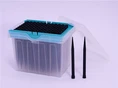
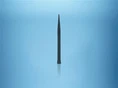
As a professional manufacturer in China, we are committed to producing high-quality pipette tip products. We have advanced production equipment and technical teams to ensure that our products meet the highest standards in quality and performance. Our pipette tips undergo rigorous quality control and testing to ensure their stability and precision. We offer various specifications and models of pipette tips to meet the different needs of our customers. Whether in the medical, biotech, laboratory or industrial fields, we provide our customers with quality products and services.
Why choose us?
Advanced equipment
We have advanced production equipment and technical teams to ensure that our products meet the highest standards in quality and performance.
Customized services
Whether in the medical, biotech, laboratory or industrial fields, we provide our customers with quality products and services.
Competitive price
We can provide the OEM and ODM services, with superior cost performance, rich technical resources and top quality and efficiency.
High quality
Our products are manufactured or executed to very high standards, using the finest materials and manufacturing processes.
Related Product

The Universal Pipette Tip is a vital tool in laboratories, designed for compatibility with a range of pipettes. With precision engineering, it ensures accurate and efficient liquid handling, contributing to reliable results in various scientific applications.

Plastic medical pipette tips are common tools used in medical laboratories and are usually made of high-quality plastic. They are precisely sized and designed to be compatible with various makes and models of pipettes. These tips are used to accurately measure and transfer liquids, providing a convenient liquid handling solution. They have wide applications in molecular biology, cell culture, clinical diagnosis and other fields.

Sterile barrier pipette tips are critical tools used in medical laboratories with additional barrier protection that effectively prevents cross-contamination between samples and the internal structure of the pipette. These tips are usually treated aseptically to ensure that no exogenous contaminants are introduced during the experiment, thereby ensuring the accuracy and reliability of the experimental results.

Barrier pipette tips are a critical tool used in medical laboratories and are designed to provide additional barrier protection against cross-contamination between samples and liquid handling equipment. These tips are typically made from high-quality plastic and feature precise dimensions and designs ensuring compatibility with a wide range of pipette brands and models. Their use helps ensure the accuracy and reliability of experimental results, especially in critical molecular biology, cell culture and clinical diagnostic applications.

A medical pipette (pipette) is a precision instrument commonly used in biomedical laboratories to move and dispense liquids with precision. They typically consist of an adjustable piston, aspiration head, and a discharge head that enable precise measurement and delivery of liquids in the microliter to milliliter range. Medical pipettes are widely used in molecular biology, cell culture, drug research and development and other fields to provide reliable liquid handling solutions. Its accuracy and repeatability make it an indispensable tool in the laboratory, helping researchers complete various experiments and operations to ensure the accuracy and reliability of experimental results.

The 10ul Pipette Tip is a laboratory tool for dispensing micro-volume liquids. It is designed to fit pipettes with a capacity of 10 microliters, providing high-precision liquid handling. Made of high-quality polymer material, ensuring minimal liquid residue and reliable liquid transfer. Cutting-edge design ensures precise aspiration and discharge of liquids, making it ideal for use in biochemistry, molecular biology and clinical laboratories. This pipette tip is widely used in PCR, sequencing, sample preparation and other fields, providing a reliable operating tool for laboratory work to ensure accurate and efficient liquid distribution.

The 1000µL wide bore pipette tips are designed for use with pipettors requiring large volume capacities. With a wider opening, they accommodate viscous liquids and prevent aerosol formation. These tips ensure precise and efficient pipetting of larger volumes in laboratory applications, maintaining accuracy and reducing the risk of contamination.

Disposable pipette tips are innovative and indispensable accessories in laboratories and research settings. These single-use tips offer numerous advantages and benefits, making them a preferred choice for liquid handling applications.

The wide bore pipette is a cutting-edge laboratory tool designed to revolutionize liquid handling processes. With its enlarged internal diameter, this pipette offers unparalleled efficiency in transferring viscous liquids, high-density samples, and particles without clogging or compromising accuracy.
What is Pipette Tips
Pipette tips are disposable, autoclavable attachments for the uptake and dispensing of liquids using a pipette. Micropipettes are used in a number of laboratories. A research/diagnostic lab can use pipette tips to dispense liquids into a well plate for PCR assays.
Benefits of Pipette Tips
They provide precision
Precision and accuracy are the keys to any successful lab experiment. Keeping this in mind, careful measurement of each material or chemical in the experiment is crucial to get the best results. That is where pipette tips become a blessing. With them, specific and accurate amounts of the sample can be measured as precisely as possible without any errors. This helps in getting more accurate results. Hamilton Tips are an excellent example.
They are easy to use
Pipetting is a must-know technique for all scientists and experimenters. Sample handling is just not possible if a person lacks this basic skill. It is even taught to high school students, considering how important this technique is. Despite its significance, pipetting is relatively easy and can be made easier using pipette tips. Learning the use of pipette tips is a valuable and simple skill. With the right kind of tips, anyone can learn the pipetting technique.
They can also be sterile
If your experiment requires sterility, like cell culture, the use of pipette tips is crucial. They can not only reduce cross-contamination, but if you use the right kind of tips, you'll also get better results. Sterile tips are not often since not all scientific research needs to be sterile. Pre-sterilized pipette tips free of any DNA, RNase, ATP, or pyrogens are also available to keep your experiment free of contamination. This ensures better and more accurate results.
They're efficient and time-saving
The most valued thing in science is efficiency, especially with lab experiments. While handling samples, an experimenter has to be quick and steady at the same time, or it'll result in a waste of time and precious reagents. By reducing the need for more complicated and time-consuming instruments, pipette tips allow the experimenter to perform experiments quickly and easily. Reducing the time ultimately increases the overall efficiency.
They offer diversity
Different conditions, materials, and methods are used for every lab experiment. All of them involve analyses of different types and quantities of the sample. This is where pipette tips can make an experiment easier according to its requirements. They come in all different kinds and sizes, so no matter what your experiment is, it's almost a guarantee that you can find the specific kind of pipette tip that you need.
Types of Pipette Tips
Filter and non-filter tips
Filter tips feature a non-self-sealing PE filter that is free of chemical additives and allows easy uncontaminated sample retrieval when the filter is wet where non-filter devices are used mostly in laboratory experiments where sterility is not an important criterion.
Low retention tips
Low retention tips, also called low binding tips, are pipette tips that have been modified to reduce the adhesion of DNA, enzymes, proteins, cells, as well as other sticky materials to the tip surface.
Sterile tips
Sterile tips are gamma-irradiated, free of biological contaminants, such as RNase/DNase, human DNA and pyrogens. They find application in highly sensitive assays, which require a high degree of sterility.
Macro tips
Macro Tips are capable of handling reagents in volumes ranging from 5 ml to 10 ml.
Micro tips
Micro-tips are used to transfer relatively small liquid volumes, mostly in the range of 0.5 µL to 1,250 µl.
Ultra-micro tips
Ultra Micro pipette tips are used to transfer very small liquid volumes ranging 0.5µL -20 µL size.
Wide orifice tips
These pipettes are designed with a large aperture. This characteristic is particularly useful for eliminating cell shearing and flow resistance.
Short and extended length tips
Short tips are used to fill small wells, for instance, while pipetting in a 384 or 1,536 well-plate where Extended Length Tips offer significant contamination control as they enable you to reach to the bottom of the vessel, thereby reducing contact of the container with the pipette shaft.
Beveled tips
A beveled orifice prevents adherence to the tip of the sample, and makes it easy to pipette every drop of sample completely. In the process of loading the gel, the beveled tip is useful in preventing accidental damage to the gel.
Round and flat tips
Flat tips are mainly used for loading acrylamide and agarose gels in the process of gel electrophoresis, while round tips are better suited for loading SDS-PAGE and agarose gels.
At present, the pipette tips on the market are basically made of polypropylene plastic (colorless and transparent plastic with high chemical inertness and wide temperature range). However, the quality of the same polypropylene will vary greatly: high-quality tips are generally made of natural polypropylene, while cheap tips are likely to use recycled polypropylene plastic (in this case, we can at most say its main component is polypropylene).
The process of making a pipette tip can vary from manufacturer to manufacturer, however, the basic principles remain largely the same. The process of manufacturing a plastic pipette tip with a long capillary in front involves the following steps:
● Injection molding of a pipette tip in a mold.
● Opening of the mold and drawing the plastic section into a capillary.
● The unsolidified plastic section is selectively heated.
● The tip is drawn vertically, and the tip is shaped using a molding element.
Keep them in original packaging
Pipette tips usually come in sterile, airtight packaging. It's best to keep them in their original packaging until ready for use. This helps prevent contamination.
Avoid exposure to air and moisture
Air and moisture can lead to contamination. Keep the tips in a dry environment, and when not in use, ensure that the packaging is properly sealed.
Use tip racks
Many laboratories use tip racks to organize and store pipette tips. These racks are designed to hold tips securely and can be placed on the bench for easy access.
Store in a clean environment
Store pipette tips in a clean, dust-free environment to minimize the risk of contamination. Consider using a dedicated area or cabinet for tip storage.
Protect from UV light
Some materials used in pipette tips can be sensitive to UV light. If your tips are susceptible, store them in a dark or opaque container to protect them from light exposure.
Organize by size and type
If you use different sizes or types of pipette tips, consider organizing them in separate sections or containers. This makes it easy to locate the right tips when needed.
Regularly inspect for contamination
Periodically inspect pipette tips for any signs of contamination, discoloration, or damage. If you notice any issues, discard the affected tips to maintain the accuracy and reliability of your pipetting.
Follow the manufacturer's recommendations
Always follow the manufacturer's recommendations for storage. Different brands and types of pipette tips may have specific storage requirements.
Temperature control
Extreme temperatures can affect the quality of pipette tips. Avoid storing them in areas with extreme heat or cold. Room temperature storage is generally suitable for most pipette tips.
Use a pipette tip box
Consider using tip boxes, which are designed to securely hold and protect pipette tips. These boxes often have lids to keep out dust and contaminants.
Pipette tips are the unsung heroes of the laboratory. Their main job is to guarantee precise measurement and transfer of liquid samples. They are the bridge between the pipette and the liquid to be transferred, playing a crucial role in the precision of your pipetting technique. Whether you're manually pipetting or using a multichannel pipette, the right pipette tip can make all the difference.
How to Choose the Right Pipette Tips
Choose high quality pipette tips for precision and accuracy
The first consideration that tends to spring to mind when thinking about which tip type to choose is precision and accuracy. If there is any batch-to-batch, or within batch, variation in the shape of the pipette tips, then your pipetting will not be precise. The accuracy of your pipette can be affected if the tip does not fit your particular pipette properly. If there is a poor seal between your pipette barrel and tip, then the drawn-in air can escape and the correct volume of liquid is not aspirated. Therefore, the final volume dispensed is not absolutely correct. Choosing a tip that is a good fit for your pipette can be a tricky business.
Universal or Pipette-specific tips
The best option for your pipette and application is to use high-quality universal tips. These universal tips can be used with most micropipettes on the market. Universal tips are designed to fit securely and tightly around all pipette barrels, which vary slightly in diameter from manufacturer to manufacturer.
Filter & Non-filter tips
Barrier tips, or filter tips, are designed for different conditions. If you will be pipetting something that could contaminate your pipette-for example volatile, corrosive, or viscous chemicals-then you'll want to consider barrier tips to protect your pipette and your samples.
Low retention tips
No matter which tip you choose, low-retention is a key feature. Low-retention tips do exactly as the name suggests-retain low levels of liquid. If you've ever looked at a standard pipet tip, you might see a little bit of liquid left after dispensing. Low-retention tips reduce this from happening because they have a hydrophobic plastic additive that keeps the liquid from sticking to the inside of the tips.
Ergonomic tips
Doing repetitive tasks, like pipetting, can cause damage to joints and result in repetitive stress injury (RSI). In light of this, companies have designed ergonomic tips that require lower insertion and ejection forces and, therefore, reduce the risk of RSI. That said, this feature all goes back to good fit. A tip that is specifically designed to fit your pipette properly is by definition an ergonomic tip.
Certifications


Our Factory
Established in 2016, Biorear is located in Jiaxing, Zhejiang Province, with an area of 16000 ㎡.
Biorear is devoted to development, manufacture, sales and service of consumables in the field of life science and clinical diagnosis. Company has 100k level cleanrooms for injection molding, automation systems for packaging, extraction, special process equipment, optical testing systems, material research ability and automatic inspection instruments developed for different products and application scenarios, which enables us to monitor and measure the quality of different products.


FAQ
Hot Tags: pipette tips, China, suppliers, manufacturers, factory, custom, wholesale, for sale, U Bottom 96 Deep Well Plate, Sterile Pcr Tubes Strip, 0 2ml Pcr Microplate, 0 2ml Clear PCR Tubes, 96 deep well plate, Sterile Pipette Tip


