


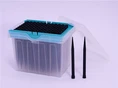





Products Description
Various materials: Reagent containers can be made of a variety of materials, including glass, plastic, borosilicate glass, stainless steel, etc. Different materials have different characteristics to adapt to the characteristics of different reagents and usage environments. For example, borosilicate glass containers are corrosion-resistant, while plastic containers are lightweight and resistant to breakage.
Different capacities: Reagent containers can have various capacities, ranging from a few milliliters to several liters, to meet the storage and dispensing needs of different liquid or solid reagents.
Sealing: In order to ensure that the reagents do not leak, are not contaminated, and extend their storage life, reagent containers usually have good sealing properties. This helps maintain the quality and stability of the reagents.
Visibility: Many reagent containers have good transparency, allowing users to clearly observe the liquid or solid inside the container to ensure the visualization and monitoring of experiments or operations.
Versatility: Reagent containers are widely used in various fields such as chemical laboratories, biological laboratories, industrial manufacturing, and healthcare. They are suitable for storing, mixing, stirring, dispensing and transporting a variety of liquid and powder reagents.

Chemistry Laboratory: Reagent containers are used in chemistry laboratories to store, distribute and mix various chemical reagents such as acids, bases, salts, solvents, etc.
Biological laboratories: In biological laboratories, reagent containers are used to store and process biological samples, cell culture media, and other biological materials.

Healthcare: Reagent containers are used in the medical field to store and dispense medications, test samples, and biological samples.
Industrial Manufacturing: In industry, reagent containers are used to store process chemicals, raw materials, and finished products to meet production needs.
Product Parameters
| Item number | Product name | unit | Package |
| G4-22 | 4ml HDPE/PP wide mouth bottle | box | 200 pieces/pack; 10 packs/box |
| G8-22 | 8ml HDPE/PP wide mouth bottle | box | 100 pieces/pack; 10 packs/box |
| G15-23 | 15ml HDPE/PP wide mouth bottle | box | 100 pieces/pack; 10 packs/box |
| G30-23 | 30ml HDPE/PP wide mouth bottle | box | 100 pieces/pack; 10 packs/box |
| G60-23 | 60ml HDPE/PP wide mouth bottle | box | 50 pcs/pack; 10 packs/box |
| G125-23 | 125ml HDPE/PP wide mouth bottle | box | 25 pcs/pack; 10 packs/box |
| G250-23 | 250ml HDPE/PP wide mouth bottle | box | 20 pcs/pack; 10 packs/box |
| G500-23 | 500ml HDPE/PP wide mouth bottle | box | 10 pcs/pack; 10 packs/box |
| G1000-23 | 1000ml HDPE/PP wide mouth bottle | box | 5 pcs/pack; 10 packs/box |
FAQ:
1. What materials are commonly used to make reagent containers?
Reagent containers can be made of various materials such as glass, plastic, borosilicate glass, and stainless steel. Each material has different characteristics to accommodate different reagents and usage environments. For instance, borosilicate glass containers are corrosion-resistant, while plastic containers are lightweight and resistant to breakage.
2. What are the different capacities of reagent containers?
Reagent containers come in various capacities ranging from a few milliliters to several liters, depending on the specific application and volume requirements. Common capacities include 100ml, 250ml, 500ml, 1 liter, and 2 liters, but larger containers can also be available for bulk storage and industrial applications. The choice of capacity depends on the quantity of reagents or samples that need to be stored or handled in a particular experiment or process.
3. How are reagent containers sealed to ensure the quality and stability of the reagents?
To prevent leaks, contamination, and extend the storage life of reagents, reagent containers are equipped with good sealing properties. This ensures that the reagents maintain their quality and stability over time.
Hot Tags: reagent bottle borosil, China, suppliers, manufacturers, factory, custom, wholesale, for sale


