




Products Description
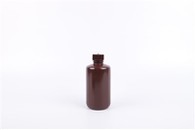
Reagent vials are essential tools used in laboratories worldwide. These small containers are designed to store and transport laboratory reagents, which are crucial for scientific research and analysis. Reagent bottle are commonly made of glass or plastic materials and come in different sizes and shapes, depending on the specific laboratory needs.
One of the essential features of reagent vials is their sealing properties. These properties prevent reagents from contamination or evaporation, ensuring that they remain pure and effective during experiments. This feature also makes these bottles suitable for long-term storage, ensuring the reagents' stability and effectiveness over time.
One of the advantages of using reagent vials is their compact and convenient design. These bottles are easy to handle, store and distribute in the laboratory. Additionally, their portability makes them suitable for fieldwork, ensuring that the reagents remain stable throughout transportation. Their design also makes them suitable for sampling, allowing scientists to collect small amounts of reagents for analysis and experimentation.
Reagent bottle come in different materials, including glass and plastic. Glass reagent vials are more robust and resistant to chemical reactions, making them suitable for storing aggressive reagents. They are also transparent, allowing scientists to examine the reagents' appearance and quantity. On the other hand, plastic reagent jars are lightweight, making them a popular alternative to glass vials. They are also shatter-resistant, ensuring that they do not break during transportation or handling.
In conclusion, Reagent bottle are essential tools in laboratory settings. They are designed to store and transport laboratory reagents and have sealing properties that help prevent contamination and evaporation. They are compact, portable, and convenient for sampling, storage and distribution in the laboratory. Glass and plastic reagent vials are popular materials due to their resistance to chemical reactions and strength, respectively. Additionally, the transparency of these materials allows scientists to examine the reagents' appearance and quantity, ensuring accurate scientific discovery and experimentation.

Avoid solution volatilization and contamination: The narrow opening of the narrow-mouth reagent bottle can effectively reduce the contact between the inside of the liquid and the external environment, thereby reducing the risk of volatilization and contamination. This is important for experiments where sensitive reagents need to be stored for long periods of time or where solution concentration needs to be ensured to be constant.

Precise liquid dispensing and manipulation: The narrow opening of the narrow mouth reagent bottle makes it ideal for precise liquid dispensing and manipulation. This design allows experimenters to use a variety of pipettes and control liquid flow to ensure precise dispensing and processing. Compared with some other containers, such as wide-mouth bottles, narrow-mouth reagent bottles make it easier to control the flow of liquid, thereby reducing the possibility of errors.
FAQ:
1. What are reagent vials used for?
Reagent bottle are used to store and transport laboratory reagents, which are chemical substances used in experiments and analysis.
2. What materials are Reagent bottle made of?
Reagent vials can be made of glass or plastic, depending on the needs of the laboratory.
3. What are the benefits of using Reagent bottle?
Reagent bottle have sealing properties that prevent contamination or evaporation of reagents, making them ideal for sampling, storage, and distribution in the laboratory. The clear or transparent materials also help visualize the appearance and quantity of reagents.
Hot Tags: reagent vials, China, suppliers, manufacturers, factory, custom, wholesale, for sale