


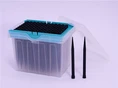





Universal pipette tips are essential accessories in laboratory settings, facilitating precise and efficient liquid handling for a variety of applications. These tips are designed to fit a wide range of pipettes, offering versatility and compatibility across different brands and models. Let's explore the features, applications, and significance of universal pipette tips in laboratory work.
Features and Design: Universal pipette tips are typically made from high-quality, medical-grade polypropylene or other suitable materials. They feature a standardized design with a narrow, tapered end that fits securely onto the pipette nozzle. The tips may come in various volumes, ranging from microliters to milliliters, to accommodate different sample volumes and pipetting needs.
One of the key features of universal pipette tips is their precision-engineered construction, which ensures accurate and reproducible liquid dispensing. The tips are manufactured using advanced molding techniques to achieve consistent dimensions and airtight seals, minimizing the risk of sample contamination or leakage during pipetting.
Additionally, universal pipette tips often incorporate features such as beveled or low-retention tips to facilitate smooth sample ejection and minimize sample retention, ensuring maximum recovery of precious samples.
Applications in Laboratory Work: Universal pipette tips find widespread use in various laboratory applications across scientific disciplines, including molecular biology, biochemistry, microbiology, analytical chemistry, and drug discovery. Some common applications of universal pipette tips include:
Liquid Handling and Transfer: Universal pipette tips enable accurate and precise dispensing of liquids, including reagents, buffers, enzymes, and samples, in routine laboratory workflows such as PCR, qPCR, ELISA, and sample preparation for sequencing or analysis.
Cell Culture and Microbiology: In cell culture and microbiology laboratories, universal pipette tips are used for aseptic handling of cell culture media, antibiotics, growth factors, and microbial cultures. Their sterile, single-use design helps prevent cross-contamination and ensures the integrity of cell cultures and microbial assays.
Clinical Diagnostics: In clinical laboratories, universal pipette tips are employed for various diagnostic assays, including immunoassays, clinical chemistry tests, and molecular diagnostics. They enable precise and accurate dispensing of patient samples, reagents, and controls, contributing to the accuracy and reliability of diagnostic results.
Drug Discovery and High-Throughput Screening: In pharmaceutical and biotechnology research, universal pipette tips play a crucial role in drug discovery, assay development, and high-throughput screening (HTS) workflows. They enable rapid and efficient liquid handling in multiwell plate assays, compound dilutions, and compound transfer operations, facilitating the screening of large compound libraries for drug discovery purposes.
Significance in Laboratory Practice: Universal pipette tips offer several advantages that contribute to their significance in laboratory practice:
Precision and Accuracy: The standardized design and precise manufacturing of universal pipette tips ensure accurate and reproducible liquid dispensing, essential for obtaining reliable experimental results and minimizing experimental variability.
Versatility and Compatibility: Universal pipette tips are compatible with a wide range of pipettes from different manufacturers, offering flexibility and convenience in laboratory workflows. Laboratories can use a single type of pipette tip for multiple pipettes, simplifying inventory management and reducing costs.
Sample Integrity and Contamination Control: The sterile, single-use design of universal pipette tips helps maintain sample integrity and prevent contamination, critical for sensitive assays and experiments requiring high levels of purity and reproducibility.
Ease of Use and Efficiency: Universal pipette tips are easy to load and eject, allowing for rapid and efficient liquid handling, even during high-throughput operations. Their ergonomic design and user-friendly features enhance laboratory productivity and workflow efficiency.