


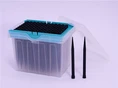




Tip combs are laboratory tools used primarily in the field of gel electrophoresis, a widely employed technique for separating and analyzing macromolecules like DNA, RNA, or proteins based on their size and charge. The main purpose of tip combs is to create wells or pockets in the gel, allowing the researcher to load samples for analysis. Here's a detailed explanation of their usage:
Gel Electrophoresis Overview:
Gel electrophoresis involves the movement of charged molecules through a gel matrix under the influence of an electric field. The gel, typically made of agarose or polyacrylamide, acts as a sieve, slowing down the movement of larger molecules compared to smaller ones. This separation is crucial for studying the characteristics of biomolecules.
Role of Tip Combs:
Well Formation:
Tip combs are instrumental in creating wells or pockets in the gel during the casting process. These wells serve as slots for loading samples. The comb is placed at one end of the gel mold before the gel solidifies. The teeth of the comb form indentations, and when the comb is removed, these indentations become wells where samples can be deposited.
Sample Loading:
After the gel has solidified, the tip comb is gently removed, leaving a series of wells in the gel. Researchers can then load their samples into these wells, usually containing DNA, RNA, or proteins. The wells created by the tip comb ensure that the samples are loaded in an organized and easily analyzable manner.
Lane Formation:
The wells created by tip combs determine the formation of lanes in the gel. Each lane represents a separate track along which the molecules will migrate during electrophoresis. Lanes are critical for comparing samples and analyzing the relative sizes of molecules.
Separation and Analysis:
Once the samples are loaded, an electric current is applied to the gel. Molecules move through the gel matrix based on their size and charge, resulting in separation. After electrophoresis, the gel is typically stained or treated to visualize the separated molecules. Tip combs play a pivotal role in ensuring that the molecules are separated in a controlled and organized manner for accurate analysis.
Varieties of Tip Combs:
Tip combs come in various configurations, with the number and spacing of teeth determining the number and size of wells. This flexibility allows researchers to tailor the gel to their specific experimental needs, accommodating different sample sizes and separation requirements.
Conclusion:
In summary, tip combs are indispensable tools in gel electrophoresis, providing a structured and organized way to load samples for separation and analysis. Their use is fundamental to the success of experiments in molecular biology, genetics, and biochemistry, enabling researchers to study and characterize biomolecules with precision and accuracy.