


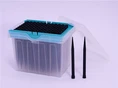





eight well pcr tube strips, clear Wells
8-well PCR tube strips are meticulously engineered to ensure seamless compatibility with automated liquid handling systems, which are increasingly integral to modern laboratory workflows. This design feature enables these tube strips to effortlessly integrate into robotic platforms, thereby optimizing efficiency and reducing the potential for manual handling errors.
Automated systems enhance laboratory operations by automating repetitive tasks such as pipetting, mixing, and sample transfer. By leveraging automated liquid handlers, researchers can execute precise and consistent sample processing protocols across multiple PCR tube strips simultaneously. This capability is particularly advantageous in high-throughput environments where large volumes of samples need to be processed efficiently without compromising accuracy.
The compatibility of 8-well PCR tube strips with automated systems extends beyond basic liquid handling tasks. These systems can also perform complex operations such as setting up reaction mixtures, thermal cycling, and data analysis, thereby minimizing the need for manual intervention and maximizing the throughput of experiments.
In addition to improving operational efficiency, automation enhances experimental reproducibility and reliability. By reducing human error associated with manual pipetting and handling, automated systems ensure consistent execution of experimental protocols. This is critical in molecular biology applications where precise control over reaction conditions is essential for obtaining reliable and reproducible results, such as in gene expression analysis, mutation detection, and pathogen identification.
Moreover, automated workflows with 8-well PCR tube strips facilitate the integration of advanced experimental techniques, including high-throughput screening and next-generation sequencing protocols. These technologies require meticulous sample handling and data management, tasks that can be efficiently managed by automated liquid handling systems in conjunction with compatible PCR consumables.
Overall, the meticulous design of 8-well PCR tube strips for compatibility with automated liquid handling systems underscores their role in advancing laboratory efficiency, precision, and throughput. By enabling seamless integration into robotic workflows, these tube strips empower researchers to conduct complex molecular biology experiments with enhanced reliability and productivity, ultimately accelerating scientific discoveries and innovations in various fields of biomedical research and clinical diagnostics.
Quality and Reliability of eight well pcr tube strips

Quality and reliability are the top attributes of this PCR tube strip, which is made of high-quality materials such as polypropylene. This material choice not only ensures durability, but also excellent chemical resistance, which is essential to withstand the rigorous conditions of PCR thermal cycling.
Polypropylene was chosen because it is strong and durable, and can maintain structural integrity under the temperature fluctuations typical of the PCR process. This resilience allows the PCR tube strip to withstand repeated thermal cycles without bending or degradation, protecting the integrity of the sample and the reliability of experimental results. The chemical resistance of the material ensures compatibility with a wide range of PCR reagents and buffers, thereby minimizing the risk of interactions that may affect experimental results.
In addition, the design of this PCR tube strip incorporates features that enhance its reliability in laboratory workflows. Each tube is precisely manufactured to strict standards, ensuring uniform size and seal integrity. This consistency minimizes variability between samples and helps improve the reproducibility of PCR experiments. The tube's tight-fitting cap provides a secure seal, prevents evaporation of reaction components, and reduces the possibility of contamination during handling and thermal cycling.
The durability of the PCR tube strip extends its use beyond single-use, supporting multiple rounds of experiments without compromising performance. This long life not only reduces operating costs, but also promotes sustainable laboratory practices by minimizing waste generation.
In research and clinical settings where precision and consistency are critical, the quality of PCR tube strips plays a key role in generating accurate scientific data. Researchers can rely on these consumables to deliver reliable performance in a wide range of molecular biology applications, including gene amplification, mutation detection, and gene expression analysis. The quality and reliability guaranteed by these PCR tube strips underscores their status as an essential tool in the modern laboratory, facilitating advances in molecular diagnostics, biomedical research, and more.

eight well pcr tube strips can be used in these fields
Cloning and Recombinant DNA Technology
Genetic Research: In molecular biology and genetics research, PCR is used extensively to amplify DNA fragments. Researchers often use PCR tube strips to perform gene amplification experiments where specific regions of DNA are targeted for analysis. This technique facilitates the study of genetic variations, gene expression patterns, and the function of specific genes.
Diagnostic Applications: PCR plays a crucial role in diagnostic testing, enabling the detection of genetic mutations associated with diseases. For example, in cancer research, PCR is employed to detect oncogenes or tumor suppressor genes that may indicate predisposition to certain types of cancer. The high specificity and sensitivity of PCR make it an invaluable tool in molecular diagnostics for identifying genetic markers linked to various diseases.
Pathogen Detection
Infectious Disease Diagnosis: PCR is widely used for the detection of pathogens responsible for infectious diseases. By targeting specific genetic sequences unique to pathogens such as viruses, bacteria, and fungi, PCR tube strips enable rapid and accurate identification of infectious agents. This capability is vital for timely diagnosis, treatment planning, and epidemiological surveillance.
Viral Load Monitoring: In virology, PCR tube strips are employed to quantify the viral load in patient samples. For diseases like HIV/AIDS, hepatitis, and respiratory viruses, PCR allows healthcare providers to monitor disease progression, assess treatment efficacy, and make informed clinical decisions based on viral load measurements.

Maybe you have the following questions
1: What is this product used for?
These products are specialized consumables used in molecular biology and genetic research laboratories. They allow researchers to amplify multiple DNA samples simultaneously using the polymerase chain reaction (PCR) technique. This is critical for applications such as gene amplification, mutation detection, gene expression analysis, and pathogen identification.
2: How does this product improve laboratory efficiency?
The 8-well format of the PCR tube strip enables researchers to process multiple samples at the same time. This increases laboratory efficiency by reducing the time and resources required for experiments. It is particularly beneficial in high-throughput screening, diagnostic testing, and other applications where large numbers of samples must be processed.
3: What materials is this product made of, and why is this important?
These products are typically made of high-quality materials such as polypropylene. Polypropylene has excellent chemical resistance and durability, making it suitable for withstanding the rigorous conditions of PCR thermal cycling. This ensures that the tubes maintain their integrity and minimizes the risk of sample contamination during experiments.
4: How does this product prevent contamination between samples?
Each tube in this product is individually sealed with a tight-fitting lid. This prevents cross-contamination between samples by creating a physical barrier to prevent sample contents from escaping and environmental contaminants from entering. This feature is critical to maintaining the reliability and accuracy of experimental results, especially in sensitive applications such as quantitative PCR (qPCR).
5: Can this product be reused?
PCR tubes are designed for single-use applications to minimize the risk of contamination and ensure the integrity of experimental data. Reusing PCR tubes may compromise experimental results due to residual DNA contamination from previous experiments. It is recommended to use fresh PCR tubes for each new experiment to maintain the reliability and reproducibility of results.
6: What are the advantages of using this product in gene expression studies?
In gene expression studies, this product allows researchers to analyze multiple samples simultaneously, allowing for effective quantification of RNA transcripts. This is critical for studying gene expression levels under different experimental conditions or treatment responses. The uniform thermal cycling of PCR tubes ensures consistent reaction conditions for all samples, helping to obtain reliable and reproducible gene expression data.
7: How does this product benefit diagnostic testing in clinical laboratories?
In clinical laboratories, this product plays a vital role in diagnostic testing for detecting pathogens and genetic mutations associated with diseases. They enable rapid and accurate identification of infectious agents and genetic variants, supporting timely diagnostic and treatment decisions. The high-throughput capabilities of PCR tubes improve the efficiency of diagnostic workflows, making them an indispensable tool in clinical microbiology and molecular diagnostics.
Hot Tags: eight well pcr tube strips, China, suppliers, manufacturers, factory, custom, wholesale, for sale, PCR Plate, 0 2ml pcr plate, 2 2ml deep well plate, 96 deep well plate, Low Binding Pcr Tubes, 96 Well Pcr Plate


