


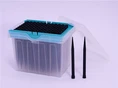




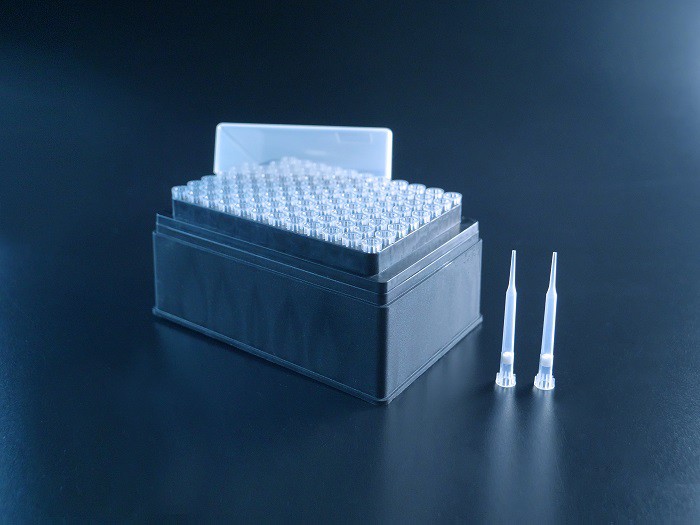
Finntip™ Stepper Pipette Tips are a revolutionary product that is designed to help you take accurate and consistent measurements when pipetting. The tips have a unique "stepping" design that ensures that the same amount of liquid is dispensed every time. The tips are also made of a high-quality material and are designed to be durable and long-lasting. The tips are available in a wide range of sizes and colors, so you can find the right size and color for your needs.
Finntip™ Stepper Pipette Tips are designed to be easy to use, with a comfortable grip and an ergonomic design that makes it easy to handle. There is also a built-in volume indicator that makes it easy to see how much liquid is being dispensed. The tips also feature an anti-drip mechanism that helps prevent spills and messes.
|
Part number |
Volume |
Color |
Filter |
Sterile |
Packing |
|
C30A0061-A1 |
50μL |
Natural |
No |
No |
96pcs/pk,24pks/cs |
|
C30A0061-A2 |
50μL |
Natural |
Yes |
No |
96pcs/pk,24pks/cs |
|
C30A0061-A3 |
50μL |
Natural |
No |
Yes |
96pcs/pk,24pks/cs |
|
C30A0061-A4 |
50μL |
Natural |
Yes |
Yes |
96pcs/pk,24pks/cs |
|
C30A0034-B1 |
50μL |
Black |
No |
No |
96pcs/pk,24pks/cs |
|
C30A0034-B2 |
50μL |
Black |
Yes |
No |
96pcs/pk,24pks/cs |
|
C30A0034-B3 |
50μL |
Black |
No |
Yes |
96pcs/pk,24pks/cs |
|
C30A0034-B4 |
50pL |
Black |
Yes |
Yes |
96pcs/pk,24pks/cs |
|
C30A0031-A1 |
200μL |
Natural |
No |
No |
96pcs/pk,24pks/cs |
|
C30A0031-A2 |
200pL |
Natural |
Yes |
No |
96pcs/pk,24pks/cs |
|
C30A0031-A3 |
200μL |
Natural |
No |
Yes |
96pcs/pk,24pks/cs |
|
C30A0031-A4 |
200μL |
Natural |
Yes |
Yes |
96pcs/pk,24pks/cs |
|
C30A0030-B1 |
200μL |
Black |
No |
No |
96pcs/pk,24pks/cs |
|
C30A0030-B2 |
200μL |
Black |
Yes |
No |
96pcs/pk,24pks/cs |
|
C30A0030-B3 |
200μL |
Black |
No |
Yes |
96pcs/pk,24pks/cs |
|
C30A0030-B4 |
200μL |
Black |
Yes |
Yes |
96pcs/pk,24pks/cs |
|
C30A0026-A1 |
1000μL |
Natural |
No |
No |
96pcs/pk,24pks/cs |
|
C30A0026-A2 |
1000μL |
Natural |
Yes |
No |
96pcs/pk,24pks/cs |
|
C30A0026-A3 |
1000μL |
Natural |
No |
Yes |
96pcs/pk,24pks/cs |
|
C30A0026-A4 |
1000μL |
Natural |
Yes |
Yes |
96pcs/pk,24pks/cs |
|
C30A0014-B1 |
1000μL |
Black |
No |
No |
96pcs/pk,24pks/cs |
|
C30A0014-B2 |
1000μL |
Black |
Yes |
No |
96pcs/pk,24pks/cs |
|
C30A0014-B3 |
1000μL |
Black |
No |
Yes |
96pcs/pk,24pks/cs |
|
C30A0014-B4 |
1000μL |
Black |
Yes |
Yes |
96pcs/pk,24pks/cs |
Pipette tip
- No bending,high transparency
- No silanization,DANse/RANse free,PCR free, No pyrogen pollution
- Can resist high temperature(121 ℃)for 30 minutes

Automatic Pipette tip
- Black conductive tips and transparent non-conductive tips
- The smooth inner surface reduces residues and will not waste reagent

Product Features
-
The filter can prevent aerosols to enter the pipettor cavity. So it is suitable for automatic workstations.

-
The elongated tip is specially designed for micro suck

-
Low retention tube effectively reduces reagent loss

-
Stacked boxes save space and are easy to use

Product Parameter
We supply full series tips which can meet different experimental needs:
Bag/boxed,with/without filter,sterilized/unsterilized,low retention/normal

With filter

Non-filter type

The size of pipette tip
Filter tip capacity:
10μL/10μL Lextra long/20μL/50μL/100μL/200μL/300μL/1000μL/1250μL
Packing
-

Boxed
-

Stacked box
-


What are the consequences of using plastic tips on glass pipettes?
Using plastic tips on glass pipettes can cause stress fractures in the glass, leading to breakage and potential injury. Additionally, it can cause the plastic tips to wear down and become brittle, leading to inefficient use of the pipette and potential contamination of the sample.
Why should you not force the last remaining amount of liquid out of the pipette?
You should not force the last remaining amount of liquid out of the pipette because doing so could cause the pipette to become damaged or broken. Additionally, forcing the last remaining amount of liquid out of the pipette could cause air bubbles to be introduced into the sample, which could lead to inaccuracies in the results.
How do pipettes work?
Pipettes are precision instruments used to accurately measure and transfer small volumes of liquid. They work by using a series of air displacement steps to precisely measure a set volume of liquid. The pipette works by drawing a set volume of liquid up into its nozzle by creating a vacuum inside the nozzle by pressing a plunger. A plug of air remains in the nozzle after the liquid is drawn in, and when the plunger is released, the liquid is forced out of the pipette and into a recipient. This process is repeated until the desired volume of liquid has been transferred.
Why can a pipette hold liquids? Shouldn't the air simply go through the liquid, equalize pressure so that the liquid drops?
A pipette is designed to create a vacuum within its tip, which allows it to draw liquids into it and hold them until they are released. This vacuum is created by a plunger at the top of the pipette, which is pushed down to draw the liquid in and then released to release it. The air pressure outside of the pipette is greater than the pressure inside the pipette, which is why it is able to hold liquids.
What is the difference between wide bore and normal pipette tips?
Wide bore pipette tips have a larger internal diameter than normal pipette tips, and they allow for larger amounts of liquid to be aspirated or dispensed. Wide bore tips are also made of thicker plastic than normal tips, resulting in less breakage and less risk of contamination. Normal pipette tips, on the other hand, have a smaller internal diameter and are usually made of thinner plastic. They provide greater accuracy and precision when aspirating and dispensing smaller amounts of liquid.
How do you know which pipette tip to use?
The type of pipette tip to use depends on the volume of liquid being pipetted. Generally, the larger the volume, the larger the tip. For accurate liquid measurements, it is important to use the appropriately sized pipette tip.
What happens if you use the wrong pipette tip?
If you use the wrong pipette tip, you may not get accurate results in your experiment. Using the wrong tip can lead to incorrect measurements or contamination of the sample, which can lead to inaccurate readings or results.
Why do you pre wet pipette tips?
Prewetting pipette tips helps to ensure that the pipette will correctly transfer the desired liquid volume. It also prevents liquid from adhering to the walls of the pipette, ensuring that the full volume of liquid is delivered. Additionally, prewetting helps to prevent accidental contamination of the sample.
What should you never do while using a pipette?
what is the reason? You should never suck liquid into the pipette with your mouth. This is because it can introduce bacteria and other contaminants into the liquid, potentially contaminating the experiment.
Is it OK to reuse pipette tips?
No, it is not recommended to reuse pipette tips. This is because of the potential risk of cross-contamination between samples. Additionally, the accuracy and precision of the pipetting process could be affected by reusing tips.
Should you leave air bubbles in your pipette?
What are the causes of bubbles? No, you should not leave air bubbles in your pipette. Air bubbles can cause inaccurate results by trapping small amounts of liquid, preventing it from being fully dispensed. The causes of air bubbles can include poor technique, a dirty pipette, or low liquid levels in the pipette tip.
Do you rinse your pipettes with water? Are there any requirements for water quality?
Yes, you should rinse your pipettes with water before and after use. For most applications, regular tap water is sufficient. However, if you are using the pipettes with aqueous solutions or solvents, you may want to use deionized or distilled water. This will help ensure that the results of any experiments are not affected by any impurities in the water.
Should you hold a pipette with liquid in it upside down?
No, you should not hold a pipette with liquid in it upside down. If you do, the liquid could spill out, creating a mess and potentially a hazard.
Should the tip of the pipette be submerged in water when filling? What are the specific steps?
The tip of the pipette should not be submerged in water when filling. The specific steps for filling a pipette with liquid are as follows:
1. Hold the pipette upright, with the tip pointing away from you.
2. Insert the tip of the pipette into the liquid until it reaches the desired level.
3. Take your finger off the bulb and allow the liquid to flow into the pipette.
4. Make sure the tip of the pipette does not touch the bottom of the container or the sides of the container.
5. When the liquid has reached the desired level, remove the pipette from the liquid and place it in a place to dry.
Hot Tags: finntip™ stepper pipette tips, China, suppliers, manufacturers, factory, custom, wholesale, for sale, Universal Pipette Tip, Sterile Pipette Tip, Filter Pipette Tip, Pipette Tip, Plastic Universal Tip, sterile Conductive filterd Tip


