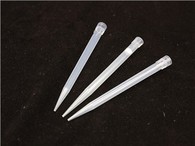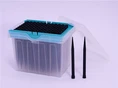





- Low adsorption inner wall treatment: greatly reduce sample residue and improve recovery rate.
- Ultra-high transparency: easy to observe liquid state and prevent misoperation.
- High-purity PP material: does not contain inhibitors to ensure sample purity.
- Biosafety guarantee: no RNase, DNase, pyrogen contamination, support aseptic packaging.
- Good compatibility: compatible with mainstream pipette brands, smooth plug-in and pull-out.
- Rich specifications: 10μL, 200μL, 1000μL and other models are available


Protein quantitative analysis and sample loading
Establishment of enzyme reaction system (ELISA, Western blot, etc.)
DNA/RNA extraction and amplification (PCR/qPCR)
Dilution and preparation of drug compounds
Trace sample operation and high-throughput screening
Clinical biochemical analysis and scientific research experimental operation
Low Retention Pipette Tip manufacturer
Cutting-edge technology strength
Focusing on the fields of life sciences and clinical diagnosis, it has the ability to develop automated testing instruments and special environment simulation technology, providing high-precision quality monitoring solutions.
Full industry chain coverage
Integrating R&D, manufacturing, and sales services, from consumables to special processing equipment and optical detection systems, providing one-stop product and technology solutions.

Strict quality assurance
Adopting advanced technology and strict quality control standards to ensure the reliability and stability of consumables under extreme conditions, and meet the high standards of global customers.
Innovation-driven development
Continuously break through special process equipment and automated detection technology to provide cutting-edge products and service support for the fields of life sciences and clinical diagnosis.
FAQ
What is the difference between low-retention tips and ordinary tips? Which experiments are best suited for them?
Low-retention tips use a special inner wall treatment to make them almost non-adsorbent to biological molecules such as proteins and nucleic acids, significantly reducing sample residues. Compared with ordinary tips, they can improve sample recovery, especially in experiments such as protein addition, qPCR, and RNA extraction, and can improve data accuracy and repeatability. They are ideal consumables for high-precision experiments.
Will Low Retention tips affect the accuracy or speed of pipetting?
No. Low-retention treatment does not change the tip structure or fluid channel, so it will not affect the aspiration speed or volume accuracy. Its smooth inner wall can also reduce the resistance to liquid discharge, making the pipetting operation smoother. In trace or high-viscosity samples, it can significantly improve the efficiency and consistency of aspiration.
What viscous or difficult-to-operate liquids can low-retention tips be used for?
Low Retention tips are very suitable for high-viscosity liquids such as glycerol, protein storage solution, nucleic acid samples, cell lysate, and concentrated buffer. This type of sample often produces a lot of residue in ordinary pipette tips, affecting the results of quantitative analysis. Low-adsorption pipette tips can significantly reduce the phenomenon of wall hanging, improve sample addition accuracy and operation efficiency.
Will low-adsorption treatment release pollutants or affect sample activity?
No. The surface treatment of low-adsorption pipette tips uses physical or high-purity polymerization technology, without additives or lubricants, to ensure that no biologically active inhibitors are released. The pipette tips are free of DNase, RNase and pyrogen contamination, suitable for various molecular biology experiments, safe for samples without any side effects, and especially suitable for sensitive sample operations.
Is it recommended to use low-adsorption pipette tips for all experiments? Is the cost higher?
Low-adsorption pipette tips are mainly suitable for experiments with high requirements for sample recovery rate and repeatability, such as protein analysis, qPCR, RNA operation, etc. For scenarios such as ordinary buffer pipetting, ordinary pipette tips can be selected according to the budget. Although the cost is slightly higher than that of standard pipette tips, the use of low-adsorption pipette tips in key experiments can significantly improve the success rate of experiments and data reliability, and is more cost-effective in the long run.
Hot Tags: low retention pipette tip, China, suppliers, manufacturers, factory, custom, wholesale, for sale, 96 Well plate, PCR Tubes With Flat Cap, 96 Well Deep Well Plate, sterile Conductive filterd Tip, Half Skirt Pcr Microplate, Lab Plastic Pcr Tubes