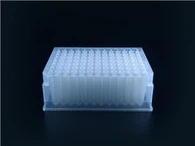




96 deep well culture plate
High-throughput capability: Each 96-well deep-well plate contains 96 independent wells, and each well is designed with greater depth and capacity. This deep-well design can accommodate larger volumes of culture media or reagents, making it ideal for large-scale high-throughput screening experiments such as drug screening, toxicity testing, genetic analysis, and cell culture. The increased capacity of each well allows for longer culture experiments, reducing the need for frequent culture medium changes, thereby improving experimental efficiency. In addition, the deep-well design also supports multi-step experiments, allowing researchers to continuously add and mix reagents in the same well, reducing the risk of cross-contamination and shortening the experimental cycle. Its high-throughput capability not only performs well in large-scale screening, but also provides great flexibility and reliability in individual complex experiments.
Standardized design: The plate adopts an industry-standard microplate format, and its size and well spacing precisely match a variety of laboratory equipment, such as automated liquid handling systems, high-throughput screening instruments, and multi-function microplate readers. This standardized design allows the plate to be seamlessly integrated into existing automated workflows, significantly improving the automation and efficiency of experiments. Using standardized plates can also reduce the time for equipment adjustment, ensuring experimental repeatability and data comparability. In addition, the standardized design helps reduce human errors, because researchers do not need to worry about compatibility issues between different plates or equipment, so they can focus on the experiment itself and improve the overall experimental quality.
Excellent sealing performance: Deep-well culture plates are usually equipped with a sealing cover or sealing film design, which greatly improves the safety and reliability of experiments. The excellent sealing performance can effectively prevent the evaporation of the culture solution, which is particularly important in experiments that require long-term culture. In addition, the sealed design reduces the risk of cross-contamination between wells and ensures that experimental conditions in each well remain independent, thereby improving the accuracy and reproducibility of experimental data. This sealing performance is particularly critical in high-precision research that requires strict control of the experimental environment, and can significantly improve the credibility of experimental results.
Material composition and features
The 96-well deep-well culture plate is made of high-quality polypropylene material, which is well-known for its excellent chemical resistance. Polypropylene can resist a variety of chemical reagents, solvents and biological agents, allowing the culture plate to maintain its physical structural integrity under various experimental conditions, avoiding distortion of experimental results due to material degradation. This excellent chemical resistance ensures that the culture plate will not deform or break when handling strong acids, strong bases or organic solvents, thereby greatly improving the reliability of the experiment. In addition, the high temperature resistance of polypropylene also allows the culture plate to withstand high temperature sterilization without damage, which is particularly important for aseptic operations in cell culture and microbiological research.


In addition, the biocompatibility of polypropylene makes it ideal for cell culture experiments. The material can minimize the impact on cell growth, proliferation and differentiation, ensuring that the normal physiological function of cells is not disturbed during the experiment. Compared with other materials, polypropylene has lower autofluorescence, which is particularly beneficial for experiments requiring fluorescence detection, which can reduce background interference and improve detection sensitivity. In addition, this material also has good transparency, which makes it easy for researchers to directly observe the reactions and changes in the wells, further improving the convenience of experimental operations and the visibility of results. The durability of polypropylene also allows the plates to be reused multiple times, reducing laboratory operating costs.
Application areas of 96 deep well culture plate
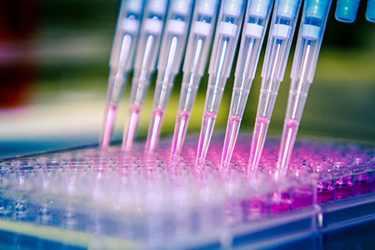
Cell culture and drug screening:
96-well deep-well culture plates play an important role in the field of cell culture and drug screening. Due to the large capacity of each well, they are suitable for long-term culture experiments, which is critical for observing cell growth, differentiation and response to drugs. Researchers can test multiple drug concentrations on the same plate, greatly improving screening efficiency. In addition, the deep-well design allows the smooth progress of multi-step experiments, such as the gradual addition of reagents or the replacement of culture media, thus supporting more complex experimental designs. This makes the culture plate an ideal tool for cytotoxicity testing, drug mechanism of action research and drug screening experiments.
Molecular biology and genomic research:
In molecular biology and genomic research, 96-well deep-well culture plates are widely used in the extraction, purification and other related experiments of DNA, RNA and protein. Its large well capacity and depth enable the processing of larger sample volumes, which is suitable for sample enrichment and multiple washing steps. This is particularly important for experiments such as gene expression analysis, genome editing and nucleic acid detection. In addition, deep-well design culture plates are also used for high-throughput PCR and qPCR experiments, supporting the simultaneous processing of multiple samples, significantly improving the efficiency of the experiment and the reproducibility of the data, and meeting the high requirements of modern molecular biology research.

Maybe you have the following questions
1. We need a high-throughput experimental solution. Can you introduce the advantages of this plate in large-scale screening?
The advantages of this plate in large-scale screening experiments are reflected in its high-throughput capacity and deep-well design. Each plate has 96 independent wells, and the depth and capacity of each well are large enough, which makes it very suitable for large-scale drug screening, toxicity testing and cell culture. The deep-well design allows for a larger sample volume, which is very important for long-term culture and multi-step experiments. Researchers can perform multiple experiments on one plate at the same time, which not only improves experimental efficiency, but also reduces operation steps and possible contamination risks, thereby improving the reliability of screening results.
2. We are concerned about the compatibility of laboratory automation equipment. Is this plate suitable for existing automation systems?
This plate design conforms to the standardized microplate format, and the size and well spacing match the industry standard. This standardized design ensures that it can be compatible with a variety of laboratory automation equipment, such as liquid handling systems, automated high-throughput screening instruments and microplate readers. Whether it is liquid transfer, sample processing or data acquisition, this standardized design ensures seamless docking with automation equipment, thereby improving the automation and operational efficiency of the experiment.
3. What are the material properties of this plate?
This plate is made of high-quality polypropylene material, which is known for its excellent chemical resistance and biocompatibility. Polypropylene can resist a variety of chemical reagents, solvents and biological agents, ensuring stability under various experimental conditions. This chemical resistance prevents it from degrading when dealing with strong acids, strong bases or organic solvents, thereby avoiding interference with experimental results. At the same time, the biocompatibility of polypropylene ensures that it will not have a negative impact on cells in cell culture experiments, ensuring the accuracy and repeatability of experiments.
4. What is the sealing performance of this plate?
This plate is usually equipped with a sealing cover or sealing film to ensure excellent sealing performance. The sealing design can effectively reduce the evaporation of the culture solution, especially in experiments that require long-term cultivation. This performance is particularly important. In addition, the sealing design can also reduce the risk of cross-contamination between wells, ensuring that the experimental conditions in each well remain independent. This sealing performance is crucial in high-precision experiments and can improve the accuracy and reliability of experimental data.
5. Can this plate be used in different experimental environments?
The polypropylene material of this plate has good high temperature resistance and chemical stability, making it stable in different experimental environments. It can withstand high-temperature sterilization without deformation, which is particularly important for experiments that require sterile conditions. In addition, the stability of the material ensures that it will not degrade or deform under temperature and humidity changes. Whether it is stored at low temperatures or cultured at high temperatures, this plate can maintain the stability of its structure and performance, thereby ensuring the reliability of experimental results.
6. Is this plate easy to operate and handle?
This plate is designed with user convenience in mind. Its sturdy structure can withstand routine operation and handling, and the well design allows for simple transfer of samples and reagents. In addition, the standardized well spacing and size ensure its compatibility with existing equipment, making the experimental process smoother. The transparency of the plate also makes it easy to observe the experimental conditions in the wells, thereby improving the convenience of operation and the accuracy of the experiment.
7. What are the advantages of this plate in terms of storage and transportation?
This plate design has high durability and is suitable for long-term storage and transportation. The polypropylene material used has strong impact resistance and durability, can withstand vibration and pressure during transportation, and is not easy to break. In addition, the design of the plate also takes into account the convenience of storage, which can efficiently utilize laboratory space and save storage costs. During transportation, the stability of this board ensures that it will not be damaged by external factors, thus ensuring its integrity when it arrives in the laboratory.
Hot Tags: 96 deep well culture plate, China, suppliers, manufacturers, factory, custom, wholesale, for sale, Filter Pipette Tip, 96 Well plate, 96 Well Deep Well Plate, 2 2ml 96 deep well plate, Universal Pipette Tip, Plastic Universal Tip