







96 deep well plates sterile
Structural optimization design
Large capacity: Each well has a capacity of 2 ml, providing more storage space than traditional 96-well plates. This design is very suitable for experiments that require processing or storing large volumes of liquid, such as large-volume sample processing, concentrated reactions, and long-term storage in high-throughput screening. The large capacity not only reduces the frequency of sample transfer, but also improves the convenience of operation and the efficiency of the experiment. In drug development and clinical trials, processing large-volume samples can reduce the number of repeated experiments, saving time and resources.
Deep well design: The deep well design effectively prevents liquid overflow and cross-contamination of samples. Compared with shallow wells, deep wells have higher liquid capacity and better sealing performance, reducing liquid evaporation and sample loss during operation. This feature ensures the safety of the experimental process and the accuracy of the results, especially when dealing with volatile or precious reagents, it can effectively avoid sample loss and errors.
Precise well layout
Standardized design: The well layout of the product is designed in accordance with international standards, ensuring uniform spacing between each well. This standardized design meets the SBS (Society for Biomolecular Screening) standard, making it compatible with a variety of automated equipment. Standardized hole spacing and layout can be seamlessly connected with automatic pipettes, liquid handling workstations, and high-throughput screening systems, ensuring efficient operation of automated equipment and accurate execution of experiments.
High-throughput screening support: Due to the precise hole layout, this product is particularly suitable for high-throughput screening and large-scale sample processing. The standardized hole layout allows the laboratory's automated system to more efficiently distribute, pipette, and detect samples, reducing the complexity of manual operations and improving the efficiency and accuracy of the overall experimental process.
Excellent mechanical strength
Durability: This product uses high-quality polypropylene (PP) with excellent mechanical strength and impact resistance. The plate will not deform or crack during frequent operation or handling. This high durability makes it suitable for use in demanding laboratory environments, including those that require long-term and high-frequency operations. Its durability ensures the long-term use of experimental tools and reduces maintenance costs in laboratory operations.
Impact resistance: High-quality polypropylene materials can withstand certain physical impacts without causing cracks or damage. This impact resistance is particularly important in laboratory environments, especially when laboratory personnel frequently operate and move experimental equipment, effectively reducing the potential risk of equipment damage.
Low background interference
Material treatment: The surface of the polypropylene material of this product is specially treated to reduce background interference. This treatment prevents the material from interfering with the reading results when conducting high-sensitivity experiments such as ELISA and fluorescence detection. Low background interference ensures the accuracy and reliability of experimental data and reduces experimental errors caused by material properties.
High-sensitivity applications: In experiments requiring high sensitivity, the reduction of background interference can significantly improve the sensitivity and specificity of detection. The low background interference feature enables the product to obtain clearer signals when conducting various tests and analyses, further improving the accuracy and reliability of experimental results.
Material composition and features
The 96-well sterile deep-well plate (2 ml per well) is mainly made of polypropylene (PP). Polypropylene is a high molecular polymer made from propylene monomers through addition polymerization. Its molecular structure shows a high degree of crystallinity, which gives the material excellent mechanical strength and impact resistance. This material maintains a stable melting point (about 160-170°C) at high temperatures, allowing it to withstand high-temperature sterilization without melting or deformation. In addition, the chemical stability of polypropylene enables it to resist the erosion of most acids, alkalis and organic solvents, which is particularly important when handling various chemical reagents and samples. Its excellent high temperature and chemical resistance ensures the long-term reliability of the product under various experimental conditions.


Another notable feature of polypropylene material is its low adsorption, which helps to reduce the adhesion of samples and reagents on the well walls. The specially treated surface further reduces the risk of sample residue and cross-contamination, and improves the accuracy and repeatability of the experiment. This low adsorption is particularly important for experiments that require high precision and high repeatability, such as cell culture and high-throughput screening. In addition, although the transparency of polypropylene is relatively low, it can still provide sufficient visibility in some applications to facilitate necessary visual inspection. Combining these characteristics, polypropylene as the main material of deep well plates not only enhances the durability and chemical stability of the product, but also ensures the efficiency and reliability of experimental operations.
Application areas of 96 deep well plates sterile
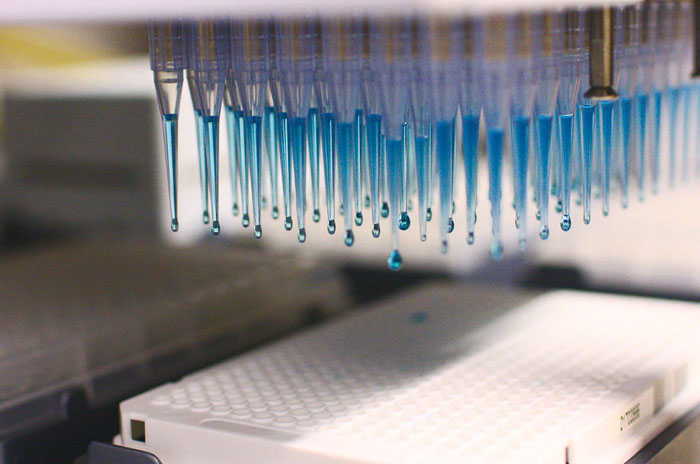
High-throughput screening (HTS):
In the field of drug discovery and biochemical research, high-throughput screening (HTS) is a key technology used to test a large number of compounds or biological samples simultaneously. The 96-well plate has become an important tool in the HTS process due to its efficient design. The larger depth of each well can accommodate more liquid or reaction mixture, thereby enabling parallel testing of multiple samples. This high-density experimental format can not only significantly increase the screening speed, but also reduce the cost of the experiment. In drug discovery, researchers can use 96-well plates to simultaneously test the inhibitory effects of dozens of drug candidates on target proteins and quickly screen out potential drugs. In biochemical research, 96-well plates are also used to analyze the results of various enzyme activities, cell reactions or chemical reactions. This high-throughput method has greatly accelerated research progress and made large-scale screening and data analysis more efficient and feasible.
Sample storage:
The 96-well plate is very suitable for sample storage due to its large pore volume, especially those samples that require large volumes or long-term storage. The deep well design can not only accommodate more liquid, but also effectively reduce the risk of sample volatilization and contamination, so that the sample remains stable during storage. This type of plate performs well in the management of biological samples, chemical reagents, and other liquids that require precise storage. For example, when storing cell culture fluids or enzyme solutions for a long time, 96 deep-well plates can provide reliable storage conditions and reduce cross-contamination between samples. At the same time, the deep-well design also makes it easier to access samples, avoiding the problem of liquid loss that may occur during the sampling process of shallow-well plates. Therefore, 96 deep-well plates play an irreplaceable role in sample storage and management in the laboratory.
Maybe you have the following questions
1. What are the standard well count and well diameter specifications for this product?
This product typically has 96 wells, which makes it ideal for high-throughput screening and batch processing experiments. The standard diameter of each well is typically 6.6 to 7.0 mm, and the well depth is typically 30 to 40 mm, although the exact dimensions may vary depending on the manufacturer. The well design allows for larger volumes of liquid, which is important when conducting biological experiments or chemical reactions.
2. What are the sterilization methods for this product?
This product is typically sterilized by gamma irradiation or ethylene oxide to ensure sterility. Gamma irradiation sterilization uses high-energy radiation to kill microorganisms, while ethylene oxide sterilization uses gas treatment to achieve the same effect. These methods are effective in eliminating bacteria, fungi, and other microorganisms, ensuring that no contamination occurs during the experiment.
3. What is the material of this product, and does it meet the requirements for biological experiments?
This product is typically made of polystyrene (PS) or polypropylene (PP), which have excellent chemical stability and biocompatibility. They can resist corrosion from a variety of chemicals and remain stable during the experiment, making them suitable for a variety of biological experiments and chemical analyses. In addition, these materials meet the standard requirements of biological laboratories and can meet a variety of experimental needs.
4. Does the product support high and low temperature processing?
Yes, this product can usually withstand a wide temperature range, from -80°C to +120°C. Such a temperature range makes it suitable for experimental conditions such as cryopreservation and heating reactions. For example, it can be used to store biological samples at low temperatures, and can also perform heat treatment or chemical reactions at high temperatures.
5. What is the pore volume of this product?
The volume of each pore is usually between 1.0 and 2.0 ml, and this volume range allows it to accommodate relatively more samples or reagents. This is very useful for conducting a large number of experiments or reactions, such as high-throughput screening, where multiple samples or compounds can be processed simultaneously.
6. Is this product compatible with automated equipment?
Yes, this product is designed with compatibility with automated equipment in mind. Its standardized pore layout and size enable it to work seamlessly with liquid handling robots and other automated systems, ensuring efficient and accurate experimental operations.
Hot Tags: 96 deep well plates sterile, China, suppliers, manufacturers, factory, custom, wholesale, for sale, 96 deep well plate, Pcr Microplate, Pcr Tubes For Qpcr, 96 Pcr Plate, Universal Pipette Tip, Hard Shell 96 Well Pcr Plate


