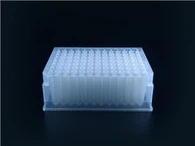





deep well plates sterile
Aseptic processing: Each deep-well plate undergoes strict aseptic processing during the production process to ensure that it is free of any contamination when used. This process usually includes high-temperature sterilization or the use of radiation sterilization technology to effectively kill possible bacteria, viruses and fungi. This sterile property makes the product very suitable for cell culture, microbiological experiments and other applications that require a very high sterile environment. By using this sterile deep-well plate, researchers can effectively avoid the risk of cross-contamination, thereby improving the reliability and accuracy of experimental results.
Well depth design: The depth of each well is precisely designed to accommodate a large volume of sample, generally up to hundreds of microliters. This deep-well design can not only store more liquid, but also help reduce the evaporation rate of the sample during the experiment, ensuring the consistency and accuracy of the experimental results. Especially in experiments with long-term culture or reaction, it can effectively avoid sample concentration and liquid loss, thereby improving the reliability and effectiveness of the experiment.
Strong compatibility: The design of the sterile deep-well plate meets international standards and has good compatibility. It can be used with a variety of automated equipment and laboratory instruments. This includes high-throughput screening equipment, liquid handling robots, pipettes, and freezing equipment. Strong compatibility enables researchers to improve work efficiency in automated experiments, while reducing human operating errors and improving data accuracy and repeatability.
Excellent temperature and chemical stability: This sterile deep-well plate maintains stable physical properties at both high and low temperatures. This stability enables it to withstand high-temperature sterilization and low-temperature storage requirements, and adapt to various experimental conditions, including refrigeration, freezing and high-temperature experiments. This chemical stability also prevents it from reacting or degrading when in contact with a variety of reagents and solutions, ensuring the reliability of experimental results.
Easy to operate: The design of the deep-well plate makes it easier to add, sample and clean samples. The layout and shape of its wells facilitate researchers to quickly perform experimental operations, reducing the cumbersome steps in the experimental process. In addition, the transparent bottom design makes sample observation more intuitive, facilitates the detection of sample changes, and improves the operational efficiency of the experiment and the repeatability of the results.
Material composition and features

Sterile deep-well plates are an important laboratory equipment designed for biological experiments. They usually adopt a 96-well layout to facilitate high-throughput experiments and sample processing. This deep-well plate is made of high-quality polystyrene (PS) material, which ensures its excellent optical properties and mechanical strength. Polystyrene material not only has good transparency, allowing researchers to clearly observe the state of the sample in the well, but also effectively resists chemical corrosion. This feature makes the deep-well plate stable under a variety of experimental conditions, whether in acidic or alkaline solutions or in environments with large temperature fluctuations.
In addition, the deep-well plate has undergone strict aseptic processing to ensure that there is no microbial contamination, which is essential for cell culture and microbial experiments. The sterile state can effectively avoid cross-contamination, thereby improving the reliability and accuracy of experimental results. The depth of each well is precisely designed to accommodate a large volume of sample, effectively reducing the evaporation rate of the sample during the experiment and ensuring the consistency of the experimental results. The deep-well plate is also compatible with a variety of automated equipment and laboratory instruments, such as liquid handling robots and high-throughput screening equipment, which greatly improves experimental efficiency and data accuracy. In short, sterile deep-well plates are indispensable tools in modern laboratories, providing reliable support for life science research.

Application areas of deep well plates sterile

Molecular biology
In the application of molecular biology, deep-well plates are important tools for experiments such as polymerase chain reaction (PCR), real-time quantitative PCR, gene cloning and protein expression. Its design ensures the reuse of samples under high-temperature sterilization conditions and has excellent high-temperature resistance, which is crucial for experiments requiring a sterile environment. High temperature sterilization can effectively eliminate bacteria and other contaminants, thereby ensuring the accuracy of experimental results and avoiding interference from external contamination. In addition, the deep-well design of the deep-well plate not only reduces sample evaporation, but also reduces the risk of cross-contamination between samples, ensuring the reliability of each experiment.
In addition, the low adsorption of deep well plates is another significant advantage. This feature effectively reduces sample loss during transfer and handling, thereby improving the sensitivity and accuracy of experiments. In highly sensitive experiments such as PCR, any small loss of sample may bias the results. Therefore, deep-well plates made of low-adsorption materials are critical to maintaining high accuracy and reproducibility of experiments. In addition, the standardized design of the deep-well plate makes it compatible with most automated equipment, providing great convenience for high-throughput experiments, simplifying the experimental process and improving experimental efficiency.
Clinical diagnosis
In the field of clinical diagnostics, deep-well plates are widely used for sample preprocessing and storage, especially in in vitro diagnostics (IVD) and biochemical analysis. This device provides an efficient solution for sample separation and analysis, improving detection accuracy and sensitivity. When processing blood and urine samples, deep-well plates ensure sample stability and reduce the risk of cross-contamination by reducing sample contact. This not only protects the integrity of the sample, but also increases the reliability of the test results.
The design of deep-well plates also supports simultaneous processing of multiple samples, enabling clinical laboratories to efficiently manage large volumes of samples. Especially when it is urgent to obtain test results quickly, the use of deep-well plates can significantly shorten the experimental cycle, thus improving the timeliness of diagnosis. In addition, its high-temperature resistance allows high-temperature sterilization during sample storage and processing, further enhancing its value in clinical settings. These advantages make deep-well plates an indispensable tool in clinical diagnosis and promote the advancement of medical testing technology.
Maybe you have the following questions
Question 1: What is the main purpose of this device?
This device is mainly used for sample storage and processing, especially in biomedical research, molecular biology experiments, and clinical diagnosis. Its design allows researchers to process multiple samples simultaneously in one experiment, optimize experimental processes, and improve experimental efficiency.
Question 2: Is the device suitable for high-temperature sterilization?
Yes, the device has good high-temperature resistance and can be sterilized multiple times in a high-pressure steam sterilizer without affecting its performance or shape. This is especially important for experiments that require a sterile environment, which can effectively prevent the growth of bacteria and other contaminants.
Question 3: What are the material properties of the product?
The device is made of high-purity polypropylene (PP) material, which has excellent chemical corrosion resistance and can resist strong acids, strong alkalis, and a variety of organic solvents. In addition, the low adsorption of polypropylene material helps to reduce sample loss and ensure the accuracy of experimental results.
Question 4: How to ensure the stability of samples during use?
The deep hole design of the device effectively reduces sample evaporation, especially when stored for a long time, which can maintain the stability of the sample. In addition, the deep hole structure also reduces the contact between samples, reduces the risk of cross contamination, and ensures the integrity of the sample.
Question 5: Is this device compatible with existing laboratory equipment?
Yes, this device follows international standards to ensure compatibility with most automated equipment and liquid handling systems. This allows researchers to easily integrate it into existing laboratory facilities and simplify experimental operation processes.
Question 6: How to prevent cross contamination during use?
Through the deep well design, the contact between samples is reduced, which significantly reduces the risk of cross contamination. This feature is particularly important for experiments that require high-precision processing, such as genomics and proteomics research, which can improve the success rate and reliability of experiments.
Question 7: Is this device suitable for long-term storage of samples?
Yes, the large capacity design of this device is very suitable for long-term storage of samples. The capacity of each well can accommodate more sample volume, reducing the number of sample aliquots, ensuring that samples are not lost during storage, and helping researchers better manage samples.
Hot Tags: deep well plates sterile, China, suppliers, manufacturers, factory, custom, wholesale, for sale, 0 2ml pcr plate, Clear Pcr Microplate, transparent pcr plate, Disposable Pipette Tip, Pcr Tubes For Qpcr, Conductive Filterd Pipette Tip