


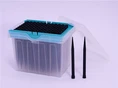





Sterile design
Sterile deep-well plates are sterilized by irradiation to ensure that each plate meets the sterility standard after production. This process can effectively remove possible bacteria, fungi or other microorganisms to ensure that there is no exogenous contamination during the experiment. For sensitive experiments involving cell culture, gene amplification, PCR reaction, etc., sterility is crucial, because any microbial contamination may interfere with the experimental results and cause false positive or false negative results. The sterile design effectively prevents cross-contamination between samples and ensures the accuracy and reliability of experimental data. Especially in experiments such as clinical diagnosis and immunoassays that require high standards of contamination control, the use of sterile deep-well plates is the key to ensuring sample purity and consistency of experimental results.
High and low temperature resistance
Sterile deep-well plates have excellent temperature resistance and can adapt to high-temperature sterilization (121°C) and low-temperature storage requirements. Its material polypropylene (PP) has good thermal stability, can maintain structural integrity and chemical stability at high temperatures, and will not deform or release harmful substances during high-pressure sterilization. In addition, deep-well plates can withstand low-temperature storage conditions and are suitable for frozen sample storage or sample processing in cryopreservation experiments. For experiments that require repeated freezing-thawing processes, such as long-term storage of samples, frozen cell culture and other applications, this deep-well plate can effectively ensure the stability of samples. The wide adaptability of temperature resistance enables it to provide reliable experimental guarantees in multiple fields such as drug development, high-throughput screening, and molecular biology research.
High-throughput screening
The 96-well design of the sterile deep-well plate makes it particularly suitable for high-throughput screening (HTS) experiments. High-throughput screening often requires the simultaneous processing of a large number of samples and reagents, and the standardized well design of the deep-well plate ensures that each well can accommodate a stable and uniform sample volume, reducing the risk of experimental errors and sample contamination. This product can provide efficient processing capabilities in large-scale experiments such as drug screening, antibody screening, and genetic testing. By using deep-well plates, researchers can test multiple samples and reaction systems at the same time, saving experimental time and improving experimental efficiency. Whether in the early stages of drug development or in later preclinical studies, the 96-well design can significantly improve the reliability of data and the consistency of experiments.
Compatible with automated equipment
The design of the sterile deep-well plate meets international laboratory standards to ensure its compatibility with various automated equipment. This product can seamlessly adapt to equipment such as automated pipettes, liquid handling systems, and automated high-throughput screening platforms, making the experimental process more efficient and accurate. Automated operation can significantly reduce human errors and improve the repeatability of experiments, especially when large-scale sample processing, to ensure efficient operation and lower sample contamination risks. With the help of automated equipment, researchers can focus on data analysis and experimental design without having to pay too much attention to the details of sample processing, thereby improving the work efficiency of the entire laboratory and reducing time and labor costs. The advantages of automated operation make sterile deep-well plates particularly important in experiments with high precision requirements such as large-scale screening and clinical testing.
Material composition and features
This product is made of polypropylene (PP), which has excellent chemical stability and is suitable for a variety of experimental environments, especially in experiments involving various chemical reagents, and can provide stable performance. The following are the detailed characteristics of its chemical stability:

Acid and alkali resistance
Polypropylene (PP) material has strong acid and alkali resistance, which enables it to withstand corrosion from a variety of strong acids and alkalis without structural damage. The following are the specific advantages of this material in terms of acid and alkali resistance:
a. Strong acid resistance
Polypropylene can resist the erosion of strong acids such as sulfuric acid, hydrofluoric acid, and hydrochloric acid. It can not only maintain its physical form in a high-concentration strong acid environment, but also effectively avoid the interference of acidic solutions on experimental results. For experiments that require the use of strong acids during chemical analysis, sample extraction or reaction, polypropylene deep-well plates can ensure the accuracy and stability of the experiment and prevent the plate from being corroded or dissolved.
b. Strong alkali resistance
When facing strong alkalis such as sodium hydroxide and potassium hydroxide, polypropylene also has excellent alkali resistance. This allows the material to avoid dissolution and degradation of the material when an alkaline solution such as a high-concentration sodium hydroxide solution is required for experiments, ensuring that the plate will not be damaged. Especially in molecular biology experiments, cell lysis solution treatment and other studies that require strong alkali conditions, polypropylene deep-well plates can stably support the experimental process.
Resistance to organic solvents
Polypropylene has excellent resistance to organic solvents, which allows it to maintain its structural integrity and avoid corrosion or dissolution in experiments involving organic solvents. The specific advantages are as follows:
a. Resistance to ethanol and acetone
Ethanol and acetone are common organic solvents that are widely used in chemical extraction and dissolution processes. Polypropylene has excellent corrosion resistance to these solvents, which can effectively avoid damage to the plate by the solvent and maintain the function and morphology of the plate. This is crucial for experiments such as drug screening and sample dissolution, and can ensure the continuity of the experimental process and the integrity of the sample.
b. Resistance to organic solvents such as dichloromethane
Polypropylene deep-well plates can withstand stronger organic solvents such as dichloromethane, which makes it well adaptable in complex organic chemical reactions. For research involving organic synthesis, solvent extraction or other chemical experiments, polypropylene can ensure that there will be no adverse reactions between the solvent and the plate, further improving the accuracy and reliability of the experiment.

Application areas of sterile deep well plates

Chemical Analysis and Solvent Handling
The chemical stability of sterile deep-well plates makes them an ideal choice for chemical analysis and solvent handling experiments, especially when facing strong acids, strong bases and organic solvents, and can effectively maintain their structure and performance. The following are the key applications of this product in this field:
Chemical corrosion resistance:
The polypropylene material enables sterile deep-well plates to withstand various strong acids (such as sulfuric acid and hydrochloric acid) and strong bases (such as sodium hydroxide), as well as common organic solvents (such as ethanol, acetone, dichloromethane, etc.). This chemical stability ensures that the contact between the sample and the solvent in the experiment will not corrode or damage the container, and can be used for a long time in harsh chemical environments without affecting the accuracy of the experimental results.
Suitable for solvent handling and extraction:
In chemical analysis, solvents are often used for sample extraction or reaction. Sterile deep-well plates have strong solvent resistance and can support the use of a variety of solvents, such as solvent extraction, chemical reactions and dissolution experiments, without causing degradation of the plate. Especially in the fields of drug screening, chemical synthesis or environmental analysis, it can reliably provide stable experimental conditions to ensure the efficiency and consistency of sample extraction and analysis results.
Environmental Monitoring and Biological Detection
Sterile deep-well plates not only perform well in chemical analysis, but are also widely used in environmental monitoring and biological detection, especially in microbial analysis and pollutant screening. The following are the main applications of this product in this field:
Environmental sample detection:
Sterile deep-well plates are widely used in environmental monitoring, especially in the detection of environmental samples such as water quality and air. Through its sterile design, it can prevent contamination by foreign microorganisms and ensure the accuracy of experimental results. In water quality monitoring, it can be used to screen bacteria, viruses or harmful chemicals in water samples; in air quality detection, it is used to analyze the concentration of microorganisms or harmful substances in the air.
Biological sample analysis:
Sterile deep-well plates are widely used in the processing and analysis of biological samples, especially in microbial growth monitoring, bacterial culture and biological reaction analysis. The laboratory can use this plate to process multiple microbial samples simultaneously, perform growth curve analysis or comparative experiments. Its sterile characteristics can effectively reduce cross-contamination between samples, ensure the purity of each sample, and ensure the reliability of experimental results.
Maybe you have the following questions
Q: 1. What is the aseptic processing method of sterile deep well plates?
A: The product is processed by irradiation sterilization technology, which is an efficient and safe sterilization method. Irradiation sterilization can effectively kill bacteria, viruses and other microorganisms without affecting the physical and chemical properties of the container. The entire production process strictly follows the aseptic standards to ensure that each container is fully in compliance with the aseptic requirements before use. This makes it very suitable for experimental environments that require high cleanliness, such as cell culture, gene amplification, immunology experiments, etc.
Q: 2. Can the product withstand extreme temperature environments?
A: The product can work stably in high and low temperature environments. Its high temperature resistance supports the structural integrity during the sterilization process at 121°C, while its low temperature resistance enables it to store samples for a long time in low temperature environments (such as -80°C) without deformation or damage. This high and low temperature adaptability allows it to operate stably under a variety of experimental conditions, especially in frozen storage and high-throughput screening.
Q: 3. How does the product perform in chemical experiments?
A: The product is made of polypropylene and has excellent chemical stability. It is resistant to corrosion from most common chemical reagents, including strong acids, strong bases, and organic solvents. This chemical resistance makes it perform well in experiments such as chemical analysis, solvent handling, and sample extraction. Whether facing harsh solvent conditions or high-intensity chemical reactions, the product can remain stable and avoid contamination of experimental samples or damage to containers.
Q: 4. Is this product suitable for high-throughput screening experiments?
A: Yes, the 96-well design of the product makes it very suitable for high-throughput screening (HTS) experiments. The size and spacing of each well are precisely designed to accommodate multiple samples or reagents while ensuring independence between samples to avoid cross-contamination. This high-throughput processing capability significantly improves the efficiency of experiments, especially in molecular biology experiments such as drug screening, gene amplification, and antibody detection, which can perform multiple experiments simultaneously and save a lot of time.
Q: 5. Is this product compatible with automated equipment?
A: The product design is standardized and meets the standards of international laboratory equipment. It is compatible with a variety of automated equipment. For example, equipment such as automatic pipettes, liquid handling systems, and automated high-throughput screening platforms can be used with this product. This compatibility allows researchers to automate operations in large-scale experiments, reduce human errors, and further improve laboratory work efficiency.
Q: 6. What are the quality control standards for this product?
A: The quality control of the product strictly follows ISO certification standards and other industry standards to ensure that each batch of products is strictly tested and verified before production and shipment. All products undergo meticulous physical, chemical performance tests and sterility tests to ensure that the products perform consistently and reliably under various experimental conditions. In addition, every manufacturing process of the product is recorded in detail to ensure that it can be traced back to the source.
Q: 7. Is this product suitable for testing food and environmental samples?
A: Yes, the product is suitable for food safety testing and environmental monitoring, especially when testing water quality, air quality and microbial or chemical contaminants in food. Its aseptic design effectively avoids external contamination and ensures the purity of the sample. In environmental monitoring and food safety testing, researchers can use this product to efficiently process a large number of samples to ensure that each sample can be accurately analyzed under contamination-free conditions.
Hot Tags: sterile deep well plates, China, suppliers, manufacturers, factory, custom, wholesale, for sale, PCR Plate, Low Binding Pipet Tip, 96 Well Microplate For Pcr, 200 L pipette Tip, 0 2ml 96 Well Pcr Plate, U Bottom 96 Deep Well Plate


