


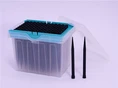




Air Displacement Pipette is a precision experimental tool commonly used in biochemistry laboratories and clinical diagnostics. Its working principle is based on air displacement technology, which enables accurate and rapid dispensing and pipetting of minute amounts of liquids.
This type of pipette usually consists of an adjustable piston housed within a membrane-sealed cylindrical stem. The operator presses a button to move the piston and establish a vacuum in the pipette. When the button is released, the vacuum draws and dispenses a predetermined volume of liquid, then the liquid is expelled by pressing the button again.
One of the advantages of air displacement pipettes is their high precision. Because the gap between the piston and seal is very small, microliter-level liquid dispensing is possible. This makes it the tool of choice for many laboratories where samples need to be accurately diluted, mixed and dispensed.
Another advantage is its ease of use and operation. Generally speaking, just set the volume accurately and press a button to pipet the liquid. This simple operation makes air displacement pipettes suitable for a variety of experimental scenarios, from basic liquid handling to high-throughput screening experiments.
There are several factors to consider when choosing an air displacement pipette. The first is the volume range, since different pipettes are suitable for dispensing different volumes of liquid. Second is precision and repeatability, since some experiments require very accurate liquid dispensing. In addition, consider comfort and convenience of operation, as well as ease of maintenance and cleaning.
Finally, the correct use and maintenance of air displacement pipettes is critical to the accuracy of experimental results. Operators should follow the manufacturers guidelines for proper operation and perform regular calibration and maintenance to ensure pipette performance and accuracy.