


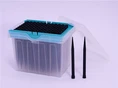





1.Instrument Compatibility
When selecting pipette tips, it is crucial to consider their compatibility with the laboratory's existing automated liquid handling systems. Different brands and models of automated pipetting instruments have specific requirements regarding tip specifications, interface designs, and connection methods. For instance, if your laboratory utilizes a Tecan automated liquid handling workstation, it is advisable to choose Automation Pipette Tips For Tecan. These tips are specifically designed to ensure perfect compatibility with Tecan devices, providing a secure fit and preventing issues such as loosening or leakage during pipetting operations. This guarantees accurate and stable liquid handling performance.
Similarly, when working with automated pipetting systems from other brands like Eppendorf, Gilson, or others, it is essential to select pipette tips tailored for those systems to avoid compatibility issues that could compromise experimental efficiency and outcomes.
Our pipette tips are designed to meet the specific needs of various leading brands, ensuring optimal performance and reliability. We offer the following high-quality pipette tips:
Pipette Tip For Hamilton
Pipette Tip For Tecan
Pipette Tip For Tecan MCA
Pipette Tip For Agilent
Pipette Tip For Beckman
Serological Pipette
Pipette Tip For Rainin
Among the pipette tips we provide, Pipette Tip For Tecan and Pipette Tip For Hamilton are available in conductive versions.
Conductive Pipette Tips
Conductive Tips For Tecan
Conductive Pipette Tip For Hamilton
Conductive Automation Tips
Conductive Robotic Pipette Tips
Liquid Level Sensing Tips
Electrically Conductive Pipette Tips
Conductive Disposable Pipette Tips
2.Requirements for pipetting accuracy
Processing of trace samples
If the laboratory often processes trace samples, such as detecting trace cytokines in cell culture fluids and operating very small amounts of DNA samples in gene sequencing, it is necessary to select pipette tips with extremely high precision. Such pipette tips are usually strictly calibrated, and the error can be controlled within a very small range when sucking and releasing very small volumes of liquid, ensuring that each pipetting volume is accurate and reliable. For example, some pipette tips that claim to have an error within ±1% are more suitable.
Conventional sample operations
For pipetting of conventional volume samples, although the accuracy requirements are relatively less stringent, pipette tips that can meet the basic accuracy requirements should also be selected, and the error should be controlled within a reasonable range, such as about ±5%, to ensure that the control of the amount of liquid in the experiment will not cause significant deviations in the experimental results, such as the situation of sucking various reagents in common biochemical tests.
3.Sample characteristics and experimental types
Biological sample related
If biological samples are involved, such as cells, nucleic acids, proteins, etc., consider whether the pipette tip is enzyme-free (such as DNase, RNase-free) and pyrogen-free to prevent contamination or damage to sensitive biological samples. In cell culture experiments, pipette tips with enzymes or pyrogens may affect the growth state of cells; in nucleic acid-related experiments, pipette tips containing DNase or RNase will degrade the target nucleic acid, resulting in experimental failure.
Chemical sample related
For the treatment of chemical reagents, attention should be paid to the chemical compatibility of the pipette tip to ensure that it can withstand the various chemical substances such as acids, alkalis, organic solvents, etc. that it contacts, and will not deform, release impurities, or affect the accuracy of pipetting due to chemical reactions. For example, when aspirating organic solvents that are often used in chemical analysis, ordinary intolerant pipette tips may be partially dissolved, which will not only damage the pipette tip, but also contaminate the sample and affect the experiment.
4.Throughput requirements
High-throughput experimental scenarios
In high-throughput screening experiments, large-scale biochemical testing, and other situations that require frequent and large-scale pipetting operations, it is necessary to select tips with reliable quality, mature manufacturing processes, and good repeatability. For example, tips with advanced injection molding processes, good product verticality and air tightness can still provide stable and accurate liquid absorption and distribution during long-term and high-frequency use, reducing experimental errors and equipment failure time caused by tip quality problems.
Low-throughput routine experiments
For occasional, low-throughput routine experiments, you can flexibly choose according to specific sample and precision requirements, but you must also ensure that the basic quality and performance of the tips meet the experimental requirements.
5. Cost considerations
Long-term use costs
In addition to paying attention to the purchase price of the pipette tip, you should also consider its service life, frequency of use and other factors to evaluate the long-term use cost. Although some high-quality and durable pipette tips may have a slightly higher unit price, they are not easily damaged and can be reused many times (where permitted), which can reduce costs in the long run, especially in a high-frequency laboratory environment.
Project budget constraints
Choose appropriate pipette tips based on the budget of the current laboratory project. If the budget is sufficient, you can give priority to products with better performance and better quality; if the budget is limited, you should weigh various factors on the basis of meeting basic experimental needs and select cost-effective pipette tips.