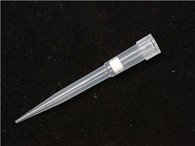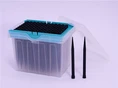




The 1000µl long pipette tip is a high-precision liquid transfer tool commonly used in laboratories, suitable for pipettes with a capacity of 1000µl. There are several main types of these tips, including standard, low-adsorption, and filter-type. The standard tip is used for daily liquid transfer, while the low-adsorption tip has a special inner surface treatment to reduce sample residue and adsorption, and is suitable for handling proteins or other viscous samples. The filter-type tip has a built-in filter element, which effectively prevents aerosol contamination, ensures the accuracy and safety of experiments, and is suitable for sensitive experiments such as PCR.
In terms of usage, 1000µl long pipette tips are widely used in molecular biology, chemistry and biotechnology laboratories. Its elongated design makes it particularly suitable for sampling from deep well plates or tall containers, avoiding cross-contamination and ensuring experimental accuracy. In addition, this kind of tip is also commonly used for precise dispensing of large volumes of liquid, such as culture medium preparation, sample dilution and reagent addition. In molecular biology experiments, the use of filter-type tips can effectively prevent cross-contamination between samples and ensure the reliability of PCR, RT-PCR and other experimental results.
In short, 1000µl long pipette tips have become one of the indispensable consumables in the laboratory due to their diverse types and wide range of uses. Whether in high-precision molecular biology experiments or in the preparation of chemical reactions, these tips provide reliable and efficient liquid handling solutions. Its high-quality materials and design not only ensure the accuracy of experimental results, but also improve the convenience and safety of experimental operations.


Product Features
-
The filter can prevent aerosols to enter the pipettor cavity. So it is suitable for automatic workstations.

-
The elongated tip is specially designed for micro suck

-
Low retention tube effectively reduces reagent loss

-
Stacked boxes save space and are easy to use


With filter

Non-filter type

Packing
-

Boxed
-

Stacked box
-


FAQ:
1. What are the primary types of 1000µl long pipette tips and their specific uses?
1000µl long pipette tips come in several main types, each designed for specific laboratory applications. The standard tip is the most commonly used for routine liquid transfer tasks. It provides reliable performance for general laboratory use. The low-adsorption tip has a specially treated inner surface that reduces sample residue and adsorption, making it ideal for handling proteins or other viscous samples where minimizing sample loss is crucial. The filter-type tip includes a built-in filter element that prevents aerosol contamination, enhancing the safety and accuracy of sensitive experiments such as PCR (Polymerase Chain Reaction) and RT-PCR (Reverse Transcription PCR).
2. How does the elongated design of 1000µl long pipette tips benefit laboratory procedures?
The elongated design of 1000µl long pipette tips offers significant advantages in laboratory procedures. This design feature allows for easy sampling from deep well plates or tall containers, which are common in many types of biological and chemical experiments. By reaching deeper into these vessels, the elongated tips help avoid cross-contamination, ensuring the purity of samples. Additionally, the long tips can facilitate more accurate liquid handling in scenarios where precision is paramount, such as in molecular biology assays and high-throughput screening.
3. Why is the low-adsorption tip particularly useful for handling proteins or viscous samples?
The low-adsorption tip is especially beneficial for handling proteins or viscous samples due to its special inner surface treatment. This treatment minimizes the adhesion of samples to the inner walls of the tip, which can be a significant issue with standard tips. When working with proteins, enzymes, or other biomolecules, it is essential to ensure that as much of the sample as possible is transferred without loss. The low-adsorption tips reduce sample residue, enhancing the accuracy and reliability of experimental results by ensuring that nearly the entire sample volume is delivered as intended.
4. In what ways do filter-type tips enhance the safety and reliability of sensitive experiments?
Filter-type tips are designed with an internal filter element that acts as a barrier against aerosol contamination. This feature is particularly important in sensitive experiments such as PCR, where even trace amounts of contamination can lead to erroneous results. By preventing aerosols from entering the pipette and potentially contaminating the sample or the pipette itself, filter-type tips maintain the integrity of the experimental process. This not only enhances the accuracy of the results but also ensures a safer working environment by reducing the risk of exposure to potentially harmful substances.
5. How do 1000µl long pipette tips support the preparation and handling of large volumes of liquid?
1000µl long pipette tips are well-suited for tasks that involve the precise dispensing of large volumes of liquid. Their high capacity allows for efficient handling of significant liquid quantities in a single transfer, which is essential in processes such as the preparation of culture media, sample dilution, and reagent addition. The ability to transfer up to 1000µl at once reduces the need for multiple pipetting steps, saving time and minimizing the potential for errors. This efficiency is particularly beneficial in high-throughput laboratory environments where speed and accuracy are critical.
6. What are the advantages of using high-quality materials in the manufacture of 1000µl long pipette tips?
The use of high-quality materials in the manufacture of 1000µl long pipette tips offers several advantages. Firstly, it ensures the tips are free from contaminants such as DNAse and RNAse, which could otherwise interfere with sensitive experiments. High-quality materials also contribute to the structural integrity of the tips, preventing issues such as warping or breakage during use. Additionally, the use of premium-grade polypropylene, for example, ensures that the tips are chemically inert and resistant to a wide range of reagents, making them suitable for various applications. This reliability and durability ultimately enhance the accuracy and safety of laboratory operations, providing researchers with dependable tools for their experiments.
Hot Tags: 1000ul long pipette tip, China, suppliers, manufacturers, factory, custom, wholesale, for sale, Sterile Filter Tip, 0 2ml Pcr Tubes, Disposable Pp Material Plastic Pcr Tubes, Pcr Tubes For Qpcr, Round Deep Well Plate, 50 L Pipette Tip