







Company Profile
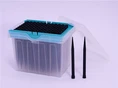
As a professional manufacturer in China, we are committed to producing high-quality pipette tip products. We have advanced production equipment and technical teams to ensure that our products meet the highest standards in quality and performance. Our pipette tips undergo rigorous quality control and testing to ensure their stability and precision. We offer various specifications and models of pipette tips to meet the different needs of our customers. Whether in the medical, biotech, laboratory or industrial fields, we provide our customers with quality products and services.
Why choose us?
Advanced equipment
We have advanced production equipment and technical teams to ensure that our products meet the highest standards in quality and performance.
Customized services
Whether in the medical, biotech, laboratory or industrial fields, we provide our customers with quality products and services.
Competitive price
We can provide the OEM and ODM services, with superior cost performance, rich technical resources and top quality and efficiency.
High quality
Our products are manufactured or executed to very high standards, using the finest materials and manufacturing processes.
Related Product

The Universal Pipette Tip is a vital tool in laboratories, designed for compatibility with a range of pipettes. With precision engineering, it ensures accurate and efficient liquid handling, contributing to reliable results in various scientific applications.

Disposable pipette tips are innovative and indispensable accessories in laboratories and research settings. These single-use tips offer numerous advantages and benefits, making them a preferred choice for liquid handling applications.

The wide bore pipette is a cutting-edge laboratory tool designed to revolutionize liquid handling processes. With its enlarged internal diameter, this pipette offers unparalleled efficiency in transferring viscous liquids, high-density samples, and particles without clogging or compromising accuracy.

Plastic medical pipette tips are common tools used in medical laboratories and are usually made of high-quality plastic. They are precisely sized and designed to be compatible with various makes and models of pipettes. These tips are used to accurately measure and transfer liquids, providing a convenient liquid handling solution. They have wide applications in molecular biology, cell culture, clinical diagnosis and other fields.

Sterile barrier pipette tips are critical tools used in medical laboratories with additional barrier protection that effectively prevents cross-contamination between samples and the internal structure of the pipette. These tips are usually treated aseptically to ensure that no exogenous contaminants are introduced during the experiment, thereby ensuring the accuracy and reliability of the experimental results.

Barrier pipette tips are a critical tool used in medical laboratories and are designed to provide additional barrier protection against cross-contamination between samples and liquid handling equipment. These tips are typically made from high-quality plastic and feature precise dimensions and designs ensuring compatibility with a wide range of pipette brands and models. Their use helps ensure the accuracy and reliability of experimental results, especially in critical molecular biology, cell culture and clinical diagnostic applications.

Pipette tips are essential laboratory tools that offer precise and accurate fluid handling solutions. They enable researchers to transfer liquids with high precision, reducing the risk of errors in experiments. Pipette tips come in various volumes and designs to accommodate different applications, ensuring versatility and flexibility in laboratory workflows. With their consistent performance and reliable sealing properties, pipette tips help maintain sample integrity and prevent cross-contamination, ensuring the accuracy and reproducibility of scientific results. Overall, pipette tips play a crucial role in improving efficiency, accuracy, and reliability in laboratory experiments and workflows.

1000uL disposable tips are essential laboratory accessories used for precise liquid handling with micropipettes. Made from high-quality materials like polypropylene, these tips ensure accurate and contamination-free sample transfer. Their disposable nature eliminates the risk of cross-contamination between samples, making them ideal for sensitive applications such as PCR, cell culture, and molecular biology. These tips are compatible with a wide range of micropipettes and come in sterile packaging to maintain sample integrity.

The 1000µL wide bore pipette tips are designed for use with pipettors requiring large volume capacities. With a wider opening, they accommodate viscous liquids and prevent aerosol formation. These tips ensure precise and efficient pipetting of larger volumes in laboratory applications, maintaining accuracy and reducing the risk of contamination.
What is Medical Pipette
A medical pipette (pipette) is a precision instrument commonly used in biomedical laboratories to move and dispense liquids with precision. They typically consist of an adjustable piston, aspiration head, and a discharge head that enable precise measurement and delivery of liquids in the microliter to milliliter range. Medical pipettes are widely used in molecular biology, cell culture, drug research and development and other fields to provide reliable liquid handling solutions. Its accuracy and repeatability make it an indispensable tool in the laboratory, helping researchers complete various experiments and operations to ensure the accuracy and reliability of experimental results.
Benefits of Medical Pipette
Precision
One of the standout benefits of pipettes is their unmatched precision. They allow researchers to work with tiny volumes of liquid, minimizing wastage and ensuring that experiments are reproducible.
Consistency
Pipettes contribute to the consistency and reliability of experimental data. When every drop counts, pipettes ensure that each sample is treated with the same level of precision.
Time efficiency
In the fast-paced world of scientific research, time is of the essence. Pipettes expedite the process of liquid handling, enabling researchers to work more efficiently.
Reduced contamination risk
Using pipettes minimizes the risk of contamination since they often come with disposable tips that can be replaced between samples, preventing cross-contamination.
Types of Medical Pipette
Volumetric pipettes
Volumetric pipettes are used to measure a single, fixed volume of liquid. They are typically made of glass or plastic and have a graduation mark on the stem that indicates the volume. Volumetric pipettes are very accurate and are often used for quantitative analysis.
Graduated pipettes
Graduated pipettes are used to measure a variable volume of liquid. They have multiple graduation marks along the stem that allow for measuring different volumes. Graduated pipettes are less accurate than volumetric pipettes, but they are more versatile and can be used for a wider range of applications.
Serological pipettes
Serological pipettes are a type of graduated pipette that is commonly used in cell culture and microbiology. They are typically made of plastic and are disposable. Serological pipettes are less accurate than glass pipettes, but they are more convenient to use.
Transfer pipettes
Transfer pipettes are used to transfer small volumes of liquid, typically in the milliliter range. They are often used for adding reagents to test tubes or for dispensing solutions into cuvettes. Transfer pipettes are not as accurate as volumetric or graduated pipettes, but they are very inexpensive and easy to use.
Micropipettes
Micropipettes are used to measure and transfer very small volumes of liquid, typically in the microliter (µL) range. They are essential for a wide range of applications, including molecular biology, biochemistry, and genetics. Micropipettes are more expensive than other types of pipettes, but they are very accurate and precise.
Electronic pipettes
Electronic pipettes are a type of micropipette that uses an electronic motor to aspirate and dispense liquid. They are very accurate and precise and are often used for high-throughput applications. Electronic pipettes are more expensive than manual pipettes, but they are faster and easier to use.
Multichannel pipettes
Multichannel pipettes are used to measure and transfer multiple aliquots of liquid simultaneously. They are typically used for high-throughput applications, such as PCR and ELISA assays. Multichannel pipettes are more expensive than single-channel pipettes, but they can save time and effort.
● It facilitates the even distribution of cells in cell seeding and avoids foaming and bubble formation.
● It allows easy media exchange of T-flask cell cultures and maintains the sterility of the cultures, and prevents contamination.
● 96 well microplates, frequently used in microplate applications like ELISA, PCR, or cell culture, are compatible with multichannel pipettes of 8 or 12-channel variants.
● To aliquot, a reagent into several doses- a process known as multi-dispensing- electronic pipettes are employed.
● Serological pipettes are employed in conventional laboratory settings and applications involving cell and tissue culture.
● Use pipettes to accurately measure small volumes of liquid. Pipettes function as tiny straws that suck up a liquid into the vacuum of its internal holding space. If you wish to extract a very precise, yet small, volume of liquid, a pipette is the tool you'll likely use.
● Keep the pipette tip away from the bottom of the vessel. When you want to draw up a volume of liquid into the pipette, make sure you keep the tip of the pipette elevated away from the bottom. Otherwise, you might cause a seal to occur, which can create air bubbles.
● Draw up liquid with the reverse pipetting technique. This method is only possible with air displacement pipettes. They draw up the liquid and disperse with any air bubbles or other forms of aspiration and is especially effective for drawing up and dispersing foamy or viscous liquid samples.
● Release liquid with the reverse pipetting technique. Once you've drawn up the liquid, you'll need to depress the plunger to the first stop and then continue through to the second stop. This will ensure that all the liquid in the pipette tip is expelled.
Components of Medical Pipette
Plunger
It is used to aspirate and dispense the desired volume of liquids.
Ejector button
It causes the metal bar to descend, ejecting the pipette tip.
Volume adjustment knob
The volume of the sample to be transferred can be set by rotating the volume adjustment knob to increase and decrease the concentration. It cannot be rotated in a fixed-volume pipette.
Volume window
It displays the set volume, and the place values shown depend on pipette size.
Shaft
It is a tube-like structure filled with air in an air displacement pipette. When the piston is pressed, some air from the shaft is released, aiding in liquid aspiration. In contrast, releasing the piston aids in liquid dispensing while refilling the shaft with air.
Tip cone
It is the area where the pipette tip is attached.
Pipette tip
It is a piece of equipment made of polypropylene or plastic that has been molded into it and comes into contact with the liquid.
How to Maintain Medical Pipette

Regular cleaning
Regular cleaning is essential for keeping your pipettes in optimal condition. Start by wiping the external surfaces with a mild detergent solution or a lab-grade disinfectant. Pay special attention to the areas around the buttons, volume adjusters, and tip ejectors. For internal cleaning, follow the manufacturer's guidelines and use recommended cleaning agents or pipette cleaning solutions. Remember to thoroughly rinse and dry the pipettes after cleaning to remove any residue. Regular cleaning not only maintains the cleanliness and hygiene of the pipettes but also prevents cross-contamination between samples.
Calibration and verification
Calibration and verification of pipettes are vital to ensure accurate volume delivery. Regularly schedule calibration checks and verifications according to the manufacturer's recommendations or your laboratory's quality control protocols. Use gravimetric or photometric methods to verify the accuracy and precision of your pipettes. If any discrepancies are detected, arrange for recalibration or servicing by a qualified technician. Regular calibration and verification help maintain the integrity of your results and prevent errors caused by inaccurate pipette volumes.
Proper storage
Proper storage of pipettes is crucial to protect them from damage and maintain their performance. When not in use, store the pipettes in an upright position to prevent the accumulation of liquid in the shaft. Avoid placing them near heat sources, direct sunlight, or extreme temperatures. Consider using pipette stands or racks specifically designed for secure storage. Additionally, ensure that the pipettes are kept in a clean and dust-free environment to prevent contamination. Proper storage safeguards the integrity of the pipettes and extends their lifespan.
Correct handling and technique
Proper handling and technique while using pipettes are essential for their longevity and accuracy. Always handle pipettes with care, avoiding excessive force or rough treatment. Use the appropriate tips recommended by the manufacturer for your specific pipettes. Ensure that the tips are securely attached and properly sealed to prevent leakage. When aspirating or dispensing, adopt a smooth and steady motion, avoiding sudden jerks. Additionally, practice proper pipetting techniques, such as pre-wetting the tips, avoiding air bubbles, and maintaining a vertical position to minimize variations in volume delivery.
Regular maintenance and servicing
Regular maintenance and servicing by qualified professionals are crucial to keep your pipettes in optimal condition. Follow the manufacturer's guidelines regarding maintenance schedules and recommended service intervals. Arrange for preventive maintenance and servicing, including lubrication, seal replacement, and general inspection of critical components. By addressing any potential issues early on, you can prevent major problems and ensure the consistent performance of your pipettes.
How to Choose the Right Medical Pipette
Accuracy and precision
The first and foremost criterion to evaluate a pipette is its accuracy and precision, which measure how close and consistent the delivered volumes are to the intended ones. Accuracy and precision depend on several factors, such as the pipette calibration, the pipetting technique, the environmental conditions, and the quality of the tips and reagents. To ensure optimal accuracy and precision, you should choose a pipette that has a suitable volume range for your application, a reliable calibration system, a clear display, and a smooth plunger. You should also follow the manufacturer's instructions, use compatible tips and reagents, and perform regular quality checks.
Ergonomics and comfort
Another important factor to consider when choosing a pipette is its ergonomics and comfort, which affect the user's performance, health, and satisfaction. Pipetting can be a repetitive and strenuous task that can cause fatigue, pain, or even injuries to the hand, wrist, arm, shoulder, or neck. To prevent these problems, you should choose a pipette that has a lightweight design, a comfortable grip, an easy-to-use button, and a low force requirement. You should also adjust the pipette to your hand size, posture, and working height, and take frequent breaks and stretches.
Compatibility and versatility
A third factor to consider when choosing a pipette is its compatibility and versatility, which determine how well the pipette can work with different types of tips, samples, and protocols. Compatibility and versatility depend on the pipette's features, such as the tip ejector, the tip cone, the volume adjustment, and the mode selection. To ensure optimal compatibility and versatility, you should choose a pipette that has a universal tip ejector that can accommodate various tip sizes and shapes, a tip cone that can form a tight seal with different tip materials and brands, a volume adjustment that can be easily and accurately set and locked, and a mode selection that can switch between different pipetting functions, such as reverse, multi-dispense, or dilute.
Cost and maintenance
A fourth factor to consider when choosing a pipette is its cost and maintenance, which affect the lab's budget, efficiency, and safety. Cost and maintenance include the initial purchase price, the operating expenses, the repair costs, and the cleaning procedures. To ensure optimal cost and maintenance, you should choose a pipette that has a reasonable price that matches your needs and expectations, a low operating cost that does not require frequent replacement of tips or batteries, a durable construction that can withstand wear and tear, and a simple cleaning procedure that can prevent contamination and damage.
Innovation and performance
A fifth factor to consider when choosing a pipette is its innovation and performance, which reflect how the pipette can enhance the lab's productivity, quality, and reliability. Innovation and performance include the pipette's technology, functionality, design, and user interface. To ensure optimal innovation and performance, you should choose a pipette that has a cutting-edge technology that can improve the accuracy, precision, ergonomics, compatibility, and versatility of the pipette, a functionality that can automate, simplify, or optimize the pipetting process, a design that can reduce the risk of errors, leaks, or spills, and a user interface that can provide feedback, guidance, or customization.
Certifications


Our Factory
Established in 2016, Biorear is located in Jiaxing, Zhejiang Province, with an area of 16000 ㎡.
Biorear is devoted to development, manufacture, sales and service of consumables in the field of life science and clinical diagnosis. Company has 100k level cleanrooms for injection molding, automation systems for packaging, extraction, special process equipment, optical testing systems, material research ability and automatic inspection instruments developed for different products and application scenarios, which enables us to monitor and measure the quality of different products.


FAQ
Hot Tags: medical pipette, China, suppliers, manufacturers, factory, custom, wholesale, for sale, PCR Tubes With Flat Cap, 2 2ml deep well plate, Polypropylene Pipette Tip, Pcr Tubes, 96 deep well plate, Polypropylene Pcr Microplate


