


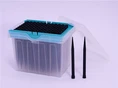





autoclavable pipette tips
High Temperature Resistance: Made of high-quality polypropylene (PP) material, these pipette tips are capable of repeated use under high-temperature steam sterilization conditions at 121°C without affecting their performance. Its material can not only withstand high temperatures, but also resist pressure changes that may occur during the sterilization process, ensuring the structural integrity and functional stability of the tips after autoclaving. This high-temperature resistance is critical for laboratories that require frequent sterilization, helping to extend the life of consumables and reduce experimental costs.
Precision Manufacturing: Pipette tips are manufactured with extremely high precision, and each tip undergoes strict quality control to ensure precise volume distribution during experiments. This high-precision manufacturing process ensures that the inner surface of the tip is smooth and flawless, significantly reducing liquid residue, thus improving the accuracy and reproducibility of experiments. Especially in experiments that require extremely high precision, such as gene sequencing or drug formulation, these tips provide stable and reliable support.
Strong compatibility: These tips are designed to be compatible with various pipette brands and models widely used in the market, so that experimenters do not need to worry about equipment compatibility issues. Whether it is a manual pipette or an automated pipetting workstation, these tips are perfectly matched to ensure continuity and convenience of experimental operations. Diverse compatibility not only improves the operational flexibility of the laboratory, but also reduces the complexity of consumable selection for experimenters.
Contamination-free design: In order to ensure the accuracy of experimental results, these tips undergo strict sterility control during the production and packaging process to ensure no DNase, RNase and pyrogen contamination. This feature makes it particularly suitable for experiments that require extremely high sample purity, such as molecular biology experiments, cell culture, and sensitive operations such as PCR. The pollution-free design effectively reduces the risk of sample contamination and ensures the reliability of experimental data.
Material composition and features
High-quality polypropylene (PP) material is the core material choice for tips, and it occupies an important position in laboratory applications due to its excellent performance. First of all, polypropylene has excellent heat resistance and can withstand high-temperature steam sterilization processes up to 121°C. This high-temperature resistance allows the tips to maintain their original shape after multiple autoclave sterilizations without any deformation or degradation, thus ensuring the long-term service life and performance stability of the tips. The thermal stability of polypropylene makes it particularly suitable for experimental environments that require frequent sterilization, providing experimenters with a reliable choice of consumables.


In addition, the chemical resistance of polypropylene material is also a major advantage. It can resist the erosion of chemical reagents and solutions commonly used in most experiments, such as acids, alkalis and organic solvents, thereby preventing the tips from chemically degrading when exposed to these substances. This chemical resistance ensures that the tips can maintain their structural integrity and function under various complex experimental conditions, and the accuracy of experimental results will not be affected by material degradation.
Finally, polypropylene material also has low liquid adsorption, which means that the tips can effectively reduce sample residues and ensure the accuracy and consistency of each dispensing. Low adsorption not only reduces the risk of cross-contamination, but also improves the reliability of experimental data, especially in experiments with extremely high precision requirements, such as gene sequencing and PCR reactions. Therefore, the multiple advantages of polypropylene make it the only choice for pipette tips, ensuring excellent performance in harsh experimental environments.
Application areas of autoclavable pipette tips

Clinical diagnosis: In clinical diagnostic experiments, such as blood analysis, urine testing, and immunoassays, the accuracy and reliability of pipette tips directly affect the diagnostic results. These tips are strictly controlled to ensure the accuracy of each dispensing, and can remain sterile after autoclaving, reducing the risk of biological contamination in the laboratory.
Drug development: During drug development, various chemical reagents and biological samples need to be handled. The chemical resistance and low adsorption of pipette tips make them an ideal choice for precise dispensing, which can effectively avoid sample residues and cross-contamination of reagents, ensuring the efficiency and safety of the experiment. Its repeatable autoclaving characteristics also greatly reduce the cost of the experiment.
Maybe you have the following questions
1: Can the product maintain its performance after high temperature sterilization?
Yes, this product is made of high-quality materials, especially high-temperature resistant polypropylene. It can be autoclaved at a high temperature of 121°C and can still maintain its original form and function after multiple sterilizations. This high temperature resistance ensures that the product will not deform or lose function due to high temperature treatment under harsh experimental conditions, ensuring long-term reliable use.
2: Is it suitable for handling chemical reagents, especially highly corrosive reagents?
Yes, the material of the product has excellent chemical resistance and can withstand a variety of commonly used chemical reagents in laboratories, including acids, bases and organic solvents. This means that when handling highly corrosive reagents, the product can still maintain its structural integrity and will not degrade or react, thus ensuring the safety of the experiment and the accuracy of the data.
3: How does the product ensure that it will not contaminate the sample during use?
This product undergoes strict aseptic processing during the manufacturing process to ensure that it will not introduce external contaminants during use. It is free of DNase, RNase and pyrogen contamination, and is particularly suitable for experiments with extremely high requirements for sample purity, such as molecular biology research and clinical diagnosis. The non-contamination design significantly reduces the risk of sample cross-contamination and ensures the reliability of experimental results.
4: Is this product suitable for high-precision operations in experiments?
Absolutely applicable. The product is precisely designed and the quality is strictly controlled during the manufacturing process, ensuring the high precision of each liquid separation. This makes it very suitable for experimental operations requiring high precision, such as gene sequencing, PCR reactions and cell culture. The low adsorption of the product further reduces liquid residue and improves the accuracy and repeatability of liquid separation.
5: Is it compatible with different brands and models of equipment on the market?
Yes, the product is designed with full consideration of compatibility and can be adapted to a variety of brands and models of equipment on the market. Whether it is manual operation or automated system, the product can work perfectly with it to ensure smooth experimental operations. This wide compatibility provides laboratories with more flexibility and reduces restrictions on the selection of consumables.
6: Is this product suitable for use in experiments with high biosafety requirements?
Absolutely suitable. The product's sterile design and strict production control make it particularly suitable for experimental environments with high biosafety requirements. Its materials have been screened to ensure biocompatibility and will not cause adverse effects on biological samples. It is particularly suitable for experiments with high safety requirements such as cell culture, protein analysis and clinical diagnosis.
7: How to ensure the consistency and traceability of batches during procurement and use?
Products are given independent batch numbers during the production process, which allows each batch of products to be accurately tracked. This not only helps the laboratory manage consumables, but also enables specific batches to be quickly located and corresponding measures to be taken when problems arise. This traceability greatly improves the transparency of the experimental process and the reliability of the product, providing greater protection for laboratory operations.
Hot Tags: autoclavable pipette tips, China, suppliers, manufacturers, factory, custom, wholesale, for sale, 0 2ml Pcr Tubes With Cap not Gap, Low Binding Pipet Tip, 200 L pipette, Pipette Tip With Filter, transparent pcr plate, 200 L pipette Tip


